
Auxilium bioprints kidney and liver tissues on the ISS for the first time (July 9)
AMP-1 built off Wake Forest designs turns orbit into a manufacturing floor, then brings the work back on a SpaceX Dragon.
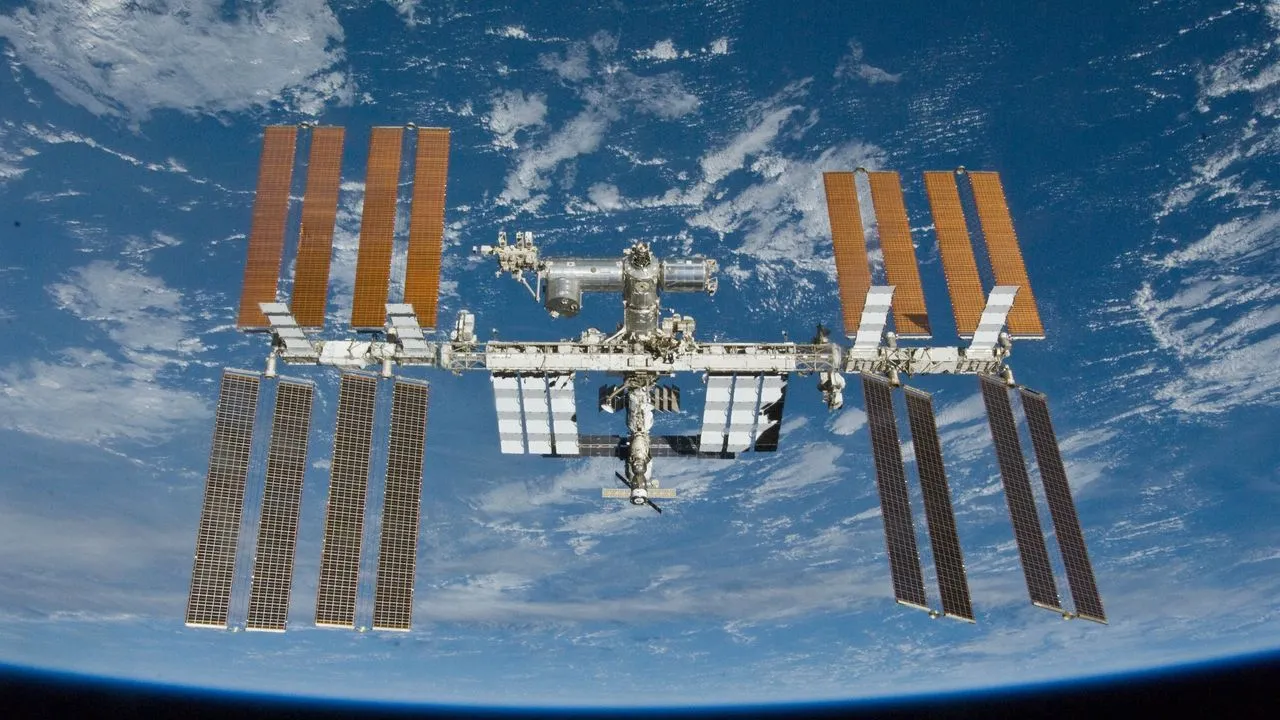
Auxilium Biotechnologies, a California-based company, says its AMP-1 orbital bioprinter produced kidney and liver tissue aboard the International Space Station for the first time. The result matters to decision-makers because it is a concrete proof point that in-orbit manufacturing of multiple clinically relevant tissue types may be feasible, not just a lab curiosity.
Auxilium Biotechnologies just pulled off a first: it bioprinted living kidney and liver tissue aboard the International Space Station, using its AMP-1 orbital bioprinter. The company made the announcement on July 9, and the experiments ran on the ISS in June, with the bioprinted materials returning to Earth on a SpaceX Dragon cargo capsule that splashed down in the Pacific Ocean on June 17.
Why this is a big deal, beyond the “space is cool” factor: the source says this is the first time either kidney tissue or liver tissue has been manufactured in space. In other words, Auxilium was not simply printing a small proof-of-concept structure, it targeted two of the most biologically complex tissue types and then demonstrated they can be produced in orbit using bioprinting, which is essentially 3D-printing living tissue.
Auxilium’s AMP-1 bioprinter, according to the announcement, used cell and tissue designs from the Wake Forest Institute for Regenerative Medicine (WFIRM) in North Carolina. In the ISS experiments, Auxilium bioprinted kidney, liver, and cartilage tissues, and the same machine also created 28 nerve repair implants. This “multiple products in one mission” detail matters because it shifts the conversation from one-off experiments toward repeatable operations, the part regulators, payers, and investors care about when they ask whether something can scale.
Auxilium CEO Jacob Koffler framed the milestone around manufacturing versatility and scalability, saying: "The ability to manufacture multiple tissue types alongside clinically relevant medical products highlights both the versatility and scalability of our technology," according to the statement published July 9. That pairing, multiple tissue types plus clinically relevant medical products, is doing quiet heavy lifting. Tissue printing in a controlled setting on Earth is one thing; demonstrating that you can generate more than one category of output in space, then recover it back on Earth for follow-up, is what makes in-orbit manufacturing feel less like science fiction and more like an operations problem that can be engineered.
WFIRM director Anthony Atala also highlighted the relevance to manufacturing medical devices and tissues in space. In the July 9 statement, Atala said: "The uniform cell distribution achieved aboard the space station points to real possibilities for manufacturing medical devices and tissues in space." Uniform cell distribution is not a flashy phrase, but in regenerative medicine, it is the difference between “we made something that looks alive” and “we made something that behaves like living tissue should.” The source ties this specifically to what was achieved aboard the ISS, which is key because microgravity and spacecraft environments add real constraints to how cells behave and how materials solidify.
This mission was not the first bioprinting experiment to happen on the ISS. The source points to a 2018 test by Russian cosmonaut Oleg Kononenko of a machine called the "Bioprinter Organ.Aut," which assembled cartilage cells using a magnetic field. Auxilium’s AMP-1 is described as a first-of-its-kind tool for producing multiple types of tissue in space, and also the first to make kidney and liver tissue in the final frontier. That distinction matters when you are comparing progress across space medicine programs, because it suggests a broader platform capability rather than a single demonstration tuned for one tissue type.
There is also an unmistakably commercial angle in Auxilium’s messaging. The company says flexibility will matter as commercial interests expand manufacturing hubs in space for biotech, healthcare, and advanced materials development. Another statement from Auxilium engineering vice president Isac Lazarovits underscored the “routine manufacturing operations in orbit” direction, saying the mission demonstrates what can be achieved when innovative technology is paired with strong collaboration. He added that demonstrating multiple product classes and meaningful production volume within a single mission is a milestone as Auxilium continues advancing toward routine manufacturing operations in orbit.
For executives, boards, and investors watching this space, the second-order implication is straightforward: if in-orbit bioprinting can be made consistent enough to generate multiple tissue types and device-like outputs, space stops being only a research destination and starts looking like a distributed manufacturing network. That could force strategic decisions across the value chain, from how companies structure partnerships between biotech and spaceflight operators, to how evidence packages are built when some parts of production occur off Earth. And for regulators and healthcare stakeholders, the source’s own emphasis on clinically relevant medical products raises the question of how quality systems, traceability, and post-return validation will be approached when the manufacturing environment includes orbit and a SpaceX cargo return pathway.
This story's Key Insights and Take-aways are locked.
Create a free account to unlock Executive Actions for one credit.
Register to UnlockAlways free for Executives Club members. Join the Club
More in Science

Alaska's 1,580-foot tsunami had warning signs. Scientists just found them.
Rapid glacier retreat, heavy rainfall, and thousands of tiny tremors preceded Alaska's 1,580-foot tsunami, a warning for every coastal community in a warming world.

The rare mutation that lets high-risk brains dodge Alzheimer's
Scientists found a natural defense against protein buildup, opening a new path to preventive treatments.

3,000 steps a day may halve Alzheimer's decline, study finds
New research links a modest daily walk to less tau buildup and nearly half the cognitive and functional decline, even for those with early signs.