

Backdated papers made Abramovich's yachts vanish from accounts, BBC finds
The BBC found backdated paperwork that made Abramovich's yachts and mansions disappear from his accounts, and why that matters for enforcement.
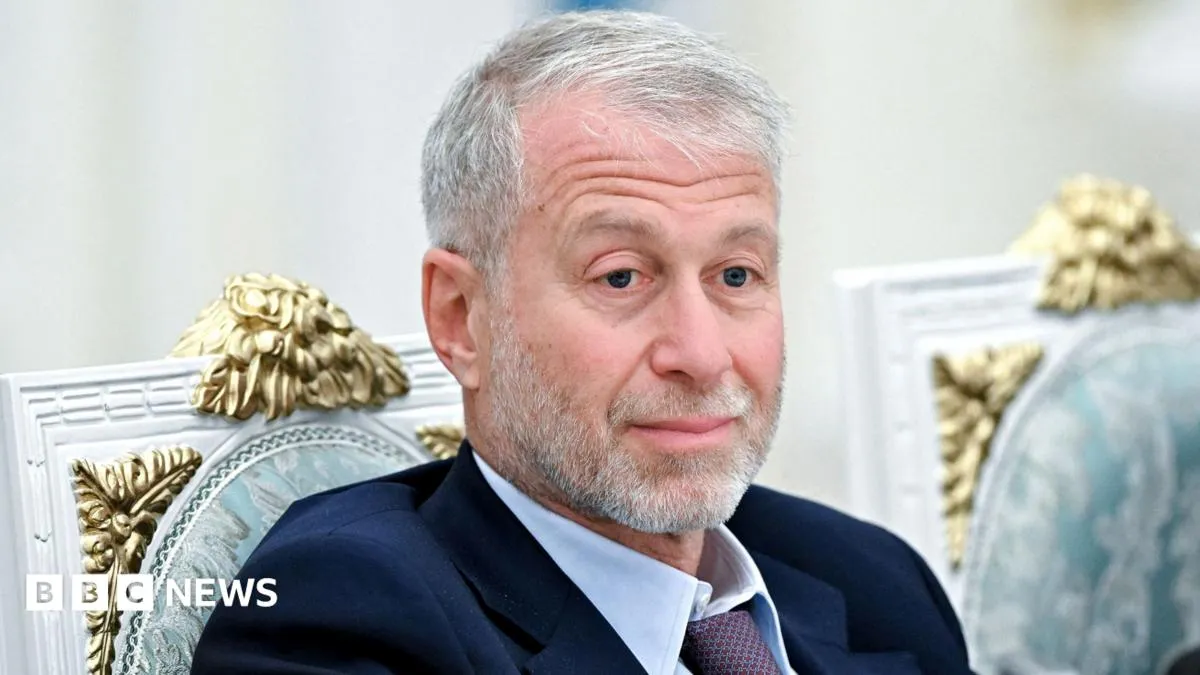
BBC investigators found that backdated documents were used to make Roman Abramovich's yachts and mansions disappear from his accounts, part of a scheme to evade tax on the Russian oligarch's wealth. The finding shows how document manipulation can hide assets from both tax authorities and sanctions enforcers, a warning for executives with complex asset structures.
The BBC's investigation found that backdated paperwork was used to make Roman Abramovich's yachts and mansions disappear from his accounts - a document trail designed to evade tax on the Russian oligarch's wealth. The falsified records are the latest evidence of how the sanctioned billionaire's financial footprint was engineered to be invisible to authorities, and they raise fresh questions about how much of his fortune remains hidden from tax collectors and sanctions enforcers alike.
The finding matters because it moves the Abramovich story from "aggressive tax planning" into the territory of active document falsification, which is a criminal matter in most jurisdictions. It also lands at a moment when Abramovich is already under maximum scrutiny: he was sanctioned by the UK and EU after Russia's full-scale invasion of Ukraine in 2022, and his assets in the West have been frozen. The BBC's reporting suggests that, even under that level of pressure, the paper trail was designed to conceal rather than reveal, which raises uncomfortable questions about what else might be hidden in plain sight.
For context, Abramovich is one of Russia's most prominent oligarchs, best known internationally as the former owner of Chelsea Football Club. He bought the club in 2003 and sold it in 2022, a sale forced by the sanctions regime that made his continued ownership untenable. His wealth has long been structured through a complex web of offshore entities, a common pattern among Russian billionaires that makes it difficult for authorities to trace what they actually own. Yachts and mansions are physically hard to hide, but on paper they can vanish entirely if the right documents are backdated.
The BBC's reporting shows how the scheme worked: backdated documents made the yachts and mansions disappear from accounts. In practice, that means paperwork was created or altered to suggest the assets had been transferred, sold, or otherwise removed from his holdings before they actually were. The effect is to make the assets invisible to tax authorities and, potentially, to sanctions enforcers who rely on the same records. For a man whose net worth has been estimated in the billions, the tax exposure from hidden luxury assets could be substantial, though the BBC's investigation does not put a specific figure on it.
This is a reminder that tax and sanctions enforcement depends on documentary evidence. When documents can be backdated, the entire evidentiary chain is compromised. Investigators increasingly cross-reference bank transfers, insurance records, crew manifests, and maintenance logs precisely because paper trails can be manipulated. The BBC's findings suggest that, at least in this case, the manipulation was sophisticated enough to keep the assets off the books for years, and the fact that it took an investigative journalism project to uncover it says something about the limits of routine regulatory oversight.
The broader enforcement landscape has been shifting since 2022. Western governments have created new tools to go after sanctioned wealth, from asset freezing mechanisms to enhanced due diligence requirements for the lawyers, accountants, and wealth managers who handle oligarch money. Those professionals increasingly face their own legal exposure when they facilitate opacity. The BBC's investigation is a reminder that the pressure is not just on the oligarchs themselves but on the entire ecosystem of advisers who make financial concealment possible.
The investigation also adds to a growing body of reporting on how sanctioned Russians have tried to shield assets from Western authorities. For enforcement agencies, it underscores the need to look beyond a single set of records and to build cases from multiple independent data sources. For the broader business community, it is a reminder that document integrity is not a compliance nicety; it is the foundation on which the entire system of tax and sanctions enforcement rests. When that foundation is compromised, the consequences ripple far beyond the individual at the center of the story.
The strategic stakes for executives and boards are clear. Backdated or falsified documentation can turn a tax issue into a criminal one, and companies that inherit assets with questionable paper trails - through M&A, distressed asset purchases, or partnerships - need to do deeper due diligence. The reputational damage of being linked to a sanctioned individual's evasion scheme can outlast any legal penalty, and the lesson from the BBC's investigation is that the paper trail is where the truth is hidden. For compliance teams, the takeaway is blunt: if a document looks too convenient, it probably is.
This story's Key Insights and Take-aways are locked.
Create a free account to unlock Executive Actions for one credit.
Register to UnlockAlways free for Executives Club members. Join the Club
More in Business

Elon Musk unveils a flying car, and SpaceX helped build it
The Tesla CEO's showcase at a SpaceX facility signals a future where road and rocket engineering converge.

Apple's $2,000 iPhone Duo opens preorders, taking on Samsung and Google
Apple's first foldable hits the market at a premium price, reshaping a category Samsung and Google have led.

Pope Leo XIV, first American pope, diagnosed with lung cancer
The 71-year-old Chicago-born pontiff underwent successful surgery on his right lung, and his diagnosis raises new questions about his AI-focused papacy and the Vatican's future.