

Beijing investor Song pays 159,800 yuan for a UBTech U1 Pro humanoid
The first home buyers are treating humanoids like gadgets, not robots for factories, and that changes adoption incentives.
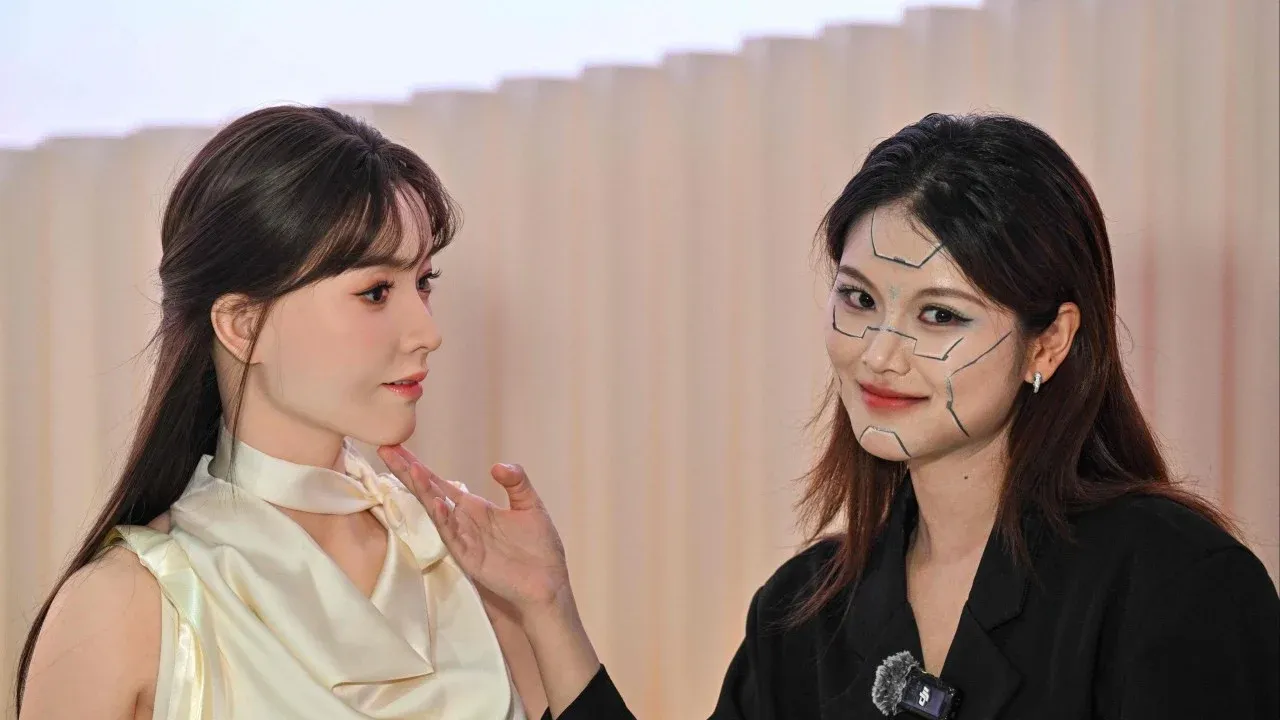
Song, a 39-year-old Beijing investor, paid 159,800 yuan (US$23,680) for the female version of UBTech Robotics' U1 Pro companion humanoid. Early consumer ownership signals demand is shifting from industrial pilots to “real life” experimentation at home, with commercial implications for humanoid makers.
When 39-year-old Beijing investor Song shelled out 159,800 yuan (US$23,680) for a companion robot, he was not buying a maid. He was buying what comes after factory demonstrations: the feeling that the future can sit on your couch.
Song, one of China’s first owners of a consumer humanoid, chose the female version of UBTech Robotics’ U1 Pro. In SCMP’s account, he framed the purchase as less about immediate household labor and more about embracing the cutting edge. His line, “The happiest part is often the waiting,” lands because it matches how early consumer tech adoption actually works: buyers know they are early, they accept imperfections, and they value the novelty and potential more than the fully automated reality.
This matters because humanoid robots have been stuck in a familiar loop. For years, they have been confined to factory floors and structured environments, where the rules are controlled, the tasks are scripted, and the risk is managed. The move from factory to home is not just a new customer segment. It forces a different product philosophy. Homes are messy. Lighting changes. Noise happens. People expect companionship, presence, and social cues, not just repeatable machine output. That is why a buyer like Song, who is explicitly treating the humanoid as a companion, is a stronger signal than a buyer who claims it will “cook meals” or “scrub floors.” Even the framing is telling: the product is being evaluated as a living experience, not a labor replacement.
UBTech Robotics, the Shenzhen-based maker of the U1 Pro, is now facing an emerging question for consumer robotics: can humanoids become consumer electronics in practice, not just in demos? The price tag Song paid, 159,800 yuan, is not trivial. It is the kind of number that only early adopters and enthusiasts can justify, meaning the early market is likely to be driven by identity and experimentation rather than pure economics. But early adopter behavior has a way of pulling product teams forward. When customers are in homes, the feedback loop becomes more immediate and more chaotic. Companies learn quickly whether their systems handle real-world edge cases, whether interactions feel natural, and whether “waiting” turns into impatience.
There is also a capital and narrative layer for executives and boards. Consumer humanoids do not just need technical progress. They need a credible story about adoption velocity and after-sales support. Homes are where you find out whether robots require too much maintenance, whether they break the way complex hardware breaks, and whether users can operate them without a technician in the room. A few successful consumer owners can create a compounding effect: word spreads through early-adopter communities, and that can accelerate the next round of buyers. A few high-profile disappointments can do the opposite just as fast. In that sense, Song’s purchase is more than a personal milestone. It becomes a reference point for the market’s willingness to normalize humanoids outside enterprise settings.
Regulatory posture is the other background variable shaping this transition, even when the story focuses on a single buyer. Robotics in consumer spaces typically intersects with safety expectations, data handling, and product accountability, while industrial deployments have historically lived inside more controlled compliance frameworks. As humanoids move into homes, companies have to think about how they demonstrate safety, how they manage user data from sensors and cameras, and how they communicate device limitations. Even if the SCMP piece is primarily about first impressions, the underlying shift is operational: consumer ownership increases the burden of proving reliability and trust.
For investors, founders, and operator-leaning executives in the humanoid space, the strategic stakes are blunt. If consumers treat humanoids like aspirational companions, companies can justify iterating on interaction quality, usability, and reliability, not just locomotion or basic autonomy. If consumers view the purchase as an expensive novelty that quickly disappoints, capital will tighten and product roadmaps will be forced back toward controlled enterprise deployments. Early buyers like Song are, in effect, testing whether the technology can earn a place in everyday life.
And that is why this first wave deserves attention from decision-makers beyond UBTech. The story is not “a robot costs 159,800 yuan.” The story is that someone actually bought it, at scale, as a real consumer product. When that kind of adoption begins, it changes how competitors pitch their timelines, how boards measure readiness, and how customers learn what to expect from humanoids when the showroom ends. The “waiting” Song describes may be a feature of the timeline, but it is also a reminder that the market is already choosing to bet on humanoids, one home at a time.
This story's Key Insights and Take-aways are locked.
Create a free account to unlock Executive Actions for one credit.
Register to UnlockAlways free for Executives Club members. Join the Club
More in Business

Anthropic’s Levant Alpöge cracks the Jacobian conjecture after 87 years
A Harvard valedictorian used Claude to hit a 1939 breakthrough, but the missing “why” is the real problem.

Uber buys Delivery Hero for nearly $15B, vaulting to top food delivery outside China
The deal doubles Uber's dual-services footprint and pushes a ride-and-eats bundling play into 50 more markets.

Epic and Google drop settlement bid, forcing rival Android app stores by July 22
Google told the court it is ready to carry third-party app stores starting Wednesday, July 22.