
Ben Affleck's AI 'heart attack' led to a $587M Netflix deal
Affleck's AI panic became a $587M Netflix deal. Now he won't say how he used it.
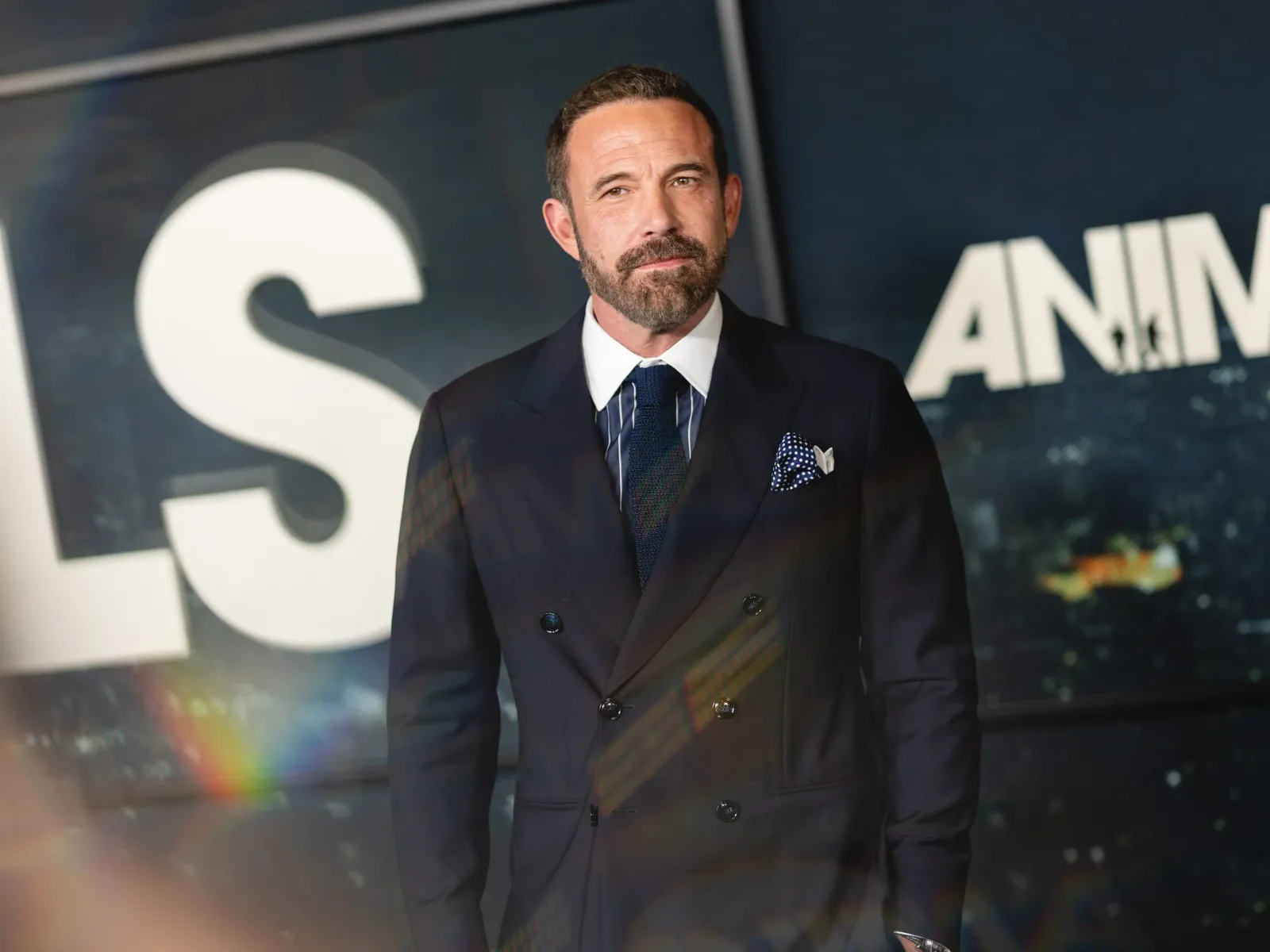
Ben Affleck said his first close look at AI gave him a 'heart attack,' prompting him to raise money and spend eight months shooting footage to train AI tools for film crews. His company, InterPositive, was acquired by Netflix for $587 million in July, and Affleck used the AI on his upcoming film 'Animals,' though he declined to specify how.
Ben Affleck's first close look at AI gave him a 'heart attack' - and it ended with a $587 million payday from Netflix. Speaking at the Bloomberg Screentime event in Los Angeles, Affleck recalled calling Matt Damon in a panic, convinced they were 'finished' as filmmakers. Instead of retreating, he raised money, spent eight months shooting original footage, and built InterPositive, the visual-effects company Netflix acquired in July for $587 million.
The actor-director's solution was to create a proprietary dataset, training existing AI models on professionally shot material rather than the scraped work of his peers. 'In order to obtain that information, I was concerned that most of the models being used had been trained on my peers' - people I know - work and I was uncomfortable with that,' Affleck said. His company takes open models built on publicly available footage and refines them for cinematic tasks, allowing filmmakers to further train the tools on their own productions and retain the proprietary nature of their footage.
Affleck's stance puts him in a distinct camp in a deeply divided Hollywood. While James Cameron and Martin Scorsese have embraced AI as a creative tool, Guillermo del Toro and Christopher Nolan have questioned its impact on jobs and artistic control. Affleck insists his tools are designed to support, not replace, people working in film. 'I don't believe that there will ever be "Just type it in and make a movie that people want to see,"' he said. 'But the whole effort behind it was to do something ethical, to do something that did not displace people, but that allowed people in this economy and this world to benefit from this technology.'
Affleck confirmed he used the AI tool 'for lots of things' on his upcoming film 'Animals,' mostly during post-production, but declined to specify exactly how. 'I'm a little bit hesitant to point out what they are or even talk about it because, like, in my business, we're trying to foster the illusion of reality, right?' he said, comparing it to a magician explaining a trick. The film is set to release on Netflix on October 9.
The $587 million acquisition underscores how aggressively streaming giants are betting on AI-assisted production. For founders and operators in creative industries, Affleck's model offers a template: instead of fighting the technology, build proprietary datasets that give artists control. His eight-month investment in original footage is a direct response to the ethical and legal gray areas of training AI on existing work - a concern that has sparked lawsuits and strikes across Hollywood. By owning the training data, InterPositive can offer filmmakers a way to benefit from AI without cannibalizing the work of their peers.
For executives weighing AI adoption, Affleck's approach highlights a key distinction: the difference between using AI as a replacement and using it as an augmentation layer. His insistence on 'hand in glove' collaboration with artists, and his refusal to disclose exactly how the tool works on 'Animals,' suggests that the competitive advantage lies not in the model itself but in the proprietary data and workflow. As Netflix prepares to release 'Animals' on October 9, the film will be a high-profile test of whether audiences can tell - or care - when AI is in the mix. Affleck's bet is that they won't, as long as the illusion holds.
Affleck's path from panic to payday also reflects a broader shift in how creative talent is responding to generative AI. Rather than lobbying for bans or waiting for courts to settle copyright questions, some high-profile figures are choosing to build their own infrastructure. The eight months of shooting were not just about gathering data; they were about creating a defensible asset that could be licensed or sold. Netflix's willingness to pay $587 million for InterPositive suggests that the market values not just the technology, but the trust and provenance baked into the training set. For boards and investors, that is a signal: the next competitive moat in AI may be the quality and ownership of the data, not the algorithm itself.
This story's Key Insights and Take-aways are locked.
Create a free account to unlock Executive Actions for one credit.
Register to UnlockAlways free for Executives Club members. Join the Club
More in Technology

A Chinese rocket deorbited over Minnesota and landed in a farmer's cornfield
Experts tied the fragment to LandSpace's Zhuque-2E, which launched on September 15 and shed debris over the American Midwest after deploying 10 satellites.

JPMorgan Chase deploys first $5B into defense tech and hypersonic missiles
The bank is moving off its balance sheet to back robot factories, hypersonic missiles, and supply chains, signaling a new era of bank-backed military innovation.

Cop fired after sharing Flock login with ICE husband: 983 searches
A Savannah officer's shared credential let an ICE agent run hundreds of plate searches on Hispanic drivers, exposing a surveillance backdoor.