

Ben Stokes retires from international cricket after the 3rd Test vs New Zealand
The England Test captain’s ECB statement locks in his exit after Nottingham’s deciding match, reshaping leadership for the next cycle.
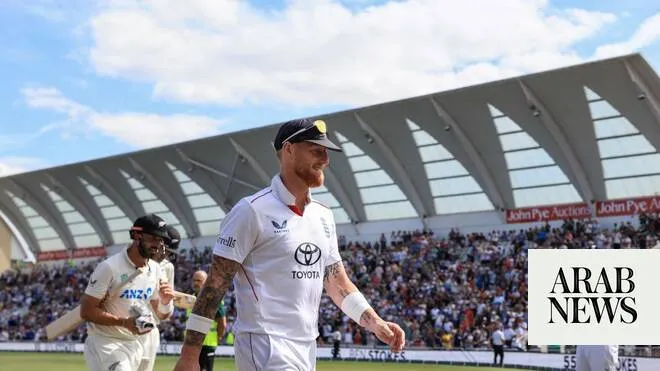
Ben Stokes announced his retirement as England Test captain and from international cricket, according to a statement from the England and Wales Cricket Board. The ECB says he will end his England career after the ongoing third Test against New Zealand in Nottingham, with the Test match set to be the final chapter.
Ben Stokes has announced his retirement as England Test captain and from international cricket, with the England and Wales Cricket Board saying the decision is effective after the conclusion of the ongoing third Test against New Zealand in Nottingham. In other words, this is not a vague “soon” exit. The on-field ending point is already scheduled, and the spotlight is already landing on what happens when the captain clock runs out.
Stokes, 35, is set to finish his England career after that match closes. As word spread of his decision, he received a standing ovation from the crowd at Trent Bridge, and there were more cheers shortly afterwards when he dismissed New Zealand’s Zak Foulkes on the fourth day of the third and deciding Test of a three-match series. It is a closing act that feels designed for the room he has spent years owning: pressure, big day, and a wicket in the most consequential Test of the series.
The timing matters because leadership transitions in elite sport are rarely just personal milestones. They are operational events. The Test captain is not only a batting and bowling decision-maker, but a public-facing anchor for team identity, selection conversations, and how England responds when momentum swings. The ECB statement frames Stokes as a “defining figure” of his generation, and that kind of role does not disappear cleanly. It leaves a vacuum that coaching staff and senior players will have to fill quickly, especially if England’s next Test cycle demands consistent performance rather than a rebuild that can take its time.
Stokes’ retirement announcement also lands amid an attention-grabbing week of disciplinary and performance turbulence. The source notes that Stokes returned to England duty at Trent Bridge after being omitted from a 253-run defeat in the second Test at the Oval for breaking a midnight curfew, alongside teammate Gus Atkinson, while celebrating at a London nightclub after the first-Test win over New Zealand. That detail is more than gossip. It shows how even star captains are managed through behavioral rules and selection consequences, and how the margins in international cricket are razor thin, even for someone with extraordinary match impact.
In cricket’s Test format, pressure is constant, but the leadership burden intensifies when results go against you. A captain’s value is often measured twice: first by what they do on the pitch, then by what they prevent off it. The curfew incident, the subsequent omission for the second Test, and Stokes’ return at Trent Bridge create a narrative of accountability and consequence. It is a reminder that, in elite setups, boardroom-level decisions and squad-level discipline are tightly linked. When the captain exits, that combined system still has to function. The question becomes whether England’s team culture can absorb the change without losing the intensity the ECB explicitly credits to Stokes.
ECB chairman Richard Thompson’s statement gives the clearest “why this matters” framing from the board’s perspective. Thompson said Stokes leaves the international game as one of England’s greatest ever cricketers, describing his “performances under pressure,” “relentless competitiveness,” and his “ability to produce the extraordinary when it matters most.” Thompson also tied that legacy to specific team-defining moments, including driving England to World Cup wins in 2019 and 2022 and Stokes’ “heroic Ashes innings at Headingley.” For decision-makers, that matters because it clarifies the standard England is trying to preserve: not just talent, but the ability to change outcomes at the worst possible moment.
There is also a strategic ripple effect beyond England. International cricket is a recurring tournament ecosystem where captains shape not only their own team, but the way opponents plan. A Stokes-led England is likely to have a distinct tactical and psychological profile, particularly in high-leverage Tests where the game can tilt quickly. His final dismissal of Zak Foulkes at Trent Bridge is a small moment in isolation, but it is also a reminder that England’s opponents will now have to prepare for a different kind of leadership and decision tempo after the third Test ends.
For executives, investors in sports infrastructure, and operators who think about brand and performance at the same time, the second-order implication is simple: star departures force systems to prove they are bigger than the star. The ECB is praising Stokes as “talismanic,” but the next chapter tests whether England has built leadership depth, succession planning, and cultural continuity. Stokes may be walking away from international cricket, but the value of his tenure will be judged by whether England can keep winning under pressure without the gravitational pull of one of its defining figures.
This story's Key Insights and Take-aways are locked.
Create a free account to unlock Executive Actions for one credit.
Register to UnlockAlways free for Executives Club members. Join the Club
More in Business

Bungie cuts most Destiny 2 staff as Sony says Marathon still matters
Herman Hulst confirms layoffs affecting most Destiny and some Marathon teams after Bungie admits Destiny fell short.

SK Hynix jumps 11% after seeking up to $29.4B in Nasdaq listing
The chip giant filed for a Nasdaq listing plan that could raise $29.4 billion, instantly reshaping investor expectations.
Micron revenue hits nearly $42B as AI memory lifts gross margins above 81%
Fiscal Q3 results crush estimates, prove AI memory is rewriting Micron's margins, and change the momentum math for the whole chip stack.