
Bezos says AI won't replace humans, but could cause a labor shortage
The Amazon founder, now running robotics and space bets, argues AI will shift work, not erase it.
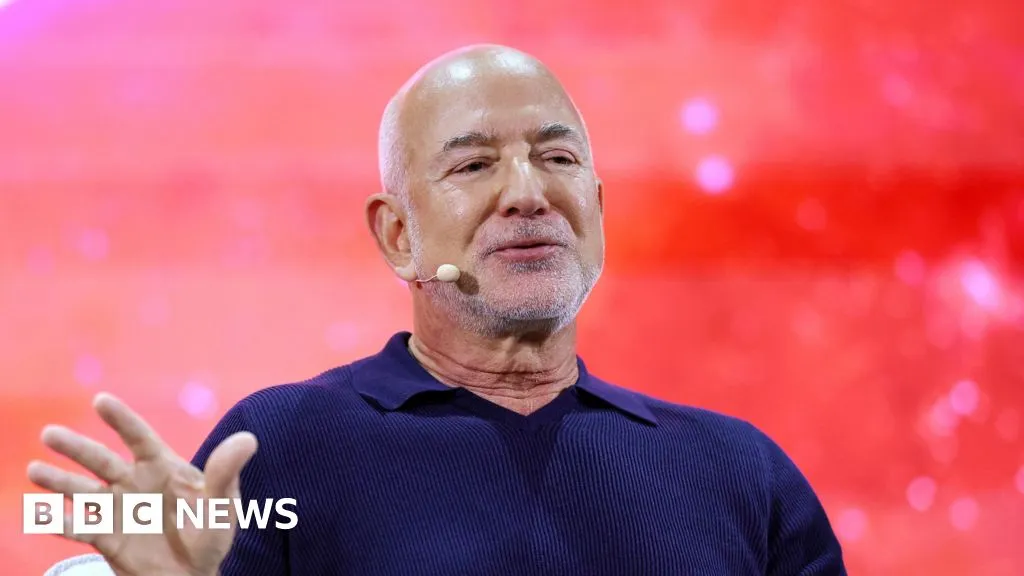
Jeff Bezos, the Amazon founder, says AI will create more jobs for humans rather than replace them. He also predicts it may lead to a labor shortage, with major implications for employers and policymakers.
Jeff Bezos has a fairly blunt take on AI and employment: it will create more jobs for humans, not replace them. The Amazon founder, who is now involved in robotics and space travel companies, also argues that this job creation could come with a nasty side effect, a labor shortage.
In other words, Bezos is not selling the classic “AI takes your job” story. His emphasis is on mismatch. If AI increases demand for certain kinds of work faster than the workforce can scale up, employers still end up “short,” even if the net direction is job growth. That is the stake here. Not whether AI changes tasks, but whether the economy can keep up with the people needed for the new mix of roles.
To understand why that argument lands, look at what AI adoption actually does inside companies. AI systems can automate parts of workflows and improve productivity, but they also tend to shift labor toward new responsibilities: building, operating, integrating, validating, and supervising AI-enabled processes. Even when roles change rather than disappear, the talent required is often different. That is where a shortage can show up quickly, especially in areas tied to robotics, software operations, data infrastructure, and field implementation.
Bezos’s current business interests matter because they hint at the type of labor mismatch he is worried about. The source notes that Bezos now has robotics and space travel companies. Robotics is a high-constraint sector, where physical deployment and operations demand technicians, engineers, supply chain specialists, and safety-focused operators. Space travel, meanwhile, is capital intensive and schedule sensitive, which means staffing needs can be rigid and fast-moving as missions ramp up. If AI accelerates capabilities in these industries, the bottleneck may not be demand for output. It may be the supply of people who can safely deliver.
This framing also interacts with how boards and executives think about risk. When leadership teams plan for AI, they often consider costs, productivity, and competitiveness. But Bezos’s perspective highlights a different kind of risk: operational friction. A labor shortage can slow execution even if technology is ready, and it can raise wages and training costs. In procurement-heavy environments, it can also ripple into contractor availability. So even if the headline direction is “more jobs,” the near-term experience for employers could still be scramble mode, because the pipeline does not fill overnight.
There is also a political and regulatory layer to this. Governments are already pressured to respond to AI-related labor disruption, but the policy response usually hinges on the type of disruption. If AI truly replaces work, you get one set of interventions, like income support and retraining mandates. If AI instead creates work but creates a shortage, you get another set, like immigration pathways, faster credentialing, apprenticeship expansion, and workforce planning. Bezos’s argument points decision-makers toward the second playbook, at least in part: focus on scale and throughput of talent.
For investors and founders, this is not just a labor market debate. It affects go-to-market timing. Companies building AI-enabled products may discover that selling the tech is only half the battle; deploying it safely and effectively requires staffing. That can turn “automation” into “augmentation with overhead,” where the growth constraint becomes hiring and training. For executives, that means the operating plan has to treat human capacity as a strategic asset, not an afterthought.
And for peers watching Bezos’s comments, the strategic stakes are clear. If a prominent AI proponent is warning of a labor shortage, boards should take it seriously as a second-order implication of AI adoption. Not because every company will face the same outcome, but because the mechanism is plausible: job mixes change faster than labor markets do. In the short run, that mismatch can determine whether AI delivers the promised productivity gains or runs into an execution bottleneck. In the long run, it determines whether societies and companies can capture AI-driven growth without leaving employers and workers behind.
This story's Key Insights and Take-aways are locked.
Create a free account to unlock Executive Actions for one credit.
Register to UnlockAlways free for Executives Club members. Join the Club
More in Technology

Nvidia's $89B data center quarter: the 9 companies cashing in
The AI buildout is minting fortunes beyond GPUs, and memory, cloud, and cooling suppliers are riding the same wave.

A YouTuber dissected the iPhone Duo and thinks he found crackgate's cause
CuriousHagi's teardown of Apple's foldable reveals a gear-like hinge that may explain why screens crack in the same spot within hours.

Google quietly links your phone number to every Android account on your SIM
Adding a SIM now ties your phone number to all Google accounts - and future accounts inherit it. Here's the security and privacy stakes.