
Billie Joe Armstrong launches Epiphone Les Paul Junior and Marshall 1959BJA signature gear
Two limited releases turn decades of Green Day’s tone into branded hardware, including Marshall’s first artist amp in 14 years.

Billie Joe Armstrong announced a limited-edition Radiant Red Epiphone Billie Joe Armstrong Les Paul Junior and his first artist signature amplifier with Marshall, the 1959BJA Artist Signature. For decision-makers, the move is a reminder that music brands are getting more direct, more engineered, and more collectible.
Billie Joe Armstrong has turned two pillars of his Green Day sound into new signature gear. The frontman announced a limited-edition Radiant Red Epiphone Billie Joe Armstrong Les Paul Junior, plus his first artist signature amplifier with Marshall, the 1959BJA Artist Signature. The through-line is the same thing players and fans obsess over: stripped-down, high-impact guitar tone. The difference now is that the tone is packaged as a defined product spec, not just a reputation.
Both releases are built around the kind of simplicity that made Armstrong’s work across decades recognizable, from Green Day’s 1994 breakthrough Dookie to the band’s more recent stadium-scale era. The new Epiphone model brings a bright red finish, a deliberately simple setup, and a layout tuned for fast playing and immediate sound. The guitar uses a single P-90 PRO pickup, with master volume and tone controls, plus a Lightning Bar wraparound bridge. That is the core pitch: less menu, more moment. It also includes a reproduction of Armstrong’s signature on the back of the headstock, and comes with a custom black hardshell case with a leopard-print interior.
If you zoom out beyond the gear porn, this is how modern artist branding works. It is not just a logo on the side of an existing product. It is a tone narrative translated into hardware details. Here, Epiphone is leaning into the visual and functional shorthand of Armstrong’s Les Paul Junior vibe, while keeping the build intentionally no-frills, aligned with his long-running punk approach. That matters because for many buyers, the “sound” they want is really a bundle of expectations: responsiveness, a certain kind of edge, and the ability to get from riff to feedback without losing the plot.
Marshall’s companion release is where the business stakes get sharper. Armstrong’s new amp marks Marshall’s first artist signature model in 14 years. That gap is not a trivial footnote. Signature amps are expensive to develop, and they require trust that the artist’s legacy can translate into consistent demand and premium pricing. The 1959BJA Artist Signature is baby-blue, and it is based on Marshall’s handwired 1959HW platform, which the company describes as the base for the amp’s construction and voicing.
Then Marshall adds a named modification, the custom “Dookie Mod,” inspired by the guitar tone Armstrong developed with producer Rob Cavallo during the making of Dookie. That is a specific creative anchor, and it also makes the product legible to both longtime fans and the broader guitar market. Marshall is essentially saying: this isn’t just “Armstrong inspired.” It is built on a known production-era tonal reference point. The amp’s look also reaches back into Armstrong’s own mythology. The baby-blue covering pays tribute to “Blue,” the heavily stickered Fernandes guitar that became one of his most recognizable instruments during Green Day’s early years.
Armstrong himself framed the news in terms of personal history and intensity. “I’m so overjoyed to have my own signature Marshall amp,” he said in a statement. “These amps have been a part of my musical life, from my heroes down to little old me. Turn it the f- up!” The wording is part of the marketing, but the substance is what executives should notice: the product pipeline is aligned to a recognizable catalog moment, and it’s timed during a high-visibility period for Green Day.
This gear drop lands while Green Day is busy on multiple fronts. Earlier this month, the band announced the soundtrack to its upcoming coming-of-age comedy Nimrods, due July 31. The 22-track set includes career-spanning favorites, four previously unreleased live recordings from the Hollywood Palladium, and a new song, “I’m Never Gonna R.I.P.” Armstrong has also been back onstage with his covers band, The Coverups. At recent shows, he was joined by Iron Maiden frontman Bruce Dickinson for David Bowie’s “All The Young Dudes,” and the group also covered Nirvana’s “Drain You,” which Armstrong dedicated to late L7 bassist Jennifer Finch.
Zooming out further, the band’s broader commercial momentum is still anchored by recent studio work. Green Day released its most recent studio album, Saviors, in January 2024, and it continued the band’s long-running Billboard presence following a catalog that includes Dookie, American Idiot, 21st Century Breakdown, and Revolution Radio. For the executives and operators watching adjacent categories, the pattern is clear: when artists remain culturally central, instrument brands can sell more than fandom. They can sell an engineered pathway to a sound buyers believe they already know.
Strategically, the second-order implication is not just that these products will be popular. It is that they model a more productized relationship between artist identity and technical specification. If you run a consumer hardware brand, a label, or a retail platform that sits near music culture, this is a reminder that differentiation increasingly comes from story plus circuitry: a recognizable look, a named modification, and a simple, repeatable “how to get it” experience. In an era where attention is fragmented and margins are pressured, turning a tone from a decades-long earworm into a purchasable, collectible object is one of the cleanest ways to monetize staying power.
This story's Key Insights and Take-aways are locked.
Create a free account to unlock Executive Actions for one credit.
Register to UnlockAlways free for Executives Club members. Join the Club
More in Entertainment

'It's a Magic Trick': Ballet Experts Say Rosalía's SNL Pose Is Impossible
Three ballet experts tell Rolling Stone Rosalía's gravity-defying SNL stillness shouldn't be possible - and why the debate is now part of the show.

Activision CMO: GTA 6 Will Boost Call of Duty, Not Bury It
Activision's top marketer says Rockstar's blockbuster will drive players back to consoles and into Modern Warfare 4, even as the company admits its recent strategy failed.
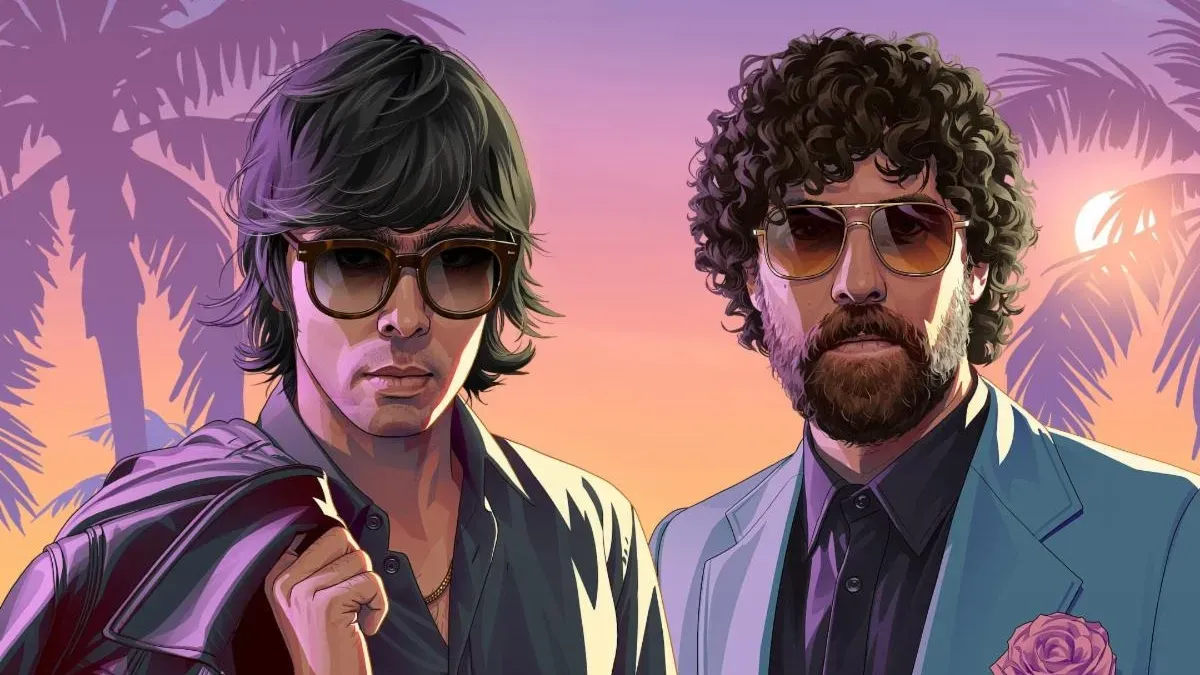
Justice to Score GTA 6, Share New Song with Tame Impala, SZA, King Gizzard
Rockstar taps the French duo for the GTA VI score, and the first taste is a genre-melting collab with Tame Impala, SZA, and King Gizzard & The Lizard Wizard.