
Billionaires buy 253M more Amazon shares while Buffett exits, despite AI spending drag
The 12-month share surge clashes with Berkshire's retreat. The difference is what they think AWS economics are about to do.
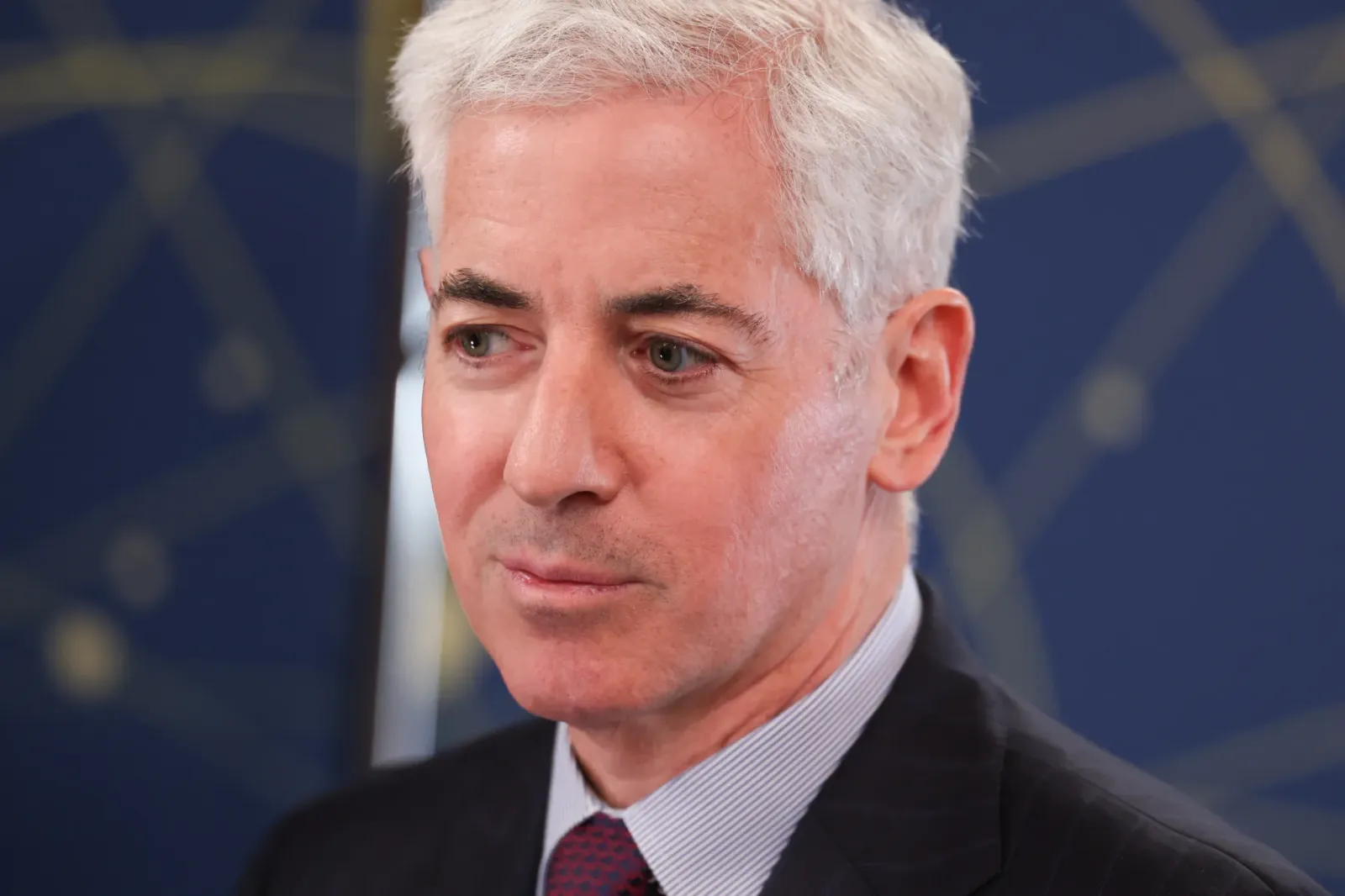
David Tepper, Bill Ackman, Seth Klarman, and Al Gore were among the institutions adding to Amazon, buying 253 million more shares over the past 12 months as Berkshire Hathaway trimmed and later listed no Amazon holdings. For decision-makers, the signal is a value vs. momentum standoff centered on AWS growth, heavy 2026 capex, and the timing of earnings recognition.
If you only watched the stock chart, you might miss the quiet part: big institutions bought 253 million more shares of Amazon during the past 12 months. At the same time, Warren Buffett's Berkshire Hathaway exited, trimming its Amazon position down to 2.3 million shares by the end of 2025 and then listing no Amazon holdings in its most recent filing.
So what’s going on? Fortune’s reporting points to a split mindset among billionaire and institutional investors: some think Amazon looks “expensive” on forward earnings because it is spending heavily right now, while others see that spending as the setup for AWS to keep accelerating. In other words, one camp is judging Amazon’s near-term multiple, and the other is betting that the business results will eventually catch up to the market’s AI narrative.
Start with the buy-side cast that made Amazon a bigger part of their portfolios. Fortune lists David Tepper’s Appaloosa Management, Seth Klarman’s Baupost Group, Al Gore’s Generation Investment Management, and Sanders Capital among the managers enlarging their stakes in the $2.5 trillion tech-and-retail giant. In Klarman and Tepper’s cases, the stock has become their single largest holding. Bill Ackman-led Pershing Square began building an Amazon stake from scratch about a year ago and now counts Amazon as its second-largest position at about $2.4 billion. Sanders Capital doubled its stake in the first quarter of 2026 to 29.8 million shares worth about $6.2 billion, making Amazon its third-largest holding behind Taiwan Semiconductor and Alphabet.
This “Amazon is a bargain megacap in the AI trade” argument is basically a timing game. Fortune frames it this way: while many companies tied to AI have soared, Amazon’s stock gains have been relatively modest. Nvidia is up 35% (as cited), Intel is up 496%, and Micron Technology is up 719% during the past 12 months, while Amazon is up 3.4% year-to-date and 10.1% over the past 12 months. The theory from value-minded investors is that the market is lagging the business. Amazon’s cloud division, AWS, posted what CEO Andy Jassy called its “fastest growth in 15 quarters” during its last earnings call.
In value logic, that gap matters because earnings are how markets “price now,” while investors actually live in “what will happen.” Charles Lemonides, founder of hedge fund ValueWorks, put it bluntly: “Their businesses are worth more than the share price and they’re in the catbird seat on just about everything.” Lemonides’ specific claim is a sum-of-the-parts case. He estimates AWS alone is worth about half of Amazon’s roughly $2.5 trillion market value, and the retail operation is worth the other half, leaving investors with advertising, media, streaming, and everything else as an added “free sweetener.” He also argues the case is stronger than a year ago because Amazon has kept executing across businesses while the stock has increased modestly.
The operational foundation for the bet is AWS. Fortune cites that AWS grew 28% in the first quarter of 2026 to $37.6 billion in revenue. It also cites Amazon’s backlog of contracted but not-yet-recognized revenue at $364 billion as of March 31. That figure is important because it suggests demand that has already been contracted. Fortune adds a major deal to the mix: Amazon’s deal for Anthropic, where Anthropic plans to spend more than $100 billion on AWS technologies over the next decade. Amazon previously invested $8 billion in Anthropic and agreed to invest up to $25 billion more.
Now layer in the reason the stock can look “expensive” even if you believe AWS is winning. Fortune reports Amazon expects to spend about $200 billion on capital expenditures in 2026, mostly for AWS, as it adds AI and cloud capacity. When a company is in a buildout, earnings can lag because the spending shows up before the returns. That is why investors can feel a disconnect between a business that’s growing quickly and a share price that isn’t running ahead as fast. On valuation, Fortune reports Amazon trades at roughly 27 times forward earnings, which is a higher multiple than Microsoft or Nvidia, both around 18-20 times, and above Meta Platforms at 17. Even the Nasdaq 100 at about 24 times looks “better” on this specific metric.
But some institutions are not treating forward earnings as the whole story. Bank of America has rated Amazon a buy with a price target around $310, based on a similar sum-of-the-parts analysis that pins most of the company’s worth on AWS. Morgan Stanley has previously noted that Amazon trades at a steep discount to its peers once you account for how fast profits are expected to grow.
And then there’s the other half of the tension: not everyone is buying, and some exits do not automatically mean conviction is fading. Berkshire Hathaway trimmed its stake from 10 million shares to 2.3 million shares by the end of 2025, and its most recent filing lists no Amazon holdings. Stanley Druckenmiller’s Duquesne Family Office cut Amazon common stock by about 94% to fewer than 46,000 shares, but also doubled his call options from 100,000 to 200,000 shares, which is a leveraged wager that the stock increases. James Kardatzke, CEO at Quiver Quantitative, cautioned against reading too much into sells. He noted that the motivation behind big moves “isn’t always clearcut” and that portfolio rebalancing can drive exits. He also pointed out the regulatory timing: 13F filings are filed quarterly, and firms have up to 45 days after quarter-end to file. In other words, these documents are a snapshot, and can indicate long-term trends rather than instant sentiment.
Fortune ties the broader appetite to market dynamics too. Lemonides said the split between buyers and sellers is about substance, not just noise, and pointed to a momentum-driven market where investors piling into momentum stocks have done best. Amazon is not rising explosively, so some investors might be tired of it. Yet he also said he is “thrilled” to build his position because, in a market where excitement begets excitement, his view is that Amazon could see that excitement “tomorrow.” His plan includes funding by trimming stakes in winners like Micron Tech and Intel.
The strategic stakes for decision-makers are straightforward even if the stories are messy. If you are a board member, CFO, or institutional allocator watching this pattern, you’re seeing two competing frameworks collide: valuation discipline versus “the business is worth more once capex converts to cash flow.” In an AI race where compute demand is the prize, AWS acceleration and contracted backlog are the scoreboard. The 2026 capex binge is the bill you pay to keep scoring. And the 253 million-share net increase is the market’s quiet vote that some investors believe the conversion is closer than the multiple suggests.
This story's Key Insights and Take-aways are locked.
Create a free account to unlock Executive Actions for one credit.
Register to UnlockAlways free for Executives Club members. Join the Club
More in Business

SK Hynix jumps 11% after seeking up to $29.4B in Nasdaq listing
The chip giant filed for a Nasdaq listing plan that could raise $29.4 billion, instantly reshaping investor expectations.

Micron revenue hits nearly $42B as AI memory lifts gross margins above 81%
Fiscal Q3 results crush estimates, prove AI memory is rewriting Micron's margins, and change the momentum math for the whole chip stack.

SpaceX sells $25B in debt under two weeks after IPO, despite $90B in orders
The satellite and rocket company’s quick $25 billion borrowing move signals how it plans to finance scale after going public.