

Bit Reactor’s Caydence Funk says Star Wars Zero Company is 30-40 hours, no NG+
A linear Clone Wars strategy game with an upfront campaign length, Funk confirms no New Game+
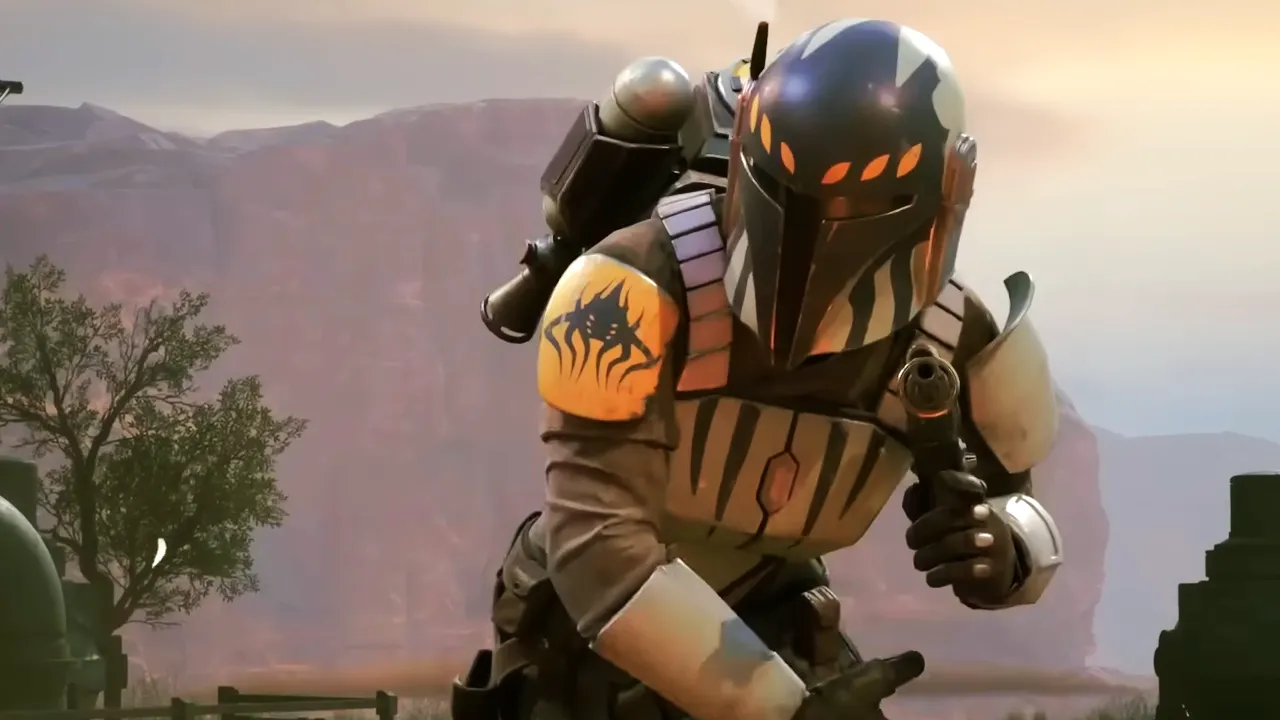
Bit Reactor lead producer Caydence Funk says Star Wars Zero Company’s main story campaign will take about 30-40 hours, depending on difficulty and strategy experience, and that there is no New Game+. For decision-makers, the design signals a deliberate tradeoff: lower replay-loop promises in exchange for a faster, more predictable value-delivery cycle.
Star Wars Zero Company is aiming at the rare consumer sweet spot: a full main story you can actually finish. In a recent Discord Q&A, Bit Reactor lead producer Caydence Funk estimated about 30-40 hours for the average player to complete the main story campaign, depending on difficulty level and experience with the strategy genre. That range is not “tiny,” but it is also not the modern expectation of getting dragged through another 60-hour branching behemoth or living inside a live-service season treadmill.
Funk also made the structure clear. The game is linear, with no branching paths or romances between operatives, and there is no New Game+ mode. The upside is immediate and practical: fewer reasons to avoid starting because you are worried you will never reach the end. The tradeoff is also immediate: if you come to strategy games for the repeatable arc of power scaling, then you are not getting an NG+ hook.
That combination matters because it flips a common market incentive. Many developers today are pulled toward systems that create long tail engagement, because engagement can be easier to measure than satisfaction. More branching, more side content, more “do it again but differently,” and replay loops that keep users returning even if they already “finished.” Here, Bit Reactor appears to be taking the opposite route. It is a one-campaign promise. Once you conclude your Clone Wars misadventure, the design gives you fewer mechanical reasons to dive back in.
Still, Funk did not leave players empty-handed on replay entirely. She noted that “players will unlock certain customisation options on subsequent playthroughs.” That is a key detail because it defines what the repeat loop is actually for. It is not a New Game+ with carryover progression and remixed difficulty. It is not a branching narrative with new romance outcomes. It is customization unlocks, which is the kind of incentive that can work for some players, but typically does not drive the same intensity of repeat commitment as a full NG+ experience.
There is another blunt implication tucked into what is not there. The article also notes there will be no official mod support. For a strategy audience, modding often becomes the unofficial long tail. Even when a game ships “complete,” the community extends it with alternate rules, units, and campaigns. Without official mod support, the pathway to endless replay shifts away from player creativity and back toward what Bit Reactor ships at launch. So if you are the type who counts on modders to turn a good base into a years-long ecosystem, the company is telling you that is not the plan.
Design-wise, this is not arriving from nowhere. The piece points out that this is not miles away from XCOM 2, which was technically linear but still delivered tactical choice through the combat layer. In other words, even if the campaign path is fixed, the moment-to-moment decisions can still scratch the strategy itch. That is a crucial distinction for executives watching what “linear” really means to players. Linear can still mean deep. It just means the world does not change because you made a branching narrative decision.
For context, the comparison to Midnight Suns is also telling. Midnight Suns, as described here, offered a “mountain of optional diversions” and “platonic relationships for you to develop.” That kind of content architecture is polarizing: some players love the relationships and detours, others feel it swallows time. Star Wars Zero Company seems positioned closer to the “tactical romp without swallowing up my life” philosophy that the author explicitly longs for. The business implication is that Bit Reactor might be targeting buyers who are burned out on sprawling RPG structures and overwhelmed by live-service commitments, not just Star Wars fans.
Then there is timing. Zero Company launches a little over a month away, on August 27, and it is described as ending a dry period with few notable releases, aside from a couple of remakes. In a crowded calendar, release timing can be a quiet advantage. If fewer major titles land around the same time, a linear game with a clearly stated campaign length can convert more effectively because players can plan their time and expectations. When you know it is about 30-40 hours and not a never-ending saga, you are more likely to say yes today instead of rationalizing “maybe later.”
For peers in similar roles, the strategic stakes are simple but sharp. This is a bet that predictability and focus can be a selling point, not a limitation. If customers respond to an upfront time commitment, boards and partners may recalibrate what “success” means beyond engagement metrics. The risk is equally clear: without NG+ and without official mod support, the company is relying on the shipped campaign and its tactical gameplay to satisfy, rather than on an extended ecosystem. In a market obsessed with replay and endless content, Bit Reactor is choosing a clean ending. The only question is whether players consider that a feature, not a compromise.
This story's Key Insights and Take-aways are locked.
Create a free account to unlock Executive Actions for one credit.
Register to UnlockAlways free for Executives Club members. Join the Club
More in Entertainment

'It's a Magic Trick': Ballet Experts Say Rosalía's SNL Pose Is Impossible
Three ballet experts tell Rolling Stone Rosalía's gravity-defying SNL stillness shouldn't be possible - and why the debate is now part of the show.

Activision CMO: GTA 6 Will Boost Call of Duty, Not Bury It
Activision's top marketer says Rockstar's blockbuster will drive players back to consoles and into Modern Warfare 4, even as the company admits its recent strategy failed.

Justice to Score GTA 6, Share New Song with Tame Impala, SZA, King Gizzard
Rockstar taps the French duo for the GTA VI score, and the first taste is a genre-melting collab with Tame Impala, SZA, and King Gizzard & The Lizard Wizard.