
BlackRock's $15.5 trillion now equals half the size of the U.S. economy
The world's largest asset manager grew 15% in a year, and the milestone reshapes the competitive math for every rival fund firm.
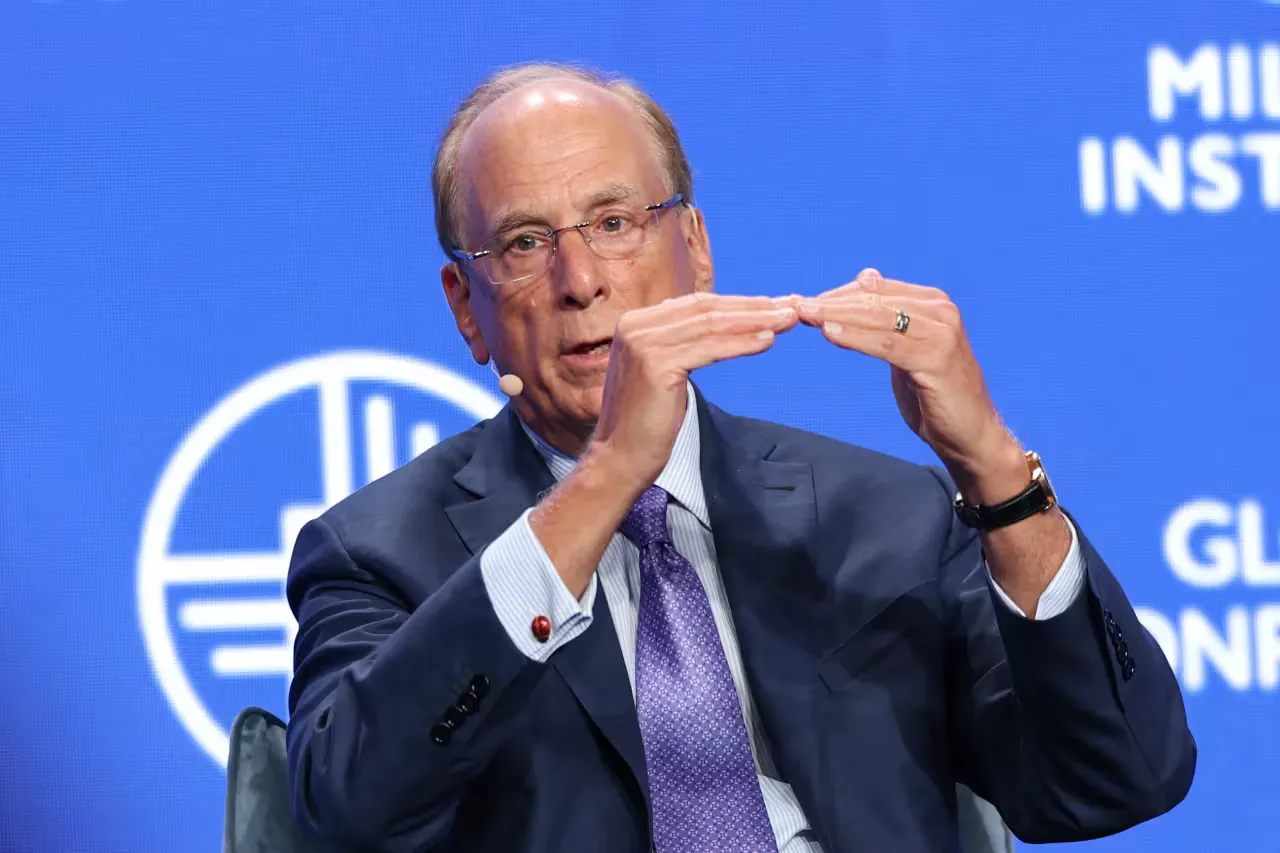
BlackRock, the world's largest asset manager led by CEO Larry Fink, said Wednesday that assets under management reached nearly $15.5 trillion, up 15% year over year. The scale, roughly half the size of the U.S. economy, concentrates unprecedented capital and voting power in one firm, a dynamic rivals, boards, and regulators cannot ignore.
BlackRock said Wednesday that its assets under management now stand at nearly $15.5 trillion, after 15% growth over the past year. That puts the world's largest asset manager at roughly half the size of the U.S. economy, a scale that was unthinkable for a money manager a generation ago.
The number matters because of how BlackRock makes money. Asset managers earn fees as a percentage of the assets they oversee, so a 15% jump in AUM flows straight into the revenue base. The growth reflects a powerful combination: rising markets inflating the value of existing holdings and steady inflows from investors who keep funneling cash into index funds and ETFs. For context, BlackRock's iShares franchise is the dominant force in exchange-traded funds, and every dollar that lands there adds to the pile. The compounding effect is what makes the firm so difficult to dislodge: each year of market gains and new inflows builds on the last, and the fee stream that results funds ever more aggressive investment in technology and distribution.
The milestone also deepens a long-running debate about concentration. BlackRock, along with rivals Vanguard and State Street, controls a significant share of the index fund market, which means the firm holds enormous voting power at thousands of public companies. When BlackRock votes proxies at annual meetings, its decisions can shape board elections, executive pay, and climate policy. That influence has made the firm a lightning rod for politicians on both sides of the aisle, even as CEO Larry Fink has tried to steer the firm away from the culture wars.
The growth rate itself is worth unpacking. Fifteen percent in a year is a strong result for any asset manager, and it signals that the bull market in stocks and the relentless shift toward passive investing are both still intact. For the broader industry, the math is uncomfortable: the bigger BlackRock gets, the harder it is for smaller rivals to compete on price, technology, or distribution. Scale begets scale, because BlackRock can spread its fixed costs, including the Aladdin risk platform, the trading desks, and the compliance machinery, across a far larger revenue base. A mid-size fund firm with $500 billion in AUM simply cannot match that efficiency, which is why the industry has seen a wave of mergers and why boutique firms increasingly pitch specialized expertise rather than broad index exposure.
There is also a regulatory dimension. BlackRock's size has drawn scrutiny from the Federal Reserve, which has flagged the systemic risks of large asset managers, and from lawmakers who worry about the firm's influence over corporate America. The firm has responded by expanding its own risk management capabilities and by publicly defending its stewardship approach. But the $15.5 trillion figure gives critics a sharper talking point: the scale of capital now concentrated in a single firm is historically unprecedented. The question is whether the milestone accelerates the conversation about designating large asset managers as systemically important financial institutions, a label that would bring stricter oversight and capital requirements.
For executives and boards, the implications are practical. Companies that rely on BlackRock as a major shareholder now face a counterparty with more resources and more data than almost any other investor. Engagement with the firm is no longer optional; it is a core part of corporate governance. For CFOs and treasurers, BlackRock's scale also matters on the product side: the firm's fee pressure has forced the entire asset management industry to cut costs, consolidate, or find niches where passive giants cannot easily compete. Pension funds and endowments that allocate capital have more leverage than ever when negotiating fees, because BlackRock's size lets it undercut almost anyone.
The strategic takeaway for peers is clear. Competing with BlackRock on scale is a losing game; competing on specialization, client service, and alternative assets is where the openings remain. The 15% growth rate also suggests that the shift toward passive investing has not peaked, which means active managers need to make an even sharper case for their fees. The firms that thrive will be the ones that treat BlackRock's scale as a constraint to design around, not a benchmark to chase.
What to watch next: whether BlackRock can sustain this trajectory if markets cool, and whether regulators move beyond talk. For now, the firm has crossed a threshold that changes the conversation. Half the U.S. economy is a lot of gravity, and everyone else in finance is now orbiting it. For investors, the milestone is also a reminder that the largest player in finance is getting larger, and that trend has consequences for fees, returns, and the shape of markets themselves.
This story's Key Insights and Take-aways are locked.
Create a free account to unlock Executive Actions for one credit.
Register to UnlockAlways free for Executives Club members. Join the Club
More in Business

Elon Musk unveils a flying car, and SpaceX helped build it
The Tesla CEO's showcase at a SpaceX facility signals a future where road and rocket engineering converge.

Apple's $2,000 iPhone Duo opens preorders, taking on Samsung and Google
Apple's first foldable hits the market at a premium price, reshaping a category Samsung and Google have led.

Pope Leo XIV, first American pope, diagnosed with lung cancer
The 71-year-old Chicago-born pontiff underwent successful surgery on his right lung, and his diagnosis raises new questions about his AI-focused papacy and the Vatican's future.