
Boots Ennis stops Xander Zayas in Round 7, unifies WBO and WBA super welterweight titles
A Brooklyn stoppage settles the unified crown in Ennis vs. Zayas, with three knockdowns doing the heavy lifting.
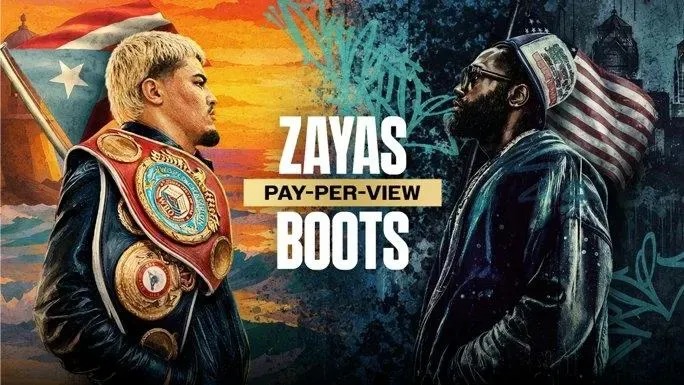
Jaron 'Boots' Ennis defeated Xander Zayas by stopping him in the seventh round, scoring three knockdowns to claim the unified WBO and WBA super welterweight titles in Brooklyn. For decision-makers and promoters, the result reshapes who controls the super welterweight conversation and what happens next in marquee matchmaking.
Jaron 'Boots' Ennis stopped Xander Zayas in the seventh round, scoring three knockdowns to claim the unified WBO and WBA super welterweight titles in Brooklyn. That is the whole headline in fight-night form: a stoppage at a specific moment, three knockdowns that changed the rhythm, and two major belts switching hands in one night.
The immediate consequence is that Ennis is no longer just a contender in the super welterweight tier. With the WBO and WBA super welterweight titles unified under him, he becomes the reference point for everything that follows in matchmaking, media plans, and the commercial gravity of the division. Brooklyn was the stage, but the real story is the power shift: one winner, one unified champion status, and a clear end to the Zayas run that night.
To understand why this matters beyond the ropes, you have to zoom out to how boxing titles work in the modern era. The WBO and WBA are two separate sanctioning bodies with their own belts and rankings. When a single fighter holds both at once, it simplifies what used to be a fragmented landscape. Instead of “who has the best case for the belts,” the market gets a single, unified figure around which hype, negotiations, and promotional calendars can organize.
That matters because boxing is not just a sport, it is a business with incentives. Promoters and networks chase certainty. A unified champion gives them an anchor for storylines, premium matchups, and audience targeting. It also reduces ambiguity in the bidding for future fights, because the champion position is clearer than juggling separate belt holders.
There is also the regulatory backbone to consider. Even though this specific report focuses on the in-ring outcome, the belts themselves exist because boxing governance systems recognize and enforce championship status. Sanctioning bodies certify title fights, ratify results, and place the champion in an official lane for defenses and mandatory challengers. A unification like this tends to create a tighter chain of consequences: next steps are less negotiable in practice because the title landscape is now unified, not split.
Ennis winning by stoppage in the seventh round adds another layer for stakeholders who build events. Knockdowns do more than signal dominance. They often influence how judges, referees, and the broader perception of the fight’s competitive gap play out for fans and for decision-makers who manage future pairings. Three knockdowns in the seventh round sequence is a decisive pattern, not a late-round fluke. When a fight ends decisively at that stage, it tends to compress the debate about whether the winner earned the right to be elevated.
For Zayas, the seventh-round stoppage is more than a loss in a single contest. It changes his position in the division’s narrative, since champions and near-champions tend to be the ones invited into the biggest conversations. When a contender loses to a unifying champion, their path forward usually requires a recalibration: fresh opponents, renewed ranking momentum, and convincing the market they are still the next must-watch threat.
For competitors and their teams, this result turns the super welterweight chessboard into a new shape. The unified WBO and WBA titles do not just decorate Ennis’s name; they set a target that others will orbit. That affects how camps pick training priorities, how promoters structure offers, and how fans build expectations about who can realistically challenge for both belts. In short, Ennis is now the gatekeeper figure, and everyone else is competing for the next crack at the unified crown.
And if you are thinking like an operator, investor, or executive tracking sports entertainment, the second-order implication is straightforward: unification compresses uncertainty and amplifies leverage. A unified champion can command higher attention and clearer branding opportunities, while opponents must spend more effort proving they are the correct next step. Tonight’s Brooklyn stoppage delivered that leverage in one night, with the seventh round and three knockdowns doing the work.
This story's Key Insights and Take-aways are locked.
Create a free account to unlock Executive Actions for one credit.
Register to UnlockAlways free for Executives Club members. Join the Club
More in Business

Bungie cuts most Destiny 2 staff as Sony says Marathon still matters
Herman Hulst confirms layoffs affecting most Destiny and some Marathon teams after Bungie admits Destiny fell short.

SK Hynix jumps 11% after seeking up to $29.4B in Nasdaq listing
The chip giant filed for a Nasdaq listing plan that could raise $29.4 billion, instantly reshaping investor expectations.

Micron revenue hits nearly $42B as AI memory lifts gross margins above 81%
Fiscal Q3 results crush estimates, prove AI memory is rewriting Micron's margins, and change the momentum math for the whole chip stack.