

Boots Riley says Scorsese’s AI deal proves Hollywood’s money can buy legit cover
Riley’s blast at Martin Scorsese’s Black Forest Labs endorsement turns one filmmaker’s AI move into a bigger question: who gives generative AI legitimacy, and why.
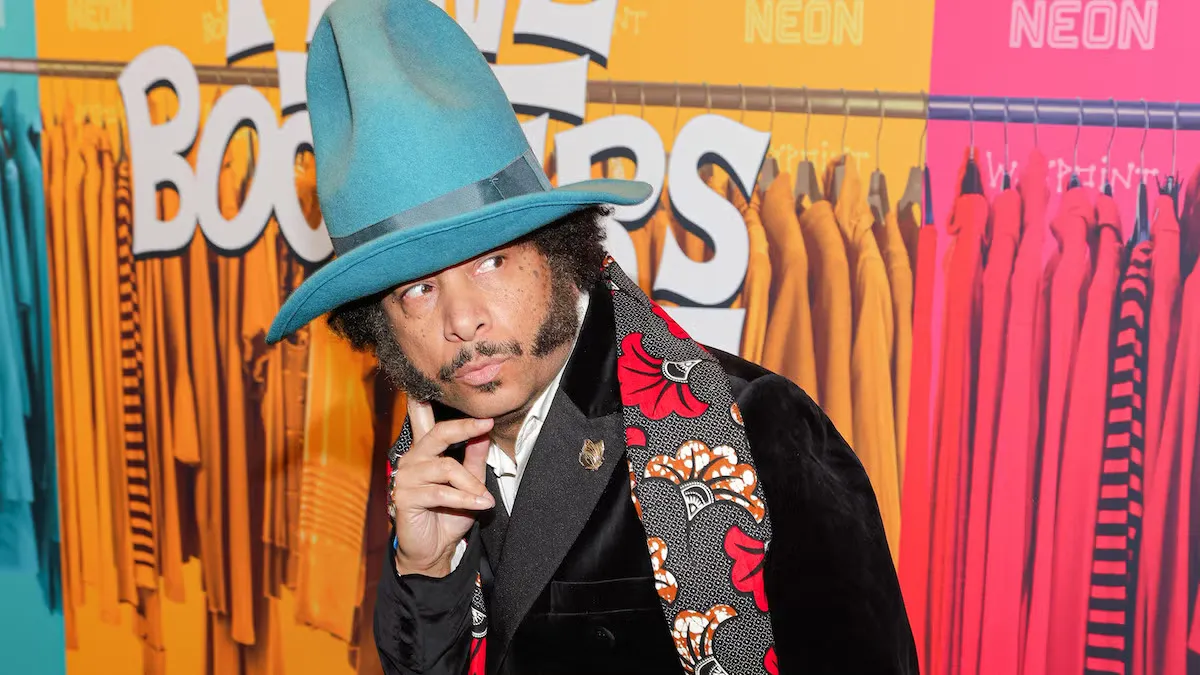
Boots Riley blasted Martin Scorsese after the 83-year-old filmmaker endorsed Black Forest Labs, an AI startup focused on image generation, and appeared in a company video using its FLUX software. The fight matters because it shows how quickly star power can normalize generative AI inside Hollywood, even as the tech remains deeply controversial and economically unproven in film.
Boots Riley did not just criticize Martin Scorsese this week. He treated Scorsese’s AI endorsement like a warning sign. The filmmaker behind “I Love Boosters” and “Sorry to Bother You” wrote on social media Wednesday that Scorsese “doesn’t give a f-k” after the 83-year-old Oscar winner signed on as an advisor for Black Forest Labs, an AI startup focused on image generation. That is the core of the story: one of cinema’s most respected names is now publicly attached to a generative AI company, and another prominent filmmaker is arguing that the move is less about creative progress than about money, influence, and industry cover.
The immediate trigger was Tuesday’s announcement from Scorsese and Black Forest Labs. Scorsese not only endorsed the company, he appeared in a video shared online by Black Forest in which he described a shot he wanted to pre-visualize. That idea was entered into Black Forest’s FLUX generative AI software, which then generated images based on his description. In his statement, Scorsese argued that “Cinema is a young medium, only around 125 years old, so we have to be open to how it can evolve.” He said he used 3D with “Hugo” and de-aging technology for “The Irishman,” and that this tool lets him share what he is visualizing “more clearly and efficiently” with his creative team, including the production designer, art designer and cinematographer, so they can build on it “to enrich cinematic intelligence.”
Riley’s response was blunt, profane, and rooted in a bigger industry argument. “My guess: at 83, they gave his family a gang of money (they throw tens of millions left&right) he wanted the income stream4them& feels like ‘AI’ will fall on its face anyway, so he doesn’t give a f-k,” Riley wrote on X. “If that’s not the case, extraf-k him. Separately, go see ‘I Love Boosters’ today.” In a follow-up, he mocked Scorsese’s defense of the technology: “Like- yeah the problem with filmmaking is ‘we didn’t have the tools to be creative before this.'” Riley then sharpened the point that matters for executives: “To be clear, my vitriol is not about him using it, I’d likely simply sneer at that in private. It’s about him using his cache 2 promote this and attempt to push the industry toward it. They need him,” he wrote. “1 Trillion spent on generative AI and it’s not saving anyone or changing film yet.”
That last line gets to the money and the pressure behind this debate. Riley’s number, whatever its exact accounting, is meant to emphasize scale: massive capital has already flowed into generative AI, and the case for immediate creative transformation is still unsettled. Black Forest Labs is trying to prove that the technology can help filmmakers pre-visualize and storyboard without giving up quality or craft. Robin Rombach, Black Forest Labs’ chief executive, said Tuesday that he was “super excited” that Scorsese is using the company’s technology and curious about exploring it, calling the partnership “such a great proof point that this works.” In other words, the company is not just selling software. It is selling credibility, and Scorsese’s name is the product demo.
That matters because Hollywood has not settled the AI question. The source frames the industry as split between creators who view generative AI as a threat and those who see it as a tool. Guillermo del Toro and Seth Rogen have disavowed the technology altogether. Demi Moore, speaking at this year’s Cannes Film Festival as a jury member and star of “The Substance,” took the opposite approach, saying resisting AI “is a battle that we will lose, so to find ways in which we can work with it, I think, is a more valuable path to take.” Scorsese’s move therefore lands in a very specific lane: not full-throated techno-optimism, but a practical, production-minded pitch that AI can help with pre-production and visualization. That is exactly why Riley is angry. If Scorsese is seen as one of the greatest filmmakers alive, then his endorsement does not just reflect an individual choice. It helps normalize the category.
There is also a broader business pattern here. In Sept. 2024, “Avatar” filmmaker James Cameron joined the board of members for Stability AI, the company behind the text-to-image model Stable Diffusion. At the same time, Cameron’s most recent film, last year’s “Avatar: Fire and Ash,” included a message assuring audiences that AI was not used in any capacity in the making of the film. That contradiction tells you everything about the current moment: the industry is experimenting, but it is also signaling caution to audiences and peers. For studio executives, agency heads, and investors, the lesson is not just that AI tools are arriving. It is that legitimacy is now a battlefield, and celebrity endorsements can move the argument faster than technical benchmarks can.
For decision-makers, this is the practical takeaway. If a filmmaker with Scorsese’s stature can help turn generative AI from a controversial tool into an acceptable creative aid, then the reputational stakes around these deals are bigger than the software itself. Companies like Black Forest Labs are not only competing on model quality, they are competing on trust, optics, and the ability to borrow prestige from people the industry already believes. Meanwhile, critics like Riley are signaling that the fight is not only about whether AI can generate useful images. It is about who gets to define what “creative” means, who gets paid to bless the shift, and whether Hollywood’s biggest names are validating a tool that the industry still has not decided it wants.
This story's Key Insights and Take-aways are locked.
Create a free account to unlock Executive Actions for one credit.
Register to UnlockAlways free for Executives Club members. Join the Club
More in Business

Anthropic’s Levant Alpöge cracks the Jacobian conjecture after 87 years
A Harvard valedictorian used Claude to hit a 1939 breakthrough, but the missing “why” is the real problem.

Uber buys Delivery Hero for nearly $15B, vaulting to top food delivery outside China
The deal doubles Uber's dual-services footprint and pushes a ride-and-eats bundling play into 50 more markets.

Epic and Google drop settlement bid, forcing rival Android app stores by July 22
Google told the court it is ready to carry third-party app stores starting Wednesday, July 22.