
Boris Cherny says compare Claude Code to engineers, not $20 subscriptions
The Claude Code architect argues the ROI math is wrong, and internal pilots beat subscription shopping.
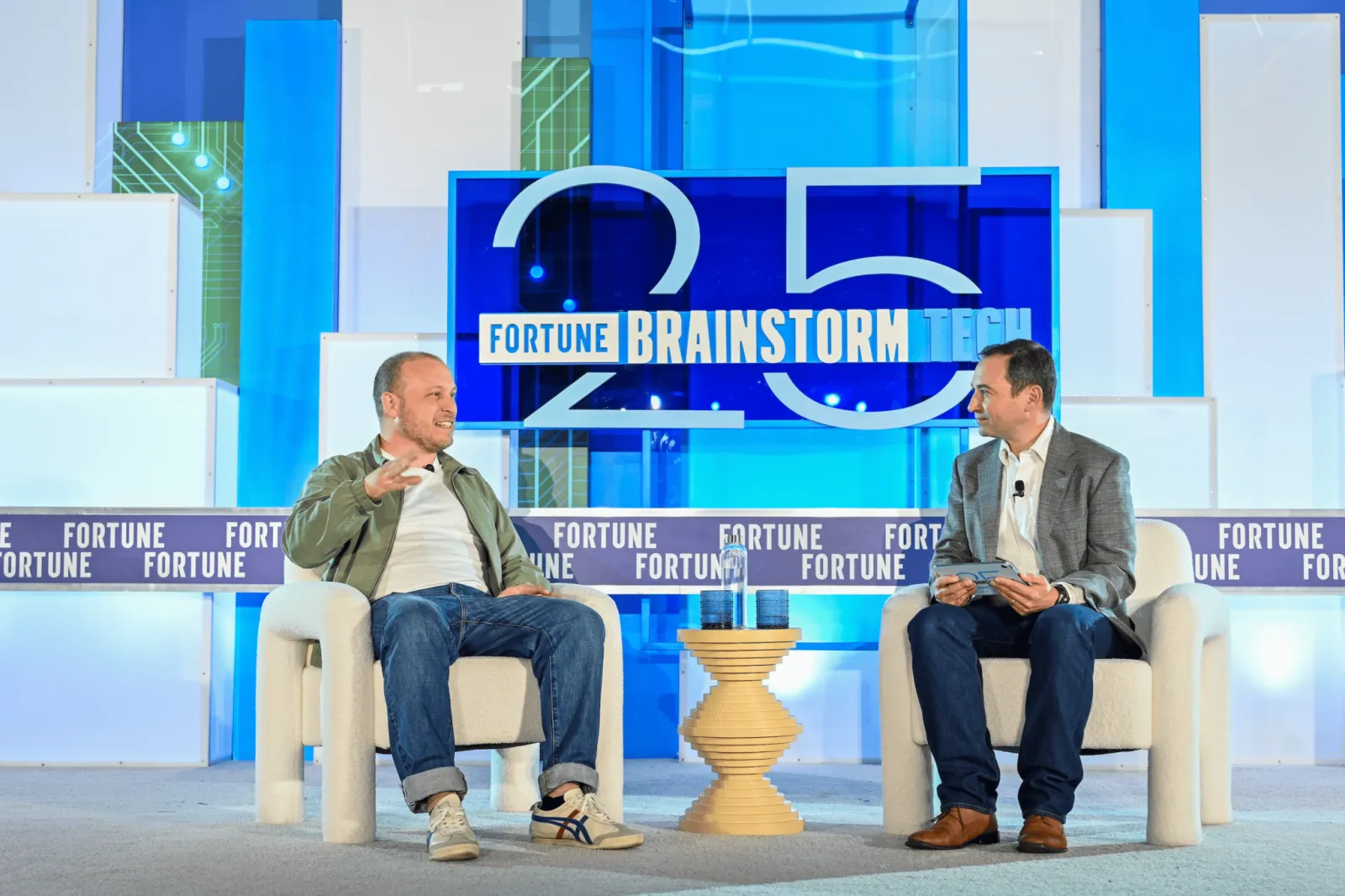
Boris Cherny, the architect behind Anthropic's Claude Code, says most companies are benchmarking AI costs against the wrong reference point. For CFOs and operators, that shift changes how you justify spend, measure adoption, and scale AI agent workflows safely.
Anthropic's Claude Code is scaling fast, with an annualized revenue run rate exceeding $2.5 billion, and Boris Cherny wants CFOs to stop doing cost comparisons that miss the real economics. Speaking at Fortune's Brainstorm Tech conference in Aspen on Monday, the architect behind Claude Code argued that teams often compare Claude Code to $20-per-month AI subscriptions instead of the alternative cost of getting the same work done.
Cherny’s core point is blunt: if you compare the ROI to legacy coding tools or consumer-style subscription products, you will likely undervalue what an AI coding agent can actually replace. “Compare it to what the cost would have been if an engineer had done this work,” he said. “That's the benchmark. That's what you should be thinking about.”
Why that matters right now is simple: in Cherny’s framing, the coding labor market is being reshaped. He described a world that used to have “50 million people in the world who could code,” then shifted to “now everyone is starting to be able to code.” The implication is not just about who can write code. It is about how businesses should measure productivity when software work can be accelerated by agents, and when the bottleneck moves faster than traditional budgeting cycles.
The negotiation dynamic he described shows how these mistaken benchmarks get exposed. Early Claude Code customers initially balked at the price compared with $20-per-month AI subscriptions, wondering whether Claude was really different. But Cherny said six months later, “everyone just kind of realized, ‘Okay, I guess it's not the same exact thing.’” That shift is essentially a re-anchoring problem: the buyer stopped treating Claude as “another model” and started treating it like a labor multiplier with different unit economics.
He also offered a concrete way to validate ROI internally: run adoption pilots. In practice, that means having one team use Claude Code and another work without it, then measuring differences in speed, security, and output quality. The goal is not to win an argument with an abstract ROI spreadsheet. It is to build the case with data, which Cherny said also helps with internal ROI politics.
Scaling the workflow is where the CFO conversation gets even more interesting. Cherny said he manages hundreds, sometimes thousands of AI agents on a given day at Anthropic. As automation improves one stage of the process, the limiting factor changes. At Anthropic, once code generation was automated, code review became the constraint. The company then automated review too, deploying teams of AI agents with distinct personas to collaboratively review every pull request, followed by security scanning.
This “each solved bottleneck reveals the next” pattern is familiar to operational executives, but AI makes it happen faster. It also changes what “efficiency” looks like. Instead of assuming a single tool will reduce costs in a straight line, Cherny’s description suggests executives should expect shifting constraints across engineering workflows: generation leads to review, review leads to security, and each shift forces new measurement and potentially new staffing or agent orchestration.
That operational humility is not just a process insight. Cherny also reflected on what the work has taught him personally: “One thing that I've learned is I am just often wrong.” He framed that as intellectual humility during a period when long-held assumptions about building and managing engineering teams are being challenged. He said Anthropic takes Claude and “put it at the center of everything that we do, of every single process,” including onboarding. For example, when new people join at Anthropic and want to file an expense report, they do not look it up in a wiki. They ask Claude: “How do I file an expense report?” In other words, the company uses the agent not only for software delivery, but for day-to-day operational execution.
Cherny’s hiring criteria carried the same theme: generalists over specialists, low-ego collaborators, and empiricists who defer to customer data over internal conviction. “We treat everyone on the team as essentially a CEO,” he said, with their job being to talk to customers and gather signals to figure out what to build next. For board members and investors, the second-order message is that AI-native organizations likely win not just by buying models or hiring prompt talent. They win by building teams and internal decision loops that can constantly reframe what matters, and then measure it quickly as constraints move.
This story's Key Insights and Take-aways are locked.
Create a free account to unlock Executive Actions for one credit.
Register to UnlockAlways free for Executives Club members. Join the Club
More in Business

Anthropic’s Levant Alpöge cracks the Jacobian conjecture after 87 years
A Harvard valedictorian used Claude to hit a 1939 breakthrough, but the missing “why” is the real problem.

Uber buys Delivery Hero for nearly $15B, vaulting to top food delivery outside China
The deal doubles Uber's dual-services footprint and pushes a ride-and-eats bundling play into 50 more markets.

Epic and Google drop settlement bid, forcing rival Android app stores by July 22
Google told the court it is ready to carry third-party app stores starting Wednesday, July 22.