

Boris Cherny says he manages tens of thousands of Claude Code agents daily
Claude Code now writes, tests, and reviews itself, pushing developers into manager roles and raising recursive-risk questions.
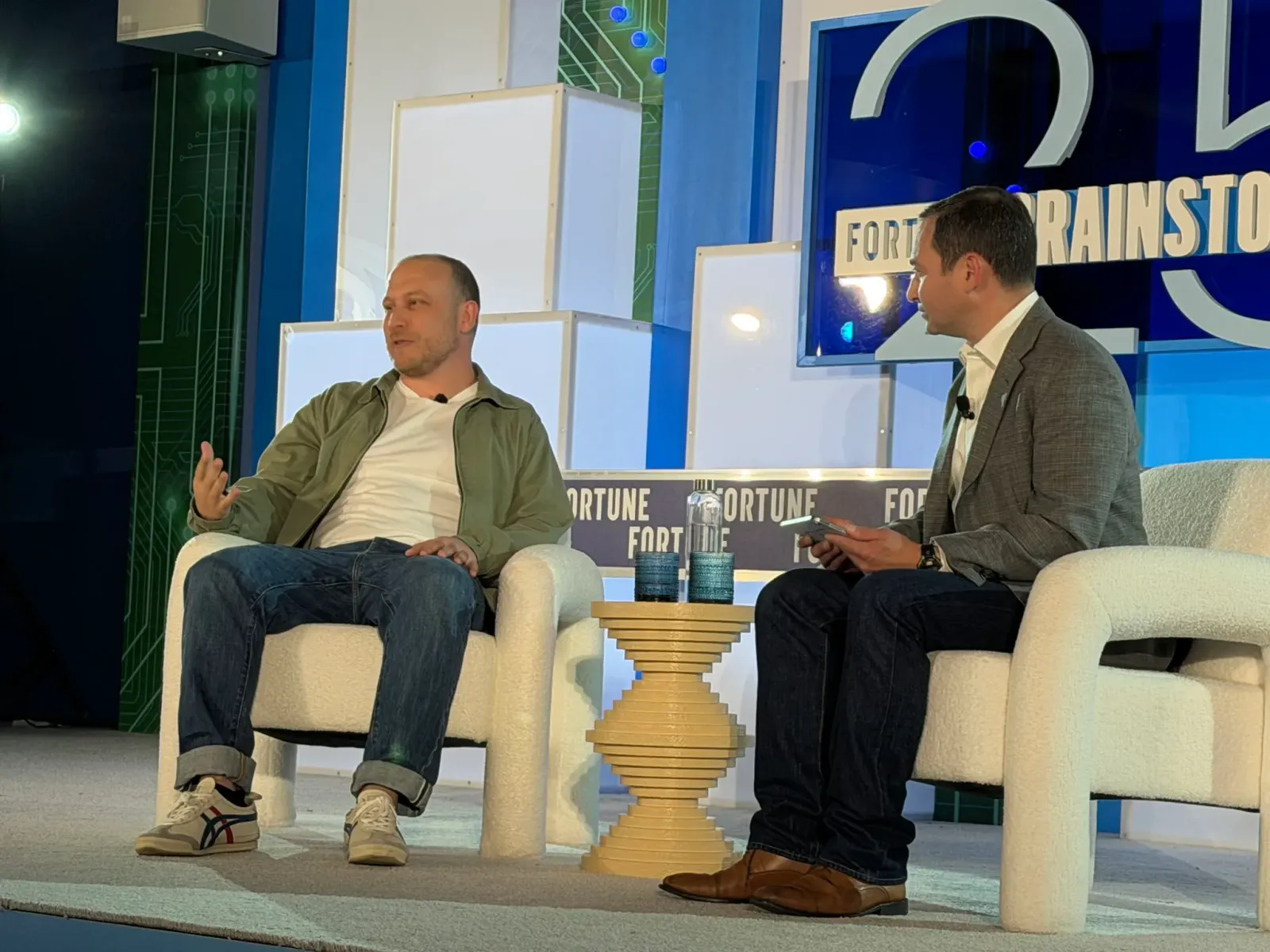
Boris Cherny, creator and head of Anthropic’s Claude Code, says he manages fleets that reach thousands and tens of thousands of AI agents at once. For decision-makers, the shift changes how software production scales and forces boards to revisit AI autonomy and safety assumptions.
Boris Cherny, the creator and head of Anthropic’s Claude Code, said he has stopped writing code himself for eight months. Instead, he manages a massive fleet of AI agents. During the opening session of the 25th annual Fortune Brainstorm Tech conference in Aspen on Monday, Cherny said, “This morning I was managing maybe a few hundred,” and added that “Some days it’s... thousands, or tens of thousands.”
He also made clear that this is not the old model of “one Claude, one prompt.” Even a year and a half ago, he explained, developers were running one instance of Claude Code in one terminal window. “Fast-forward to today, it looks very different,” Cherny said. “You have a Claude Code, but it has subagents that are other Claudes.” In his description, the user is no longer prompting Claude directly all the time. “It’s actually another Claude that does the prompting.” That is the heart of the operational change: the system is reorganizing itself into teams, not just executing single instructions.
So what’s actually being done by this agent fleet? Cherny said Claude Code is “fully writing itself,” and it is also doing its own security review. He framed the capability shift as moving from execution to ideation: “We’re starting to get to the point where it has ideas.” In that setup, Claude Code is looking at external repositories and platforms, including “GitHub” and “X,” and then working through “what should I build next.” He described waking up to results already in motion, saying, “Often, he added, he wakes up in the morning, and Claude has already taken action on a variety of ideas.” The developer’s day becomes less like typing and more like overseeing a continuously operating organization.
This matters because it changes the economics and workflow of software creation. Cherny compared the impact to the printing press, developed by Johannes Gutenberg around 1440, which lowered the cost of producing books and expanded literacy. His argument is basically that AI coding assistants could similarly lower barriers to building software, triggering a wave of innovation whose full implications we are only beginning to understand. You do not need to take the historical analogy literally to see the point: when code generation accelerates, the bottleneck shifts. Instead of “Can we write it fast enough?”, the question becomes “Can we direct it safely, verify it reliably, and keep it aligned with what the business and users actually need?”
Cherny also tied this self-building approach to measurable internal output. He said that with Claude Code writing all the code for Anthropic, there has been an 8x increase in the amount of code written at the company since the beginning of the year. And he offered a blunt product bet along with that operational reality: “I think this might be the first product that actually just takes off.” The subtext for operators and investors is simple: code velocity is turning into a competitive variable, and it can compound quickly if the system is writing, testing, reviewing, and proposing improvements without waiting on constant human intervention.
Importantly, Anthropic is not treating this as a pure technical victory lap. Last week, Anthropic published a blog post titled “When AI Builds Itself,” outlining how it is increasingly using AI systems to help develop future AI models. Taken far enough, and with enough compute, Cherny said that such an approach could lead to recursive self-improvement, meaning an AI system capable of autonomously designing, building, and improving its own successors. When asked if he was worried about recursive self-improvement, Cherny said yes: “It’s one of the big risks for AI.”
That risk framing is not just philosophical. Boards and enterprise risk teams are increasingly being asked to supervise systems that can operate across time, produce artifacts, run evaluations, and potentially influence what gets built next. When code generation starts to include self-review and ideation loops, the governance challenge moves from “Is the model accurate?” to “Is the process controllable?” and “What happens when the system’s objectives start to optimize internal outcomes faster than humans can audit them?” Cherny’s remarks, grounded in Anthropic’s ongoing efforts around AI-assisted model development, put that governance question front and center.
For peers building developer tools, investing in AI infrastructure, or overseeing product safety, the strategic stake is immediate: the role of the builder is “totally changing,” as Cherny put it. If Claude Code can spin up subagents, run prompting indirectly through agent-to-agent behavior, and already take actions overnight, then firms that still treat AI coding assistants as manual copilots may feel speed pressure. Meanwhile, firms that adopt agent fleets without strengthening verification, security review, and oversight processes may inherit the very risks Anthropic is publicly naming. The next phase is not only building faster. It is building with enough structure that speed does not become chaos.
This story's Key Insights and Take-aways are locked.
Create a free account to unlock Executive Actions for one credit.
Register to UnlockAlways free for Executives Club members. Join the Club
More in Technology

OpenAI says 10,000 agents cracked a 90-year math problem in 88 hours
The company's claim is audacious, but one mathematician is pushing back. Here's what it means for AI-driven discovery.

Meta still serves child sexual abuse ads on Instagram in India - BBC report
A new report following the BBC Eye investigation says the ads are still there - what it signals for every platform with a self-serve ad engine.

White House yanks 'Build the Wall' game after Tetris Company copyright warning
The administration's arcade game vanished in hours - and the takedown playbook every brand can learn from.