
Brad Bird shuts down a Ratatouille sequel, says Pixar interest won't change his mind
He tells Collider he has no interest in continuing Remy’s story, despite Pixar’s franchise pattern.
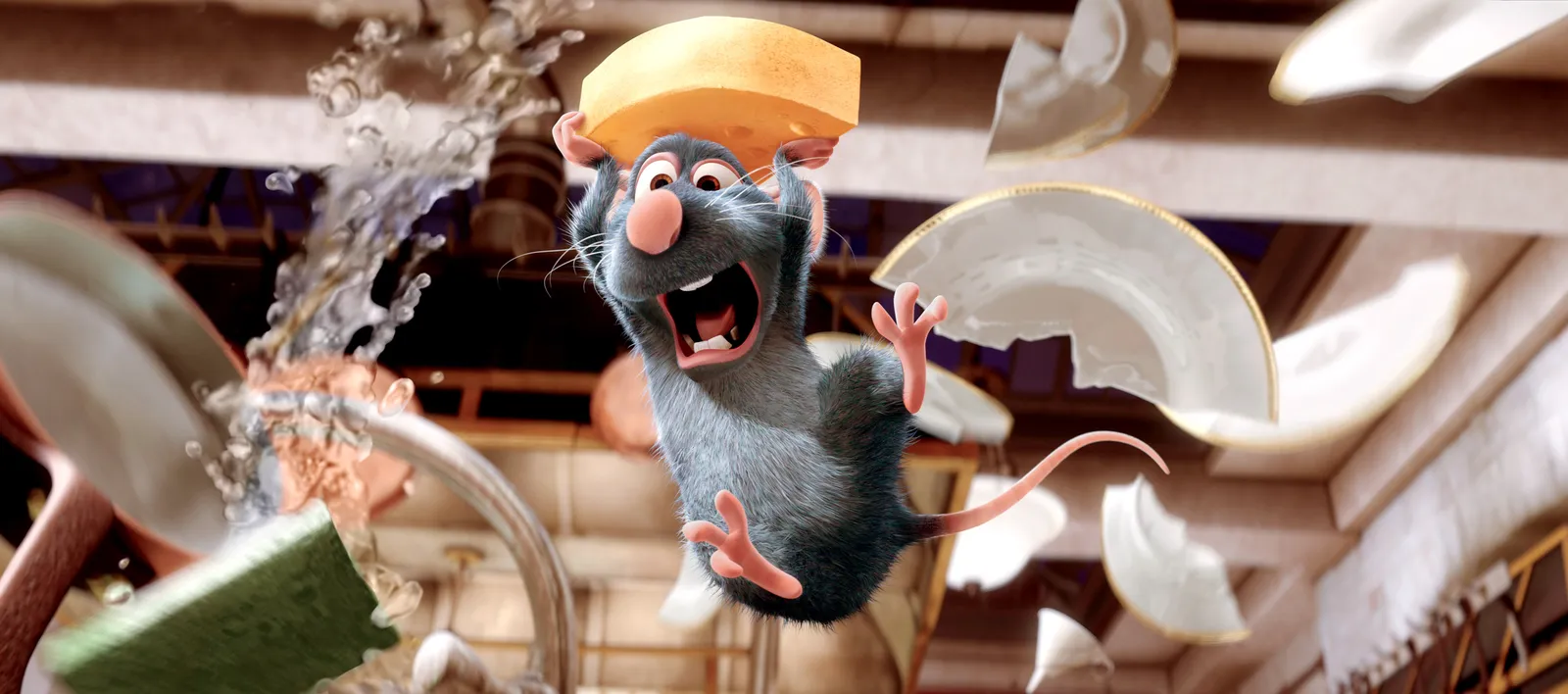
Director Brad Bird is blocking a Ratatouille sequel, telling Collider he has no interest in continuing the story of Remy. For decision-makers watching Pixar’s franchise machine, it is a reminder that even beloved IP can hit a creative dead end.
Brad Bird is shutting down the idea of a Ratatouille sequel, and he did it plainly. In an interview with Collider, the director said he has no interest in continuing the story of Remy, the rodent chef at the center of Pixar’s hit.
That sounds like a creative preference until you remember what Pixar tends to do. Pixar often franchises its beloved movies, and the source points to examples like Finding Nemo, The Incredibles, and Toy Story. In other words: the industry expectation is that hit stories do not end. Bird is describing the opposite for Ratatouille. He is essentially saying, “We told that story,” and he is not interested in reopening the kitchen doors.
Why this matters beyond fandom is that studios, boards, and investors live and die by patterns. Animation is expensive. Marketing is expensive. So when a property works, the default operating mode becomes extension: sequels, follow-ups, spin-offs, and brand reinvention that feels like a sequel even when it is dressed differently. Pixar is not the only animation player with that instinct, but it is one of the most consistent, and the source explicitly frames that franchise tendency as a real business behavior, not just a fan theory.
So what does it mean when a director, who already proved he can make a crowd-pleasing world, refuses to continue? It is a friction point between two kinds of leverage. On one side you have executive leverage: the studio’s interest in reusing brand equity and audience goodwill. On the other side you have creative leverage: the director’s claim that the story itself should not be stretched because the ending is the product. Bird’s Collider comments land right in that gap.
There is also a momentum issue. The source notes that “Toy Story” fifth installment has opened, and it references that Pixar franchises multiple classics. That is important because it signals that, at the studio level, the franchise pipeline is already active and visible to the market. When a director blocks one sequel, it does not kill Pixar’s business model. It just reroutes it. Instead of Ratatouille 2, the studio can double down on other existing series, pursue different original ideas, or find a way to keep audience attention moving without relying on Remy.
From a decision-maker perspective, this is less about Ratatouille specifically and more about how you manage expectations across the org. Boards and executives do not want surprises, especially when the market starts pricing in sequel momentum. If Pixar is known for franchising, and fans naturally ask for another entry, a public “no interest” from the director is a signal that creative boundaries are not negotiable. You can still build a lineup. You just cannot assume every hit will become a sequel.
It also highlights a subtle incentive problem that shows up in entertainment: if audiences believe a movie will be extended forever, they start evaluating the next installment not on story quality but on whether it “should exist.” That puts pressure on everyone involved, from writers to producers to marketing. Bird’s position offers a counterweight. The source frames his stance as having no interest in continuing Remy’s story, not as a promise to improve it, polish it, or modernize it. In other words, he is not dangling a version of the sequel that “might be different.” He is closing the door.
Second-order implications follow. Studios sometimes use franchise confirmations to stabilize planning cycles and internally align product calendars. When a director shuts down an obvious sequel, it forces alternative commitments. That could mean shifting development resources away from a sequel concept and toward other IP or original projects, which changes timelines and staffing. It also affects marketing narratives: instead of telling audiences “the next one is coming,” the studio has to keep the brand warm through other vehicles. And for executives, it is a reminder that brand equity is not the same thing as creative permission.
The strategic stake for peers in similar roles is straightforward. Pixar’s history of franchising, cited in the source through Finding Nemo, The Incredibles, and Toy Story, shows how a studio can build predictable growth from familiar stories. Brad Bird’s “no interest” stance, however, shows the limit of predictability when creativity and authorship are treated as real constraints. In media businesses, predictable demand helps, but it does not override the artistic decision that the story has already been told. For executives and boards, the takeaway is not to stop planning for sequels. It is to plan for the possibility that the sequel ceiling is set by the people who made the original story resonate in the first place.
This story's Key Insights and Take-aways are locked.
Create a free account to unlock Executive Actions for one credit.
Register to UnlockAlways free for Executives Club members. Join the Club
More in Entertainment

Russell Brand's accuser 'bewildered and confused' as he denies 7 sex charges
The criminal case against the comedian is a live test of how media companies manage talent risk when serious allegations go public.

'It's a Magic Trick': Ballet Experts Say Rosalía's SNL Pose Is Impossible
Three ballet experts tell Rolling Stone Rosalía's gravity-defying SNL stillness shouldn't be possible - and why the debate is now part of the show.

Activision CMO: GTA 6 Will Boost Call of Duty, Not Bury It
Activision's top marketer says Rockstar's blockbuster will drive players back to consoles and into Modern Warfare 4, even as the company admits its recent strategy failed.