
Brian Lacki says aliens could build galaxy-eating black holes larger than galaxies
Why astronomers are now hunting “stupendously large black holes,” and what that could mean for the search for life.
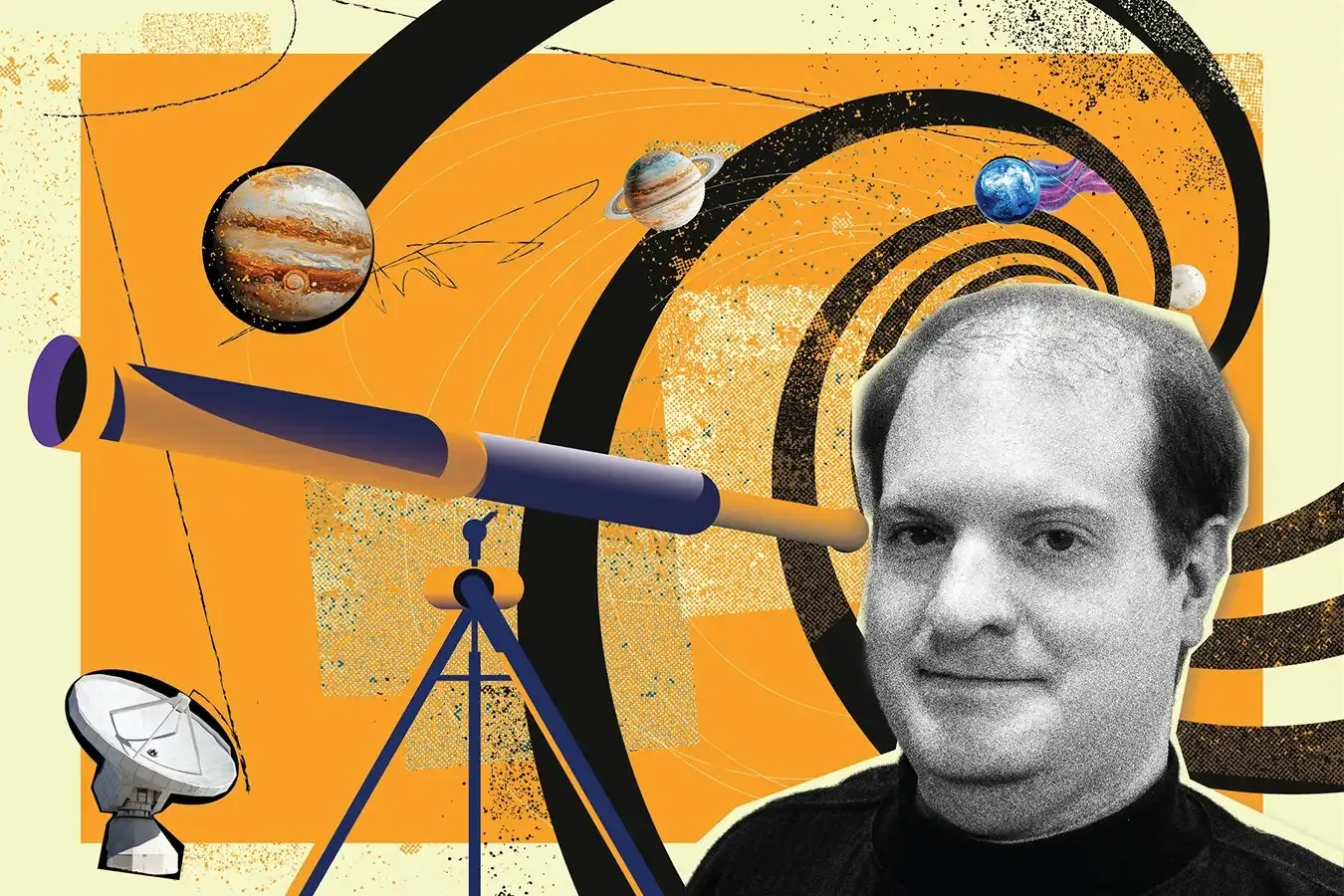
Brian Lacki discusses a new push by astronomers to look for black holes bigger than galaxies and what “stupendously large black holes” could be used for by alien civilizations. For decision-makers funding science and strategy around discovery, the big implication is how radically the target changes when you consider advanced intelligence, not just nature.
Astronomers have started looking for black holes bigger than galaxies, and one physicist, Brian Lacki, argues these “stupendously large black holes” are not just a curiosity. He frames them as an intriguing possibility for how alien civilizations might use extreme astrophysics, which is a very different lens than the one most people use when they think about black holes. In other words, the search is moving from “what does nature do?” to “what might an intelligence build, if it had the time, resources, and ambition?”
That shift matters because “bigger than galaxies” is not a minor adjustment to existing models. It signals the hunt is targeting a regime that would force astronomers to explain not only how such objects could form, but also what observations would confirm them. The source highlights the central idea: the universe may contain black holes far larger than galaxies, and their existence, if found, would be hard to dismiss as merely an incremental extension of known populations.
So why should anyone care beyond the romance of cosmic weirdness? Because the method of thinking changes. When astronomers search for black holes, they are typically looking for natural astrophysical processes: collapse, mergers, growth over cosmic time. Lacki’s framing adds a second storyline, one where advanced civilizations might treat such black holes like infrastructure. That is the provocative part: if “stupendously large black holes” can be constructed or engineered, their presence becomes a potential artifact, a signature that something purposeful sits behind the scale.
This is also where incentives start to tug on the research ecosystem. Telescopes, instruments, and time on observing campaigns are scarce. Once the target list changes, the entire allocation logic changes with it. A “bigger than galaxies” claim pulls attention toward new detection strategies, new analysis pipelines, and often new collaboration patterns between teams that specialize in different wavelength regimes or theoretical modeling. Even without any claims of technology transfer, the research org chart can feel the impact. Boards and senior leaders in science organizations, research funders, and universities tend to follow what looks measurable, fundable, and publishable. A search that reframes black holes as possibly engineered by alien civilizations naturally pushes teams to sharpen what counts as evidence.
There is also the regulatory and governance angle, even for space and astronomy. While space science is not regulated like financial markets, scientific governance still has its own equivalent: how claims are vetted, how data is shared, and how institutions guard credibility. If the community begins to treat “stupendously large black holes” as a plausible set of objects for the hunt, then institutions have to decide how to handle uncertainty. The crucial executive question becomes: will decision-makers support efforts that are inherently speculative, as long as the underlying observations can be scrutinized and repeated? Lacki’s scenario is intriguing, but it is built on the existence of a new observational target, not on unsupported sensationalism.
The second-order implications for leaders are subtle but real. First, it changes how success is defined. In a purely natural-physics scenario, confirmation might test models of black hole growth and structure formation. In a possible intelligence scenario, confirmation might also guide a search for other anomalies that fit a coherent pattern. That means strategy could become more cross-disciplinary. Even if astronomers remain cautious, the “alien civilisations might use them” framing encourages connecting black hole observations with broader concepts: energy extraction, extreme environments, and the ways advanced life might shape what we see.
Second, it changes how boards evaluate risk. The risk is not only “will we find them?” It is “will we find them and then still be unable to interpret them?” Extremely large targets can create ambiguity, because alternative explanations might also be consistent with some observational signatures. Lacki’s discussion makes the point that the possibility is intriguing, but not effortless to validate. That means organizations supporting the work need to be comfortable with staged milestones, transparency around uncertainties, and a willingness to pivot detection strategies as evidence accumulates.
Finally, for peers in leadership roles across science, tech, and funding, this is a stress test of how to back discovery when the story is bigger than the dataset. The source’s core message is that astronomers are beginning this search now, and Lacki’s framing adds a compelling reason to take “stupendously large black holes” seriously. If such objects are detected, it would reshape not just astrophysics, but also the operational definition of what a meaningful signal looks like in the search for life. For anyone building or allocating toward discovery, that is the strategic stakes: you are not just funding instruments, you are funding the future shape of questions.
This story's Key Insights and Take-aways are locked.
Create a free account to unlock Executive Actions for one credit.
Register to UnlockAlways free for Executives Club members. Join the Club
More in Science

Alaska's 1,580-foot tsunami had warning signs. Scientists just found them.
Rapid glacier retreat, heavy rainfall, and thousands of tiny tremors preceded Alaska's 1,580-foot tsunami, a warning for every coastal community in a warming world.

The rare mutation that lets high-risk brains dodge Alzheimer's
Scientists found a natural defense against protein buildup, opening a new path to preventive treatments.

3,000 steps a day may halve Alzheimer's decline, study finds
New research links a modest daily walk to less tau buildup and nearly half the cognitive and functional decline, even for those with early signs.