
Broadcom CEO Hock Tan: AI investors are gamblers with 'no clue'
The chip giant's chief likened the AI capex frenzy to a casino floor, warning that extreme expectations are being set without real understanding - a reality check for boards betting big on AI.
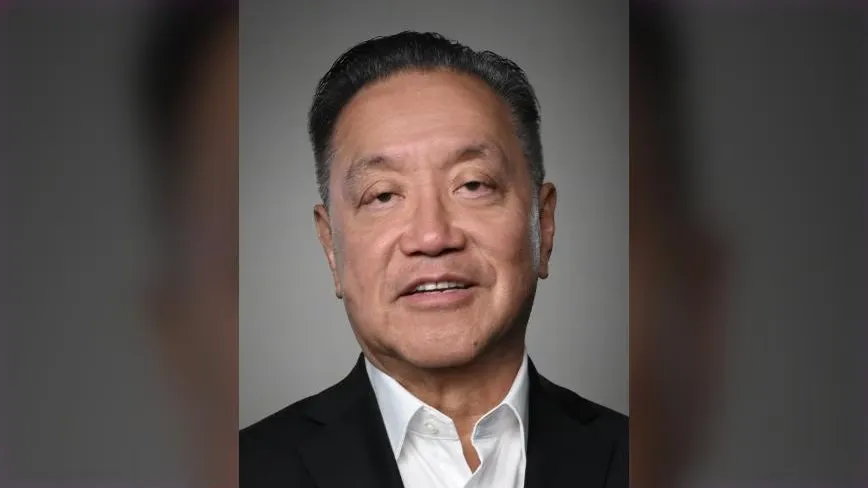
Broadcom chief executive Hock Tan told a Singapore conference that many AI investors have 'no clue' what they are investing in, likening them to casino gamblers. The warning from a top AI infrastructure supplier signals that even industry insiders see extreme expectations in the AI trade, a caution for boards and investors.
Broadcom chief executive Hock Tan on Monday compared many AI investors to casino gamblers who have little idea what they are betting on, telling the DBS Asia Future Forward Conference in Singapore that "a lot of investors have no clue what they are investing in." Bloomberg reported the remarks, which landed as one of the most direct insider critiques yet of the AI investment frenzy.
Tan said investors "set very extreme expectations only..." - the thought trailing off in the source report - but the implication was clear: the market's AI enthusiasm is running ahead of what many of its participants actually understand. The comment is notable not just for its bluntness, but for who is making it. Broadcom is one of the largest suppliers of the silicon that powers AI data centers, selling networking chips and custom accelerators to the hyperscalers pouring billions into artificial intelligence. Its stock has been a major beneficiary of the AI trade. A CEO cashing in on the boom calling out the people funding it is a rare moment of candor.
For context, the AI infrastructure buildout has reached extraordinary scale. The largest cloud providers and tech companies have committed hundreds of billions of dollars to data centers, chips, and energy capacity, betting that AI will reshape computing and generate massive returns. That spending has lifted the entire semiconductor supply chain, with Broadcom among the clearest winners. But it has also fueled a debate about whether the returns will ever justify the outlays, and whether the market's valuation of AI winners reflects fundamentals or faith.
Tan's warning echoes a pattern familiar to students of technology cycles. In past booms - from the dot-com era to the crypto craze - the sharpest warnings often came from insiders who could see the order books and knew which demand was real and which was speculative. Tan, a serial acquirer who built Broadcom through a series of transformative deals, has a direct view of how much AI infrastructure is actually being purchased and deployed. When he says investors lack clarity, he is speaking from a vantage point few others have.
The stakes for decision-makers are immediate. If a key supplier's CEO believes the market's expectations are extreme, boards and executives should ask whether their own AI strategies are built on evidence or enthusiasm. The gap between what companies are spending and what they can prove about returns is the fault line that could crack first if sentiment shifts. For founders and operators building AI products, the risk is twofold: their customers' willingness to pay depends on the same capex cycle, and their own valuations may be tied to the same expectations Tan is questioning.
There is also a second-order effect for public companies. When investor expectations become extreme, management teams face pressure to hit numbers that may not be achievable, which can distort capital allocation and strategy. Tan's comments are a reminder that the AI trade is not just a technology story; it is a psychology story. The technology may well transform industries over the long term, but the market's current pricing reflects a collective bet that may not fully account for the uncertainty Tan is pointing at.
For peers in the C-suite, the lesson is to separate the signal from the noise. Tan is not declaring AI a bubble or predicting a crash; he is saying that many of the people placing bets do not understand the game. That distinction matters. The underlying demand for AI infrastructure could remain strong even as the market reprices expectations. Companies that can demonstrate real usage, real revenue, and real customer commitment will be better positioned than those riding the narrative alone.
The most useful response is intellectual honesty. Executives should stress-test their AI assumptions against hard data: actual orders, actual usage, actual payback periods. They should ask whether their investor communications are setting expectations that are defensible or merely exciting. And they should remember that in every technology cycle, the companies that survive the correction are the ones that built on fundamentals rather than hype. Tan's casino metaphor is a warning that the house always has an edge - and in this game, the house is the market's own excess.
This story's Key Insights and Take-aways are locked.
Create a free account to unlock Executive Actions for one credit.
Register to UnlockAlways free for Executives Club members. Join the Club
More in Business

Elon Musk unveils a flying car, and SpaceX helped build it
The Tesla CEO's showcase at a SpaceX facility signals a future where road and rocket engineering converge.

Apple's $2,000 iPhone Duo opens preorders, taking on Samsung and Google
Apple's first foldable hits the market at a premium price, reshaping a category Samsung and Google have led.

Pope Leo XIV, first American pope, diagnosed with lung cancer
The 71-year-old Chicago-born pontiff underwent successful surgery on his right lung, and his diagnosis raises new questions about his AI-focused papacy and the Vatican's future.