
Bungie turns Marathon endgame into PvE, letting players roam Cryo Archive Map solo
The new mode removes other players from Marathon’s endgame Cryo Archive Map, replacing them with computer-controlled enemies, and the community seems into it.
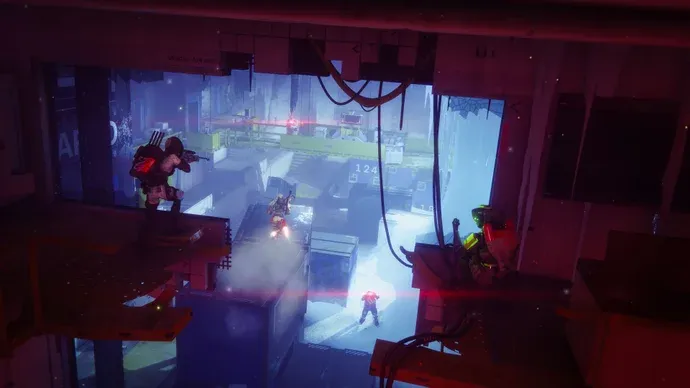
Bungie has revealed details of an upcoming Marathon PvE mode that lets players explore the endgame Cryo Archive Map without player-versus-player pressure. For decision-makers, it signals how Bungie may fight churn and re-ignite engagement by changing the risk profile of its core loop.
Bungie is betting that the fastest way to bring players back to Marathon is not a new mission, but a new kind of pressure. Its upcoming PvE mode lets players explore the endgame Cryo Archive Map without the threat of other players. Instead of facing human opponents, players will be up against computer-controlled enemies.
In other words, Bungie is removing the PvP sting from the endgame, then swapping in AI-controlled challenges as the main threat. That design decision is the whole story so far, because early community reaction “seems positive,” according to Eurogamer. When people say they want “something to do,” what they often mean is they want a reason to keep showing up. Marathon is trying to manufacture that reason by making the Cryo Archive Map less about contested survival and more about cleared, repeatable progression.
To understand why this matters beyond the forums, look at how extraction and endgame systems usually behave. Endgame areas are where players decide if a game respects their time. If the endgame loop is too swingy or punishing in a way that feels outside your control, engagement tends to decay fast, especially for players who do not want to match into unpredictable fights every session. A PvE option can reduce the “lottery effect” of who you get matched against, and it makes skill expression more legible. You still have to execute, but the game is no longer asking you to win a mind game against another person who might bring a completely different loadout and strategy.
This matters for Bungie because Marathon, by the very nature of the update, is competing for attention in a market where players are already split across multiple live games. The longer a game stays “fizzling,” the harder it becomes to re-ignite baseline curiosity. From a product perspective, shifting the mode type changes the audience. PvE tends to attract players who want structured risk, teamless progression (or at least less social friction), and repeatable outcomes. Even if the player base already exists, the PvE switch can widen the funnel by lowering the entry anxiety for those who bounced earlier.
There is also a second-order implication that boards and exec teams care about: mode changes are often cheaper than full content drops, but they can still move retention. Developing new maps, story beats, or large-scale systems is expensive. Adding a PvE configuration for an existing endgame map, where the “threat model” changes from other players to computer-controlled enemies, is a lever that can be pulled faster. It does not eliminate risk, because AI behaviors, encounter pacing, and reward balance still have to feel fair. But the core environment exists. That makes the move structurally appealing for teams trying to stabilize engagement without waiting for a wholesale relaunch.
This is also where regulatory and policy framing, while not the headline here, quietly intersects with incentives. In gaming, there is ongoing attention on how competitive modes can create toxic behavior, harassment patterns, and community strain. A PvE mode does not “fix” everything, but it can reduce a specific class of player-to-player friction by design, since other players are not part of the threat loop in the Cryo Archive Map. When community sentiment is a key KPI, reducing avoidable conflict is often a practical way to buy goodwill.
For Marathon’s leadership, the strategic stakes are simple: if players find the new PvE mode fun, repeatable, and meaningfully different, it can become a reason to return, not just a reason to try once. Eurogamer frames the community response as “overwhelmingly positive,” which is notable because “positive” feedback early in a cycle can influence whether a game gets a second wave of attention. That can help streaming momentum, creator coverage, and word-of-mouth among players who are watching whether the game is worth their time.
If you are an exec at a peer studio, the takeaway is not “copy PvE.” It is “change the endgame threat model.” Players do not just care about content quantity. They care about what the game does to them moment-to-moment. Bungie’s move turns Marathon’s endgame from a human contest into a computer-driven challenge inside the Cryo Archive Map. If that shift lands, it suggests that engagement recovery can come from clarity and control, not only from bigger expansions.
This story's Key Insights and Take-aways are locked.
Create a free account to unlock Executive Actions for one credit.
Register to UnlockAlways free for Executives Club members. Join the Club
More in Entertainment

Russell Brand's accuser 'bewildered and confused' as he denies 7 sex charges
The criminal case against the comedian is a live test of how media companies manage talent risk when serious allegations go public.

'It's a Magic Trick': Ballet Experts Say Rosalía's SNL Pose Is Impossible
Three ballet experts tell Rolling Stone Rosalía's gravity-defying SNL stillness shouldn't be possible - and why the debate is now part of the show.

Activision CMO: GTA 6 Will Boost Call of Duty, Not Bury It
Activision's top marketer says Rockstar's blockbuster will drive players back to consoles and into Modern Warfare 4, even as the company admits its recent strategy failed.