
BYD and Xpeng push humanoid robots toward mass production, shifting China’s fight with Tesla
EV giants are moving from cars to humanoids, betting AI will open a new global manufacturing and revenue battleground.
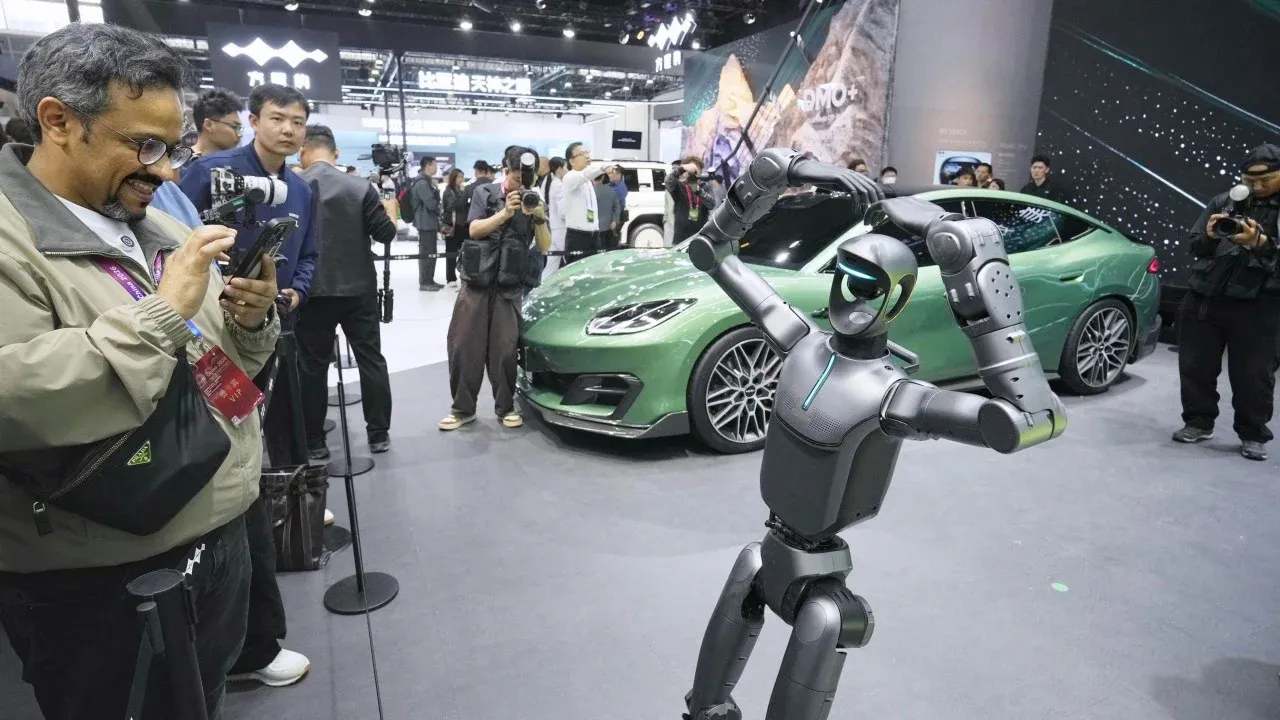
Chinese EV makers, including BYD and Xpeng, are accelerating plans to mass-produce humanoid robots after years competing in electric vehicles and autonomous driving. For decision-makers, the shift signals a new race to commercialize AI-driven robots that could redefine who controls the next automation cycle.
Chinese electric vehicle (EV) makers are opening a new front in their battle with Tesla: humanoid robots. Companies including BYD and Xpeng are now accelerating plans to mass-produce humanoid robots, aiming to turn years of competition in electric cars and autonomous driving into a new, AI-powered product category.
Here is the key stake: the humanoid pivot is not just a flashy side quest. The manufacturers are explicitly betting that advances in artificial intelligence will unlock a vast new market beyond transportation, which means the “who wins” question could move from charging networks and battery supply chains to robot brains, production scale, and real-world deployments.
To understand why this matters now, zoom out to how the last few years played out in China. The EV space trained these companies for intense execution: they competed hard on cost, manufacturing speed, and autonomy technology, because customers and regulators reward measurable performance. Autonomous driving, in particular, is the bridge between “moving an object” and “handling complex environments.” Humanoid robots are essentially a new interface for that same capability, turning AI from software that rides in vehicles into software that operates in physical spaces.
This is also a competition about timing and capacity. Mass production is a different game than prototypes or pilots. It demands robust engineering across many layers: mechanical design that can survive daily use, sensors and actuators that behave consistently, and software that can generalize. For BYD and Xpeng, the logic is straightforward. They have manufacturing muscle from EVs and they have spent years building AI pipelines and autonomy expertise. If AI unlocks practical reliability, scaling becomes the advantage, not the bottleneck.
The article frames this as a global race, but the strategic implication is specifically about China’s position as a manufacturing powerhouse. If Chinese firms can commercialize humanoid robots earlier than rivals elsewhere, they can capture both production volume and the ecosystem that follows. That includes supplier networks for components, talent migration toward robotics teams, and customer mindshare as early adopters test deployments. In other words, whoever establishes early scale can shape standards, pricing power, and the “default” path customers take when they want robots in warehouses, factories, and eventually services.
There is also a second-order competitive effect that matters to boards and investors: the product shift changes the risk profile. EVs face commoditization pressures and cyclical demand. Robotics adds different variables, including safety, integration complexity, and the regulatory and liability environment for machines that interact with people. While the source does not spell out specific regulatory actions, the broader pattern is clear: regulators and buyers will scrutinize how AI-driven robots operate, especially when physical harm is possible. That means the execution hurdle is not only technical. It is also about proving reliability and safety enough to expand from limited use cases into broader commercialization.
For Tesla, this is a familiar pattern of competitive pressure but with a twist. The company built early advantages around electric vehicles and advanced autonomy, and it still matters as a benchmark. The Chinese EV giants are effectively saying: we are done waiting for a future where “cars are the only frontier.” They are moving the battlefield to robots, where autonomy and AI could again be decisive, and where manufacturing scale could become a compounding advantage. If humanoid robots do become a large market, the firms that can mass-produce will likely be the firms that also influence adoption.
For decision-makers at peers, the lesson is blunt. Boards that only track EV milestones may be missing a category-level shift that could determine leadership in the next automation era. The humanoid push from BYD and Xpeng suggests AI commercialization could move faster than markets expect, and that the companies best positioned will be those that combine manufacturing scale, autonomy experience, and an ability to translate AI progress into products that can be deployed, maintained, and scaled.
This story's Key Insights and Take-aways are locked.
Create a free account to unlock Executive Actions for one credit.
Register to UnlockAlways free for Executives Club members. Join the Club
More in Technology

OpenAI says 10,000 agents cracked a 90-year math problem in 88 hours
The company's claim is audacious, but one mathematician is pushing back. Here's what it means for AI-driven discovery.

Meta still serves child sexual abuse ads on Instagram in India - BBC report
A new report following the BBC Eye investigation says the ads are still there - what it signals for every platform with a self-serve ad engine.

White House yanks 'Build the Wall' game after Tetris Company copyright warning
The administration's arcade game vanished in hours - and the takedown playbook every brand can learn from.