
BYD rolls out 100,000th EV in Brazil on July 16, forcing Europe to react
The milestone, led by BYD's Seagull at Camacari, lands as Europe weighs its response to a surge in Chinese EVs.
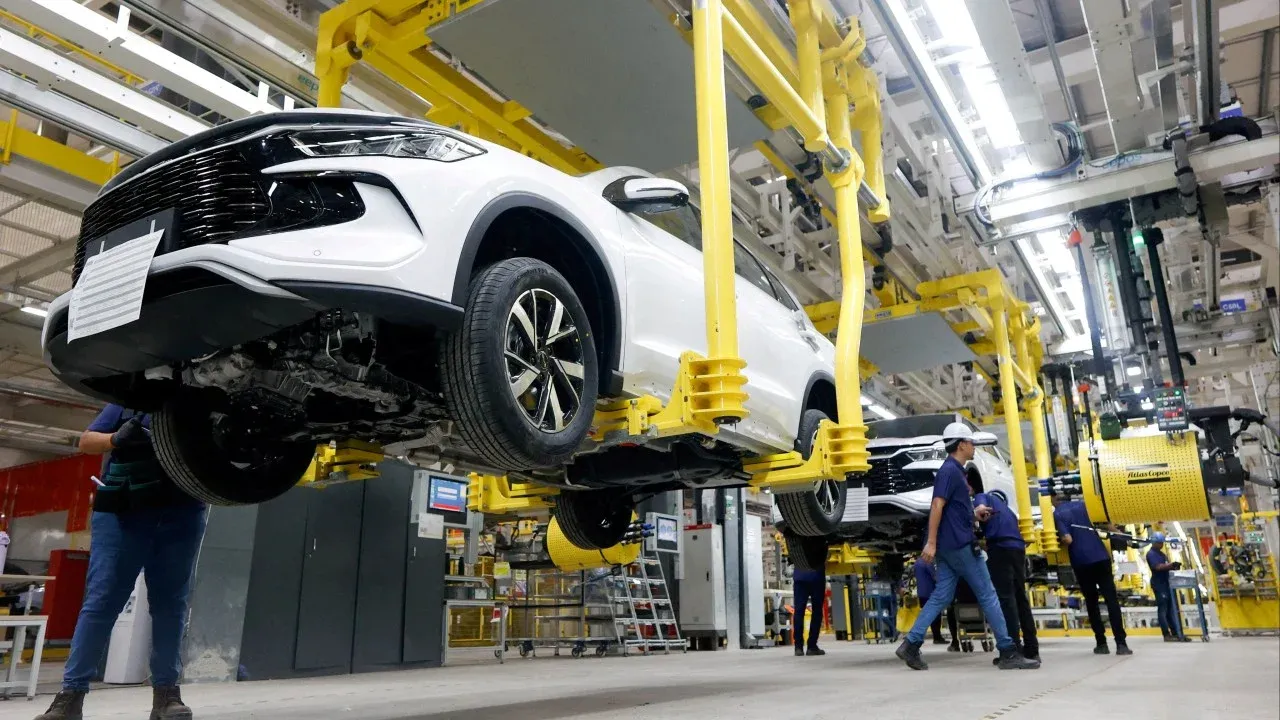
BYD, China's largest electric vehicle producer, rolled out its 100,000th new-energy vehicle from its Brazilian assembly line on July 16, with the milestone model being a BYD Seagull from the Camacari plant. For decision-makers, the expansion raises the pressure on Europe as governments increasingly push for local manufacturing and job creation, reshaping trade and industrial policy.
BYD just hit a clean, headline-friendly milestone in Brazil: it rolled out its 100,000th new-energy vehicle from its Brazilian assembly line on July 16. The milestone vehicle was a BYD Seagull, which came off the line at BYD's Camacari plant. That date matters, because it is not simply a corporate celebration. It is a signal that Chinese EV output is no longer a “someday” threat for South America. It is already on the ground, already moving through local production.
This is the moment Europe can least afford to treat as distant. Electric cars are fueling fresh tension in Europe, and the BYD milestone adds weight to the argument that the Chinese EV surge is becoming a sustained industrial reality rather than a temporary pricing wave. BYD reached the 100,000-vehicle landmark as part of its rapid expansion, in a context where governments are increasingly pushing for local manufacturing and job creation. In other words: Brazil is building industrial capacity with Chinese companies, while Europe is forced to decide what to do when that capacity translates into exports, competition, and political pressure.
To understand why that matters to executives, it helps to frame how industrial policy and EV supply chains collide. Electric vehicles do not only compete on engineering. They compete on factories, tariffs, local incentives, and how quickly companies can scale in target regions. BYD’s rollout at Camacari is a concrete example of scaling where governments want production to happen, not just sales. And the Seagull being the milestone is also telling. It reflects that mass-market models are central to the strategy, not only premium or niche products.
Brazil’s push for local manufacturing and jobs is also part of why this is more than a Brazil story. When a major Chinese EV producer achieves early production scale in South America, it changes the math for everyone else. It potentially reshapes distribution plans, inventory expectations, and the bargaining power of local dealers and suppliers. It can also influence how quickly consumers in those markets see a wider range of models and price points, since local production tends to reduce delivery friction and can support more predictable supply.
Now zoom out to Europe, where the “fresh tension” is not theoretical. European policymakers and industry leaders are weighing the response to a surge in Chinese EVs, and these decisions tend to be driven by two competing goals: protecting domestic industrial capacity and ensuring consumers have access to affordable vehicles. The BYD milestone gives European decision-makers a sharper data point. It suggests Chinese expansion is translating into tangible production footprints, which makes reliance on imports more politically and economically sensitive. If production scales faster in partner regions, Europe’s window for action can narrow.
There is also a second-order implication for boards and finance teams across the sector: production scale can quickly change competitive pricing. Even without new numbers beyond the 100,000th milestone, the direction is clear. BYD’s rapid expansion indicates resources and throughput are increasing, which can intensify competition in multiple geographies at the same time. That can compress margins for less scalable players and force faster shifts in procurement, manufacturing efficiency, and product roadmaps.
At the same time, government incentives can create uneven playing fields, and executives should expect policy reactions to cluster around “local jobs, local factories” language. The source ties BYD’s growth to governments increasingly pushing for local manufacturing and job creation. That kind of policy framing tends to be contagious, meaning other regions may follow suit, offering production-based support to companies that build locally. For Europe, the decision becomes a balancing act between industrial strategy and trade friction, with reputational stakes too. A heavy-handed approach can raise costs and disrupt vehicle availability, but doing nothing can be read as allowing industrial migration.
So the strategic stake is simple: BYD is proving that scaling Chinese EV production beyond China is operational, not aspirational. With 100,000 new-energy vehicles coming from Brazil by July 16, the momentum is visible. Europe is weighing its response to the Chinese EV surge at the same time that competitors and partners are already turning that surge into local manufacturing. For executives tracking EV market share, supply chain resilience, and regulatory risk, the takeaway is that the next phase of the EV race will be decided as much by factories and policy as by batteries and software.
This story's Key Insights and Take-aways are locked.
Create a free account to unlock Executive Actions for one credit.
Register to UnlockAlways free for Executives Club members. Join the Club
More in Business

Anthropic’s Levant Alpöge cracks the Jacobian conjecture after 87 years
A Harvard valedictorian used Claude to hit a 1939 breakthrough, but the missing “why” is the real problem.

Uber buys Delivery Hero for nearly $15B, vaulting to top food delivery outside China
The deal doubles Uber's dual-services footprint and pushes a ride-and-eats bundling play into 50 more markets.

Epic and Google drop settlement bid, forcing rival Android app stores by July 22
Google told the court it is ready to carry third-party app stores starting Wednesday, July 22.