
BYD's Stella Li wants 2-3 humanoid robots per store, not to replace humans
The executive says robots will sell and demonstrate cars, while BYD still relies on people for the emotional lift.
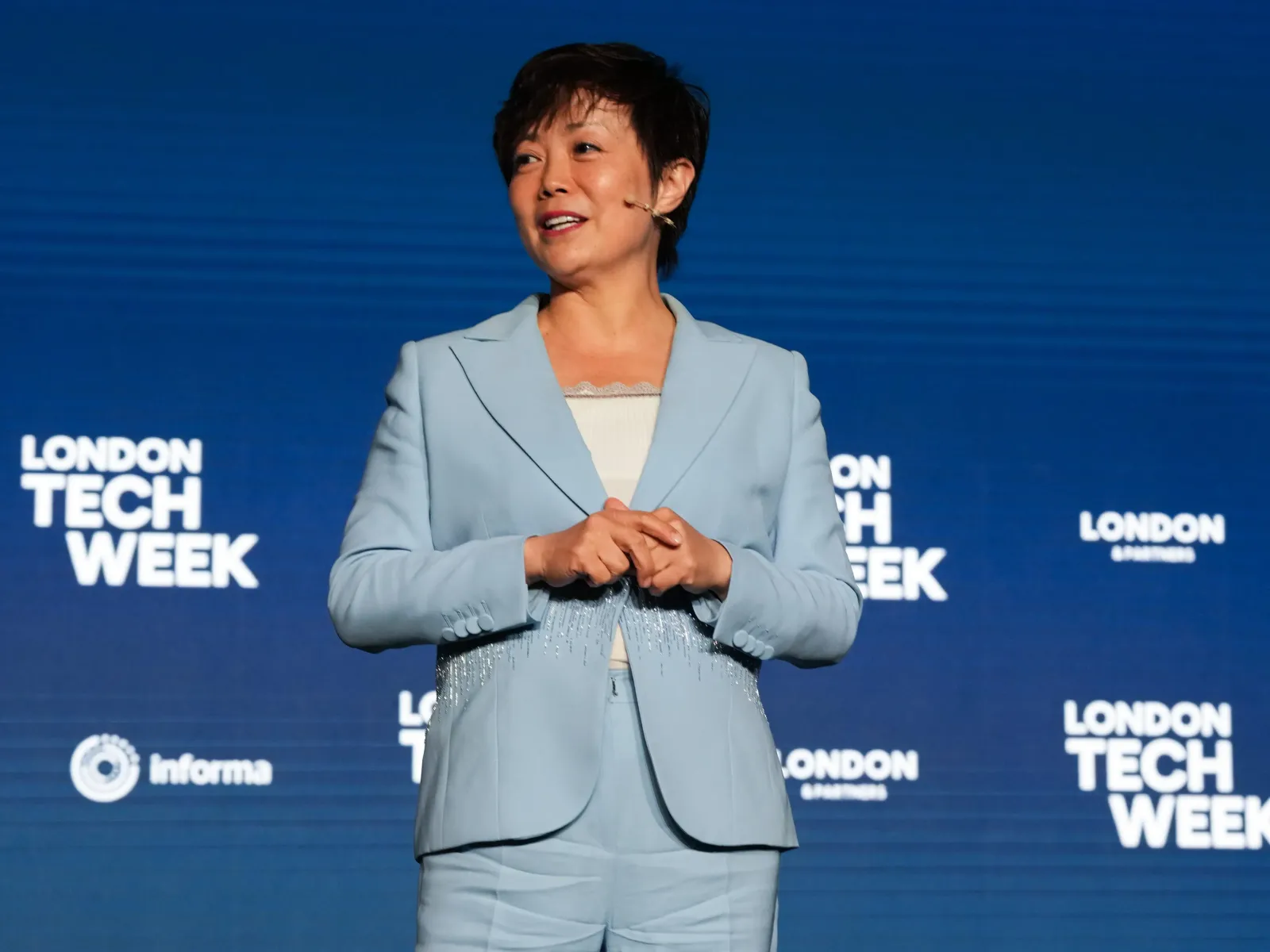
BYD executive vice president Stella Li told Business Insider she wants two or three humanoid robots in every BYD store, built to explain, entertain, and demonstrate cars. For decision-makers, it signals how automakers may turn showrooms into AI-enabled sales engines faster than many expect.
BYD executive vice president Stella Li says her goal is to bring two or three robots to every single store, and she frames the plan as showroom sales support, not a human replacement. Speaking to Business Insider at the Cannes Lions festival, Li described humanoid robots that can explain to customers, “have fun,” and even show and demonstrate the car. She also predicted the underlying technology for robot car salespeople would be available in the next “one or two years.”
That pairing matters because the whole point of selling a car is trust and timing, not just information. Li made it explicit that BYD’s showroom robots would not replace the “emotional connection” provided by a human salesperson. “We still need the people, but now with robotics we can make our service better,” Li said, arguing robotics can improve service while humans keep the relationship layer intact.
Zoom out and this is not a random product daydream. BYD is developing its own rival to Tesla’s Optimus humanoid robot, and Li’s comments put BYD’s ambition on a showroom floor, where the battle is won in minutes and lost in seconds. Tesla’s move is already in motion: Tesla plans to begin production of its Optimus humanoid robot this summer, and CEO Elon Musk has said the robotic helper has the potential to be the biggest product of all time. BYD, meanwhile, is positioning humanoids as a consumer-facing workflow rather than only an industrial novelty.
BYD also has the kind of robotics momentum that makes this pitch feel less like marketing and more like an industrial strategy. Li told Business Insider that building humanoid robots for the home and service industry will be a “huge” market for the company. She said the humanoid robotics industry in China is moving rapidly, but that the field still needs more efficient energy-consumption systems and better AI “brains” before home robots become reality. This is a key operational point for executives: energy efficiency and real-world autonomy are not side quests. They are gating items that determine whether robots stay in controlled environments or show up at scale.
There is already a supply-and-demand reality behind the hype. The global market for humanoid robots is expected to grow from $3 billion in 2025 to $28 billion in 2030, according to Morgan Stanley estimates, and Chinese robotics firms accounted for more than 80% of all humanoid robot shipments last year, based on data from Omdia. So the question is less whether humanoids are coming, and more who captures the next wave of distribution and customer interaction. The majority of deployments so far have been in controlled factory and warehouse settings. Li’s framing implicitly acknowledges the harder part: home and real-world environments are more unpredictable, which has typically made them more challenging for the technology.
In that environment, showrooms are an interesting compromise between “factory-only robots” and “home robots everywhere.” A showroom is still semi-controlled, but it is full of real customers, messy schedules, and unpredictable questions. Li said BYD would build its humanoid robot in-house, but was open to buying robots from rival companies if needed. That flexibility signals a risk-management play: if the market for humanoids matures unevenly, BYD can hedge supply and execution rather than betting the entire rollout timeline on one in-house engineering path.
There is also a bigger manufacturing ambition simmering underneath the showroom talk. Li said BYD is investing heavily in industrial robots, and that the company is inching closer to so-called “dark factories,” where manufacturing is handled entirely by robots. She suggested that in the next three to five years there will be a lot of revolution, including the possibility of having manufacturing where there are no human beings, with the robot running the facility. For boards and executives, this matters because it ties consumer-facing AI to upstream automation capabilities. In practice, companies that succeed in humanoid deployment often need industrial control systems, supply chain discipline, and technical talent that can translate from factory floors to customer-facing experiences.
So what does this mean for decision-makers at other automakers and technology-adjacent operators? If BYD executes on “two or three robots per store,” it could pressure competitors to rethink showroom staffing, sales training, and the customer service model. And because Li says the technology could be available in the next “one or two years,” this is not a distant moonshot. It is a near-term operational question: will you treat humanoids as a pilot novelty, or as a distribution channel that changes how cars get sold, serviced, and marketed?
This story's Key Insights and Take-aways are locked.
Create a free account to unlock Executive Actions for one credit.
Register to UnlockAlways free for Executives Club members. Join the Club
More in Business

SpaceX sells $25B in debt under two weeks after IPO, despite $90B in orders
The satellite and rocket company’s quick $25 billion borrowing move signals how it plans to finance scale after going public.

Accenture’s $4.18bn play fails as AI fears spark a 20% worst-ever stock plunge
On Thursday, Accenture hit its biggest one-day drop on record after forecasting worries that AI could hollow out consulting.

SpaceX stock jumps 3% after it overtakes Amazon’s market cap
CNBC says SpaceX’s shares surge following its IPO Friday, forcing investors to reprice what “space” and “AI” are worth.