
Calcite in a 1,900-year-old latrine reveals why Roman concrete still holds up
The ancient micro-structure that keeps Roman concrete durable could guide modern mix designs and longevity standards.
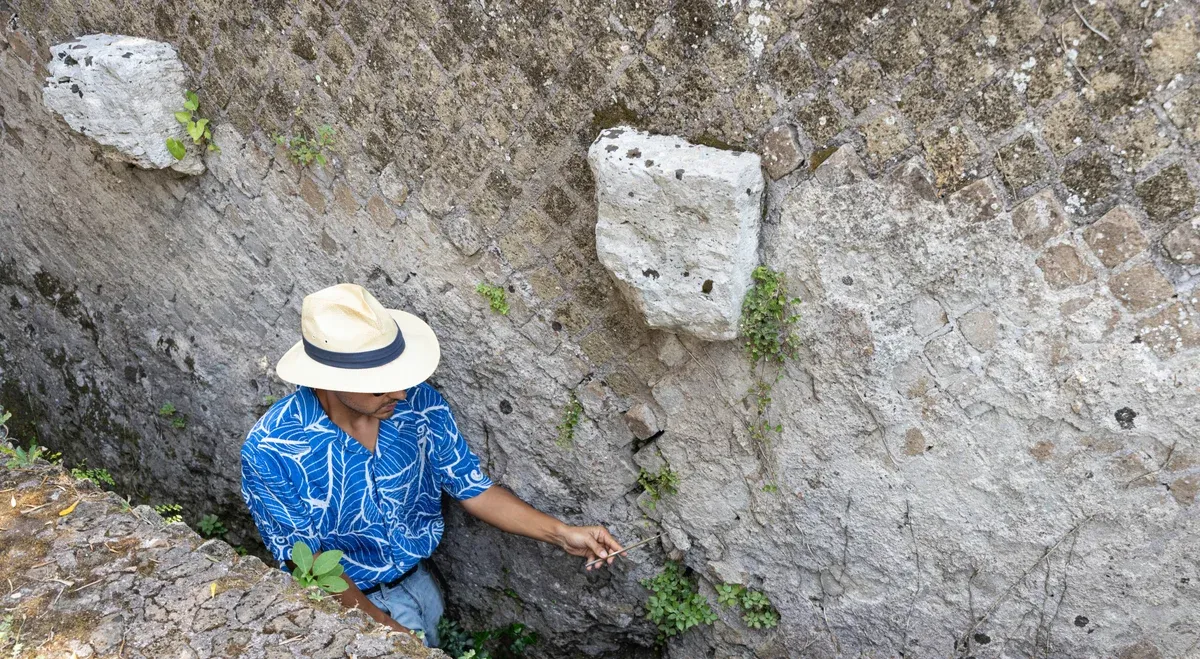
A study of a 1,900-year-old Roman latrine found calcite threading through cracks and pores. For decision-makers, the mechanism offers a durability playbook that could reduce repair risk and extend service life for modern concrete infrastructure.
The story sounds weird on purpose: a 1,900-year-old latrine, preserved long enough to be sampled, may contain the durability clue modern concrete engineers keep searching for. The key detail is microscopic. Researchers report calcite threading through the material's cracks and pores. In other words, what looks like damage at the macro scale is potentially part of a self-healing or stabilizing process at the micro scale.
That is the payoff up front, and it matters because concrete durability is not a small, theoretical engineering problem. Concrete is the backbone of bridges, highways, ports, water systems, and buildings, and it fails for reasons that are often baked in early: the material's ability to resist cracking, water ingress, and chemical attack over decades. If calcite formation is helping older Roman concrete stay intact, it provides a concrete (no pun intended) explanation for why some structures last far longer than expected. The ancient sample shows the mechanism directly, and that opens the door to translating it into modern concrete design choices.
To understand why the calcite clue is so actionable, you need to picture what cracks and pores actually do. Cracks can become highways for water and dissolved ions. Pores can act like storage compartments, holding moisture and chemicals that accelerate deterioration. Over time, those pathways can widen damage, weaken strength, and trigger cycles of expansion and contraction. Now add calcite threading through those same cracks and pores. If minerals are precipitating along pathways inside the material, they can partially block fluid movement and reinforce the microstructure, slowing the cascade from “small imperfection” to “major failure.”
Roman concrete is a benchmark because it has survived in real buildings and infrastructure for centuries. The source here is an ancient sample from a latrine, but the implication is broader: durability may not be only about how the Romans made concrete initially, but about what happens after the material is exposed. That distinction matters for today, because modern concrete projects are often judged on short-term outcomes like initial strength, and on cost. Durability is where lifetime costs land, and that is where procurement, insurance, and public budgets collide. A longer-lasting material can lower maintenance and repair frequency, reduce traffic disruptions, and dampen the “surprise bills” that show up after assets are built.
There is also a regulatory and standards angle, even when the evidence originates centuries ago. Infrastructure and construction rules typically require performance-based criteria, including service life, resistance to certain degradation mechanisms, and limits on how materials behave when exposed to moisture, salts, and freeze-thaw conditions. Regulators and standard-setting bodies cannot easily rewrite rules based on a single study. But a mechanism like calcite threading is exactly the kind of evidence that can feed future test protocols and durability targets. It helps engineers move from “we think this might last” to “here is what happens inside the material.” That shift is the difference between a promising idea and a standard you can specify.
For executives and boards, the second-order implication is about risk management and capital allocation. Concrete portfolios, whether in real estate, heavy infrastructure, or public works, have long tail exposure. Failures tend to be expensive because remediation is disruptive and because repair and replacement can be tied to inspections, legal scrutiny, and political accountability. If modern concrete can be tuned to reproduce the durability mechanism suggested by the Roman sample, decision-makers could potentially reduce lifecycle cost volatility. Even incremental improvements can compound across a large portfolio, because maintenance schedules and replacement cycles are multiplicative at scale.
There is a practical governance question too: how do you decide whether a durability strategy is worth funding before it has a mature supply chain and decades of field data? Translating an ancient microstructural mechanism into modern practice would require lab validation, pilot projects, and performance monitoring that aligns with current specifications. But the strategic benefit is clear. If calcite formation can be induced or supported through mix design inputs and curing strategies, it may deliver a pathway to concrete that resists the very pathways that trigger deterioration, cracks and pores. In short, the story is not just “Romans were good at concrete.” It is “the material may keep working after placement, and we can study that behavior.”
That is why this latrine matters to people who fund, approve, and oversee infrastructure. The mechanism shown in a 1,900-year-old sample suggests a way to extend service life and reduce degradation pathways. As durability becomes an increasing focus for standards and budget scrutiny, the executives who track science-backed performance improvements are the ones most likely to protect project outcomes, avoid lifecycle surprises, and set credible expectations for the assets they own.
This story's Key Insights and Take-aways are locked.
Create a free account to unlock Executive Actions for one credit.
Register to UnlockAlways free for Executives Club members. Join the Club
More in Science

Alaska's 1,580-foot tsunami had warning signs. Scientists just found them.
Rapid glacier retreat, heavy rainfall, and thousands of tiny tremors preceded Alaska's 1,580-foot tsunami, a warning for every coastal community in a warming world.

The rare mutation that lets high-risk brains dodge Alzheimer's
Scientists found a natural defense against protein buildup, opening a new path to preventive treatments.

3,000 steps a day may halve Alzheimer's decline, study finds
New research links a modest daily walk to less tau buildup and nearly half the cognitive and functional decline, even for those with early signs.