
California’s 5% billionaire tax faces a payroll crisis, founders warn before November 2026 vote
SEIU-UHW’s one-time levy is set for the November 2026 ballot, and Silicon Valley leaders say it forces cash outs.
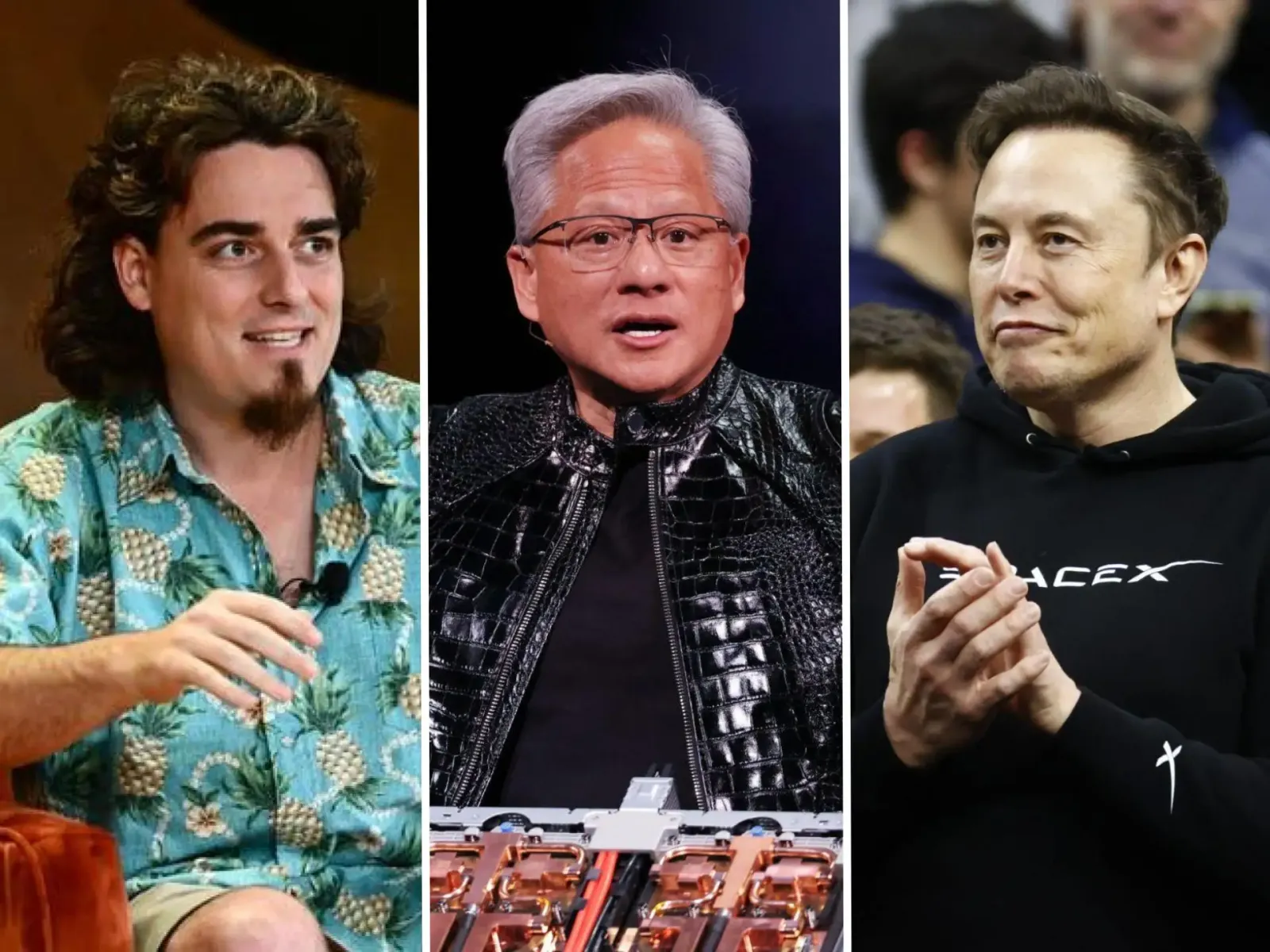
Palmer Luckey, Jensen Huang, and Bill Ackman are among the business leaders weighing in on California’s proposed one-time 5% wealth tax on residents with assets over $1 billion. If it passes, the tax would apply retroactively to January 1 and could reshape how founders finance illiquid stakes.
California’s proposed one-time 5% wealth tax on billionaires is moving faster than most political drama. The measure was certified for the November 2026 ballot on June 25 after it received enough valid signatures, and it includes a rule that makes it harder to shrug off: if it passes, it would apply retroactively to all California residents as of January 1.
That retroactive feature is exactly what’s got some of the most high-profile tech founders and investors talking like the policy is not just “controversial,” it is operationally dangerous. Oculus founder and Anduril cofounder Palmer Luckey said in a December X post that the tax would force founders to “sell huge chunks of our companies,” adding that there is no provision for companies that funnel revenue back into research and development rather than paying cash incomes sizable enough to cover the tax. In his telling, the tax turns normal fundraising and operating realities into an immediate cash crunch: “Now me and my cofounders have to somehow come up with billions of dollars in cash.”
To understand why that argument lands, you have to know what the proposal is trying to do. State labor groups, via the Service Employees International Union-United Healthcare Workers West labor union, proposed a 5% tax on California residents with assets exceeding $1 billion. The bill is designed to fill a projected multibillion-dollar state budget deficit. In other words, the policy is explicitly budget-first, and that’s where the second-order fight begins: if the state needs revenue now, do you get it by taxing wealth on paper, or by taxing cash flows and realized gains that reflect economic activity in the moment?
Luckey’s critique is the purest version of the “paper wealth becomes cash demand” problem. He argues the tax pressures companies to pivot into “profit obsession over mission or long-term sustainability,” because the policy would punish the typical startup pattern: reinvestment, illiquid ownership, and compensation that may not translate into readily spendable cash. For boards and founders, the practical question becomes less about ideology and more about survivability. If a founder or a shareholder faces a tax bill without cash distributions, options shrink quickly: sell equity, borrow against holdings, or restructure operations. (And in a separate critique, Bill Ackman basically argues the broader billionaire problem is already about how wealthy individuals avoid taxes by living off loans secured by stock.)
Ackman, the billionaire CEO of Pershing Square Holdings, wrote on X in December that he was “opposed to wealth taxes because they effectively represent an expropriation of private property,” warning of “unintended and negative consequences.” But he also said he is in favor of a “fairer tax system.” His example is familiar to anyone who’s followed high-end tax planning: someone who amassed a billion dollars or more could pay no personal income tax by living off loans secured by their company’s stock. Ackman’s view is that the fix is a change in the tax code, not a state-level wealth tax aimed at filling the gap.
Other leaders reacted through a different lens: where the “wealth” even belongs. Nvidia CEO Jensen Huang told Bloomberg TV that the tax hadn’t crossed his mind while “trying to build the future of AI,” saying, “We chose to live in Silicon Valley, and whatever taxes they would like to apply, so be it. I’m perfectly fine with it.” He also tied the location choice to fundamentals: Nvidia is based in Silicon Valley because “that’s where the talent pool is.” That stance is almost a statement of corporate strategy. If the business thesis depends on a specific ecosystem, the tax becomes a variable to work around, not a reason to uproot.
Meanwhile, others took a more political or anti-policy posture on the mechanics and incentives. Congressman Ro Khanna, whose district covers much of Silicon Valley, called the proposal “good for American innovation,” and in a seven-paragraph X post Saturday he argued Nvidia would be built all over again even if the wealth tax eventually arrives. His spokesperson, Sarah Drory, told Business Insider that Khanna has “always supported a modest wealth tax on billionaires” to address “staggering inequality” and ensure “people have healthcare,” while also advocating “common sense workarounds” for startup founders whose companies are not profitable and whose stock is illiquid.
Outside California, the “workaround” question has a history. Ben Horowitz, who relocated from California to Las Vegas in 2021, said the tax was the “best strategy” to break the state’s pattern of producing highly successful entrepreneurs. He framed it as a hard problem in network effects and pointed to examples of unrealized capital gains tax dynamics in Norway, where he said founders left. Elon Musk, in a separate December X repost, described his “wealth” as tied up in Tesla and SpaceX shares and argued that this means his wealth can only increase due to producing more products and services for the public. Even if he did not directly comment on the California tax itself, his framing reinforces the key point everyone is circling: whether tax targets are stocks, income, gains, or “net worth” is not a semantic issue. It determines whether the tax can be paid without selling the asset.
Then there’s Gavin Newsom, who has spoken against the wealth tax and said at The New York Times Dealbook conference in December that California has to stay competitive with other states, noting that people with “two or three homes outside the state” already have options. If the measure passes as a ballot measure, he would not be able to veto it. And the signals from wealthy residents are not subtle. Larry Page has taken action to relocate: Business Insider previously reported he converted entities from California to Delaware incorporation, including his family office and Flu Lab LLC. In other words, before the ballot even happens, the policy is already generating behavior changes.
For executives and board members, the stake is simple and uncomfortable. This proposal is designed to raise money for a state deficit, but the backlash is about liquidity, timing, and how quickly policy can force asset sales or ownership moves. With the vote set for November 2026 and the retroactive rule anchored to January 1, companies and founders still have time to plan, but not the kind of time you want to discover the problem at the last minute. In Silicon Valley, a tax proposal is never “just a tax proposal.” It is a stress test for capital structures, compensation, investor expectations, and whether the ecosystem you rely on stays where it is.
This story's Key Insights and Take-aways are locked.
Create a free account to unlock Executive Actions for one credit.
Register to UnlockAlways free for Executives Club members. Join the Club
More in Business

Bungie cuts most Destiny 2 staff as Sony says Marathon still matters
Herman Hulst confirms layoffs affecting most Destiny and some Marathon teams after Bungie admits Destiny fell short.

SK Hynix jumps 11% after seeking up to $29.4B in Nasdaq listing
The chip giant filed for a Nasdaq listing plan that could raise $29.4 billion, instantly reshaping investor expectations.
Micron revenue hits nearly $42B as AI memory lifts gross margins above 81%
Fiscal Q3 results crush estimates, prove AI memory is rewriting Micron's margins, and change the momentum math for the whole chip stack.