
Canada's dollar-for-dollar tariff strike lands September 8 after talks collapse
Finance Minister François-Philippe Champagne confirms retaliatory tariffs on U.S. goods, escalating the trade war and forcing executives to rethink supply chains.

Finance Minister François-Philippe Champagne announced dollar-for-dollar counter-tariffs on U.S. goods effective September 8, following the collapse of trade talks. The move escalates the trade conflict, forcing businesses on both sides of the border to prepare for higher costs and disrupted supply chains.
Canada's Finance Minister François-Philippe Champagne has confirmed that dollar-for-dollar counter-tariffs on U.S. goods will take effect September 8, following the collapse of bilateral trade talks. The move is a direct retaliation against U.S. tariffs and signals a sharp escalation in the trade dispute between the two neighbors. For executives, the date is not a distant deadline - it is a three-week countdown to a new cost structure on cross-border commerce.
The 'dollar-for-dollar' approach means Canada will match the value of U.S. tariffs on Canadian exports, a strategy designed to apply equal economic pressure. While the exact scope of the tariffs was not disclosed in the announcement, the principle is clear: every dollar of U.S. levies on Canadian goods will be mirrored on U.S. products entering Canada. This symmetry is a deliberate signal that Ottawa will not absorb the cost of Washington's protectionism, and it gives businesses a concrete framework to model their exposure.
The announcement comes after trade talks between the two countries collapsed, according to the original report. While the specific sticking points were not detailed, the breakdown suggests fundamental disagreements over tariff levels, market access, or other trade barriers. Historically, such collapses often lead to prolonged disputes, as each side seeks to protect domestic industries. The September 8 effective date is notably swift, leaving little room for last-minute negotiations or grace periods - a sign that the Canadian government is prioritizing resolve over patience.
For executives, the immediate concern is supply chain disruption. Companies that rely on cross-border trade - particularly in sectors like agriculture, manufacturing, and energy - will need to reassess their sourcing and pricing strategies. The short lead time means many will be forced to absorb costs or pass them on to consumers, potentially squeezing margins. Retailers, automakers, and food processors are especially vulnerable, as they often operate on thin margins and just-in-time inventory systems that leave no buffer for sudden tariff shocks.
Beyond direct costs, retaliatory tariffs can trigger broader economic consequences. They can reduce trade volumes, disrupt just-in-time inventory systems, and create uncertainty that discourages investment. For North American businesses, this adds another layer of complexity to an already volatile global trade environment, with potential ripple effects on employment and economic growth. The U.S.-Canada trading relationship is one of the largest in the world, with billions of dollars in goods crossing the border daily; even a modest tariff increase can ripple through supply chains and consumer prices.
For CEOs and CFOs, the key takeaway is the need for agility. Companies should model various tariff scenarios, identify alternative suppliers, and consider accelerating shipments before the deadline. Engaging with trade associations and policymakers could also help shape the outcome, as business pressure often influences negotiations. The September 8 date is a hard stop, but it is also an opportunity to stress-test supply chains and build resilience against future trade shocks.
The September 8 tariffs are a clear signal that the trade relationship between the U.S. and Canada is at a critical juncture. While the full scope of the tariffs remains to be seen, the message is unambiguous: businesses must prepare for a more protectionist era. Those that act quickly to mitigate risk will be better positioned to weather the storm, while those that wait may find themselves scrambling to adjust to a new normal of higher costs and reduced trade flows. The collapse of talks and the swift retaliation suggest this is not a temporary blip but a strategic shift in how the two countries manage their economic relationship.
This story's Key Insights and Take-aways are locked.
Create a free account to unlock Executive Actions for one credit.
Register to UnlockAlways free for Executives Club members. Join the Club
More in Business
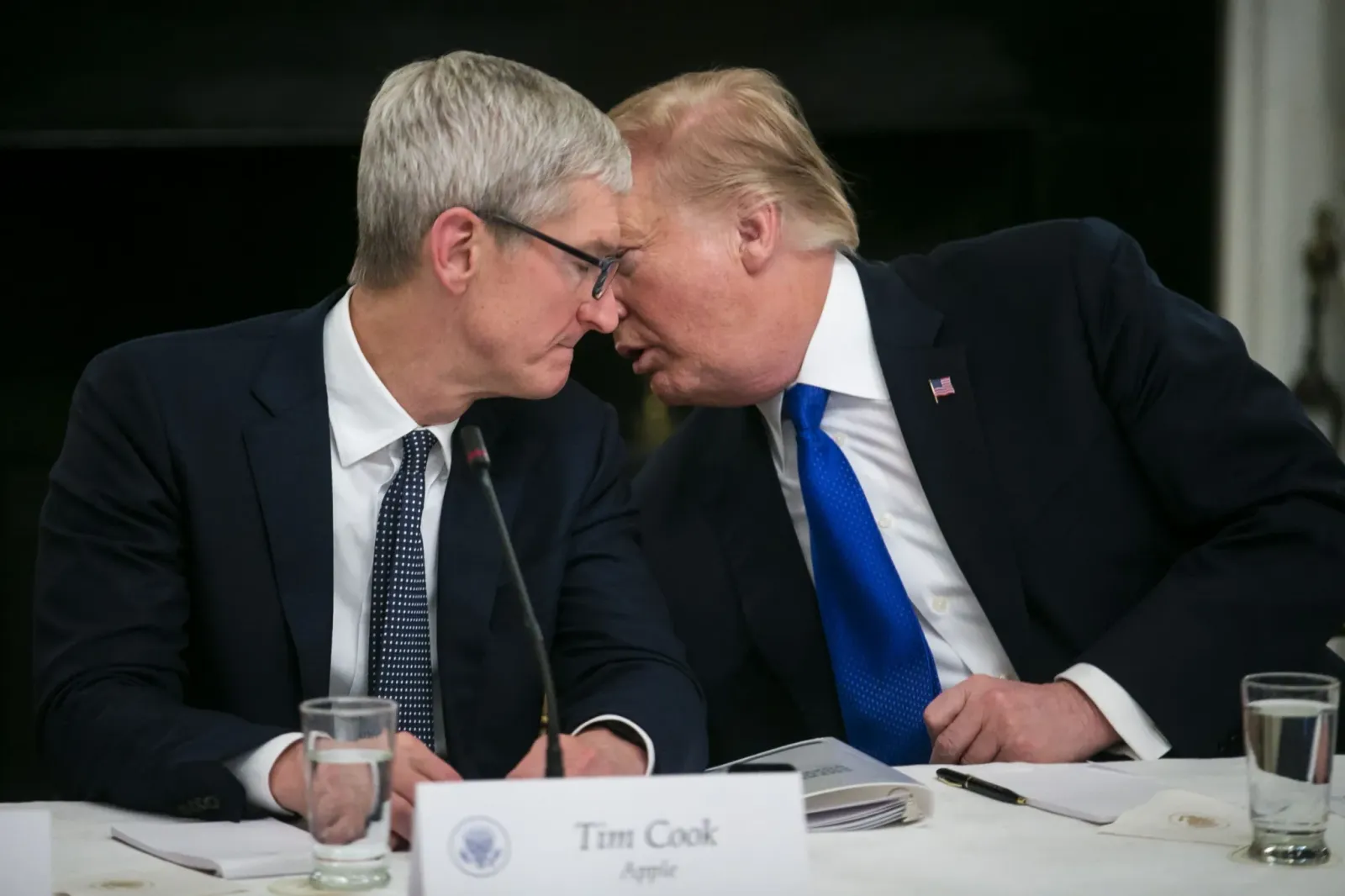
Tim Cook steps down as Apple CEO, stays on as chair with $45M equity
The 'Trump whisperer' keeps his White House and Beijing access as Apple navigates tariffs and a $4.6 trillion market cap.

Snowflake shares surge as AI data demand crushes estimates, lifting full-year forecast
Stocks jumped on stronger-than-expected guidance, signaling enterprise AI workloads are accelerating faster than Wall Street priced in.

Tim Cook's 15-year Apple CEO run ends: 3 lessons for any successor
After 15 years, Tim Cook hands Apple to John Ternus - here's how he turned a $350B company into a $4.6T juggernaut.