

Cash App’s star-topped Wand turns tap-to-pay into a stunt
Cash App is turning a DIY social-media trend into a branded NFC accessory, signaling how payments companies now compete on experience, not just rails.
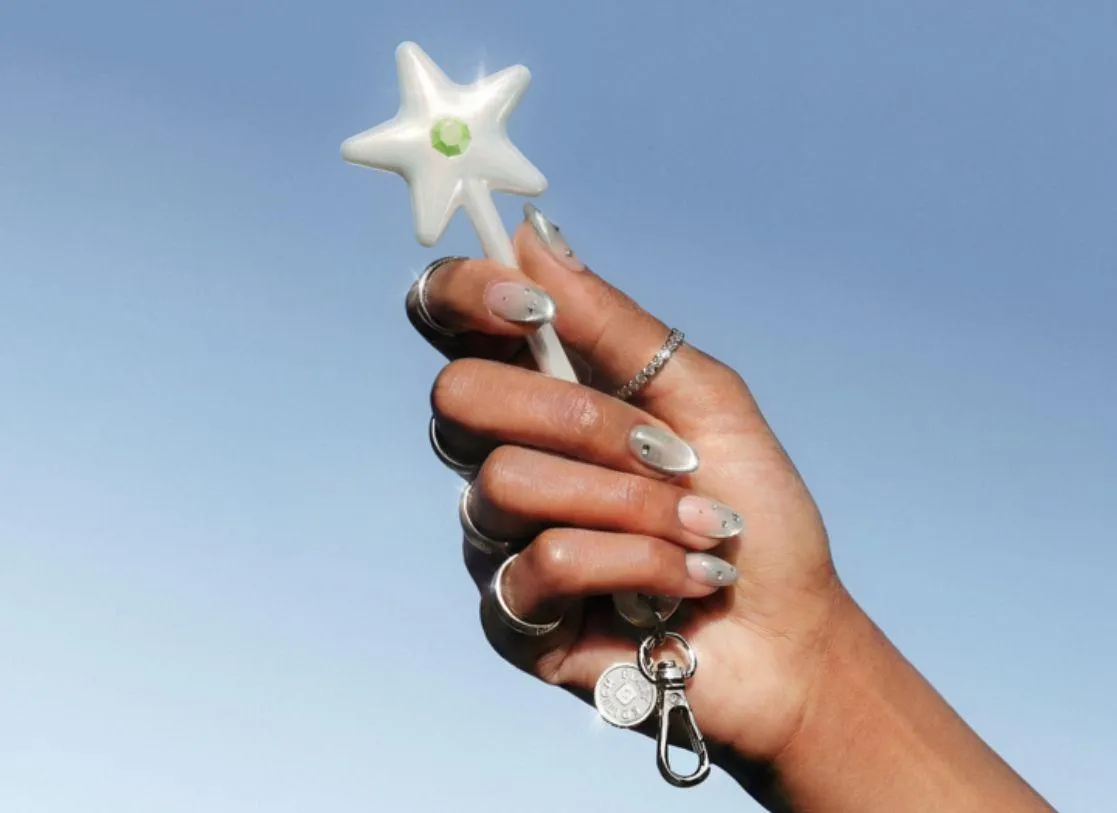
Cash App is launching the Cash App Wand, an NFC-enabled, iridescent, star-topped wand that lets users make contactless payments without pulling out a phone or card. For decision-makers, the move shows how consumer fintech is increasingly battling for attention through hardware-like brand theater as much as through payment utility.
Cash App is launching a Cash App Wand, and yes, it is exactly what it sounds like: an NFC-enabled, iridescent, star-topped wand that lets people pay without pulling out a phone or card. The whole point is to make contactless payments feel even more effortless, but also more fun, which is a pretty on-brand move for a company trying to keep payments sticky in a world where tapping a card has already become muscle memory.
The more interesting part is that Cash App is not inventing the idea from scratch. It is borrowing from a DIY trend that has already spread across social media, where people have been 3D printing, or otherwise building, their own creative cases for contactless payment cards. Wands appear to be the most popular version of that homebrew trend, likely because the extra reach makes them useful for drive-thru payments. Cash App is now taking that internet behavior and packaging it as a branded accessory, which is a neat little reminder that fintech companies are not just competing on transaction speed anymore. They are competing on vibe.
That matters because contactless payments have already won on convenience. Tapping a card or phone is fast, familiar, and increasingly standard in everyday life. So if a payments company wants to stand out, it needs more than a functional payment rail. It needs a reason for users to feel attached to the product, to show it off, or at least to remember which app or card they used the last time they grabbed coffee. Cash App’s wand is a small object, but the logic behind it is big: if the payment method becomes part of the user’s identity, the brand gets more durable than the checkout moment itself.
There is also a very practical angle here. Consumer payments are one of the most crowded corners of fintech, with plenty of services offering similar basic functionality. When products converge, presentation starts to matter more. That is why a novelty accessory can be more strategic than it looks at first glance. It creates a visible, social-media-friendly artifact around a service that otherwise lives inside a phone screen. And because the source specifically points to a trend already circulating online, Cash App is effectively meeting users where they already are rather than trying to manufacture demand out of nowhere. That usually beats shouting into the void.
For operators and investors, the second-order question is whether this kind of move deepens engagement or just adds noise. On one hand, a branded wand could make Cash App feel more playful and distinct, especially for younger users who are already comfortable with tap-to-pay and online micro-trends. On the other hand, novelty has a shelf life. If the accessory becomes just another gimmick, it risks being memorable without being meaningfully sticky. The real test is whether it reinforces everyday usage, or whether it becomes a one-time social post and then disappears into a drawer.
Still, the strategic signal is hard to miss. Payments firms increasingly have to win in two layers at once: the infrastructure layer, where money moves reliably, and the consumer layer, where the product feels worth using over and over again. Cash App’s Wand is aimed squarely at the second layer. It suggests a market in which features are no longer enough, because features are easy to copy. The harder part is building a brand people want to carry, wave, or show off, even if the underlying transaction is just another coffee run. For peers in fintech, the lesson is simple: the next competitive edge may look less like software and more like theater, as long as the theater still helps people pay faster, easier, and more often.
This story's Key Insights and Take-aways are locked.
Create a free account to unlock Executive Actions for one credit.
Register to UnlockAlways free for Executives Club members. Join the Club
More in Technology

OpenAI says 10,000 agents cracked a 90-year math problem in 88 hours
The company's claim is audacious, but one mathematician is pushing back. Here's what it means for AI-driven discovery.

Meta still serves child sexual abuse ads on Instagram in India - BBC report
A new report following the BBC Eye investigation says the ads are still there - what it signals for every platform with a self-serve ad engine.

White House yanks 'Build the Wall' game after Tetris Company copyright warning
The administration's arcade game vanished in hours - and the takedown playbook every brand can learn from.