

Casio bets on India's watch boom with affordable models
The Japanese maker is courting India's young, price-sensitive consumers as the market expands.
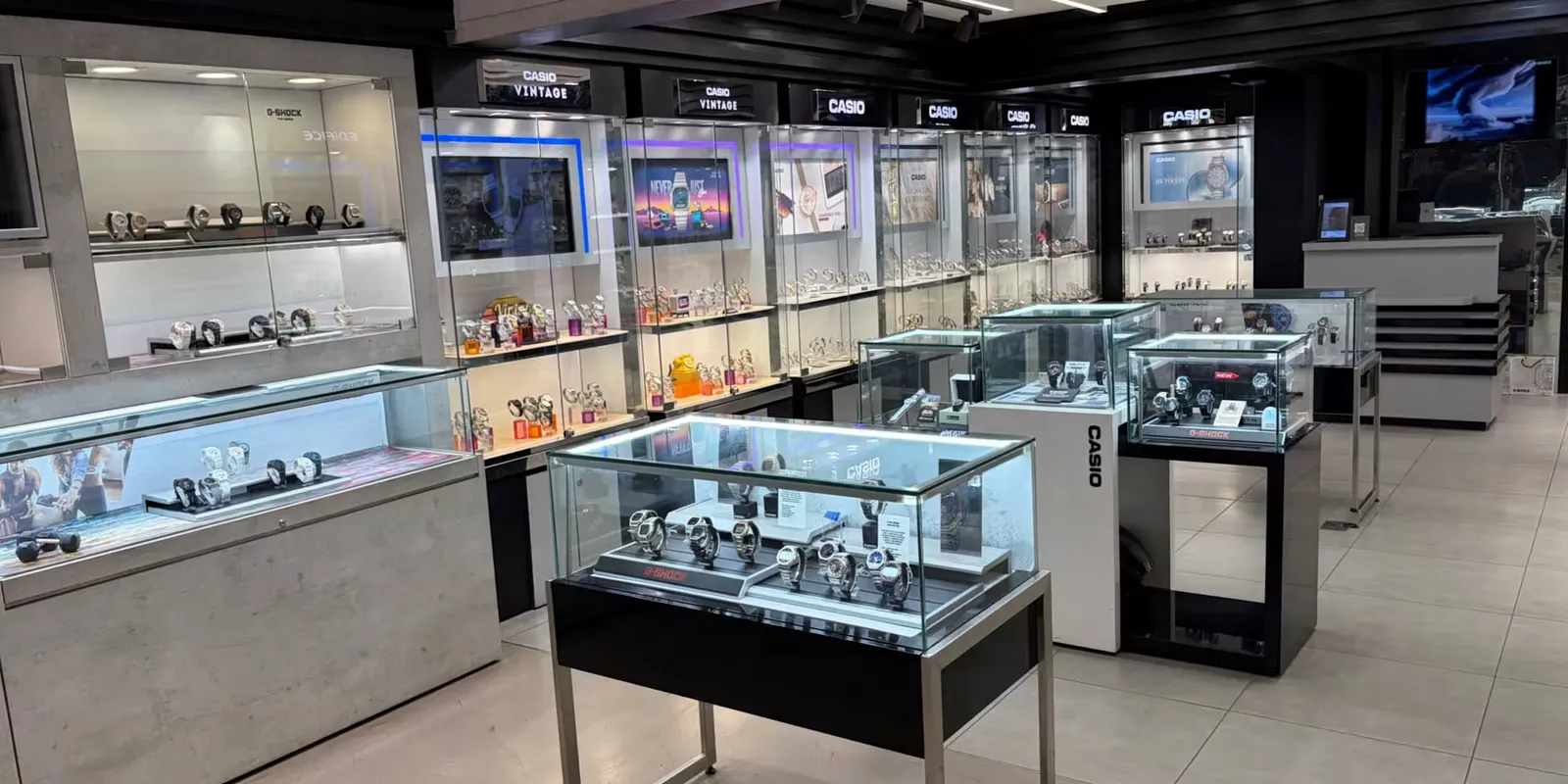
Casio is targeting India's growing watch market with affordable models, according to Nikkei Asia. The strategy aims to capture demand from a young population seeking value, positioning the company for growth in one of the world's most promising watch markets.
Japanese watchmaker Casio is zeroing in on India's expanding watch market with a lineup of affordable models, according to Nikkei Asia. The move underscores the company's bet on a country where rising incomes and a young demographic are fueling demand for timepieces. By shifting its product mix toward lower price points, Casio is directly challenging domestic players and global rivals in a segment that has traditionally been dominated by value-conscious buyers.
India's watch market has been on an upward trajectory, driven by urbanization, a growing middle class, and increasing fashion consciousness. While luxury brands like Rolex and Omega have a presence in major cities, the bulk of sales come from the mid-range and budget segments, where consumers prioritize durability and price over prestige. This is a stark contrast to mature markets like Japan or the United States, where smartwatches have cannibalized traditional watch sales. In India, however, the analog and digital watch categories still hold strong appeal, particularly among younger buyers who view watches as both functional accessories and style statements.
Casio, known for its durable and feature-rich watches, is adapting its product mix to suit Indian tastes. The company's iconic G-Shock line has already carved out a niche among adventure enthusiasts and urban youth, but the new push into affordable models signals a broader strategy. By offering watches at entry-level price points, Casio aims to capture first-time buyers who are just entering the watch market, as well as students and young professionals who may not yet have the disposable income for premium models. This approach mirrors the company's success in other emerging markets, where it has leveraged local manufacturing and distribution networks to keep costs low.
To keep prices competitive, Casio has been increasing local manufacturing in India. This not only reduces import duties but also allows the company to respond quickly to local trends and seasonal demand. Local production also aligns with the Indian government's 'Make in India' initiative, which offers incentives for companies that manufacture domestically. By deepening its local footprint, Casio can avoid the tariff barriers that have hampered other foreign brands and ensure a steady supply of affordable watches to a market that is highly price-sensitive. The company has also invested in after-sales service networks, a critical factor in a country where repair infrastructure can be inconsistent.
The Indian watch market is highly competitive, with established players like Titan, HMT, and Fastrack dominating the domestic landscape. Titan, in particular, has a strong brand presence and a wide distribution network, making it a formidable rival. Global brands such as Timex and Fossil also compete for shelf space, while a slew of Chinese smartwatch makers have flooded the market with low-cost alternatives. Casio's challenge will be to differentiate its affordable models while maintaining its brand image of quality and innovation. The company's reputation for ruggedness, especially in its G-Shock line, could help it stand out, but the budget segment is often dominated by price wars and aggressive discounting. To succeed, Casio will need to emphasize the durability and reliability that have been its hallmarks, rather than engaging in a race to the bottom on price.
For Casio, success in India could provide a significant growth engine as traditional markets mature. The company's ability to balance affordability with its core strengths will be key. If it can capture a meaningful share of India's price-conscious consumers, it could establish a strong foothold in one of the world's most promising watch markets. Moreover, the move reflects a broader trend among Japanese brands, which are increasingly looking to emerging economies for growth as domestic demand stagnates. Casio's strategy in India will be closely watched by industry analysts, as it could serve as a template for other companies seeking to tap into the country's vast consumer base.
The timing of this push is also notable. India's watch market is expected to continue growing as the country's economy expands and more people enter the workforce. The rise of e-commerce platforms has made it easier for brands to reach consumers in smaller cities and towns, where traditional retail penetration is limited. Casio has been strengthening its online presence, partnering with major e-tailers and launching its own direct-to-consumer channels. This omnichannel approach allows the company to target a wider audience while keeping distribution costs manageable. Additionally, the growing popularity of fitness trackers and smartwatches has not diminished the appeal of traditional watches in India, as many consumers still prefer the simplicity and reliability of analog models.
In the long run, Casio's bet on India is not just about selling watches; it is about building brand loyalty among a generation that is just beginning to develop purchasing power. By offering affordable models that deliver on quality, the company hopes to create a pipeline of customers who will eventually upgrade to higher-end products. This 'razor-and-blades' strategy, where entry-level products serve as a gateway to premium offerings, has been successful for many consumer goods companies. For Casio, the key will be to maintain consistency in product quality and customer service, ensuring that the brand's reputation remains intact even as it expands into the mass market.
Ultimately, Casio's move into India's affordable watch segment is a calculated response to a market that is too large to ignore. With a population of over 1.4 billion and a rapidly growing middle class, India offers immense potential for watchmakers. The company's decision to prioritize affordability over margins reflects a long-term view, one that prioritizes market share and brand penetration over short-term profitability. As the Indian watch market evolves, Casio's ability to adapt and innovate will determine whether it can become a household name in the country, or whether it will be relegated to a niche player. For now, the company is making all the right moves, and its focus on affordable models is a clear signal that it intends to be a major player in India's watch story.
This story's Key Insights and Take-aways are locked.
Create a free account to unlock Executive Actions for one credit.
Register to UnlockAlways free for Executives Club members. Join the Club
More in Business

Tim Cook steps down as Apple CEO, stays on as chair with $45M equity
The 'Trump whisperer' keeps his White House and Beijing access as Apple navigates tariffs and a $4.6 trillion market cap.

Snowflake shares surge as AI data demand crushes estimates, lifting full-year forecast
Stocks jumped on stronger-than-expected guidance, signaling enterprise AI workloads are accelerating faster than Wall Street priced in.

Tim Cook's 15-year Apple CEO run ends: 3 lessons for any successor
After 15 years, Tim Cook hands Apple to John Ternus - here's how he turned a $350B company into a $4.6T juggernaut.