
Casper Kelly’s Buddy trailer brings horror to kids' TV, after Sundance and next-month theaters
Casper Kelly, creator of Adult Swim’s Too Many Cooks, turns children’s television inside out with a theatrical release.
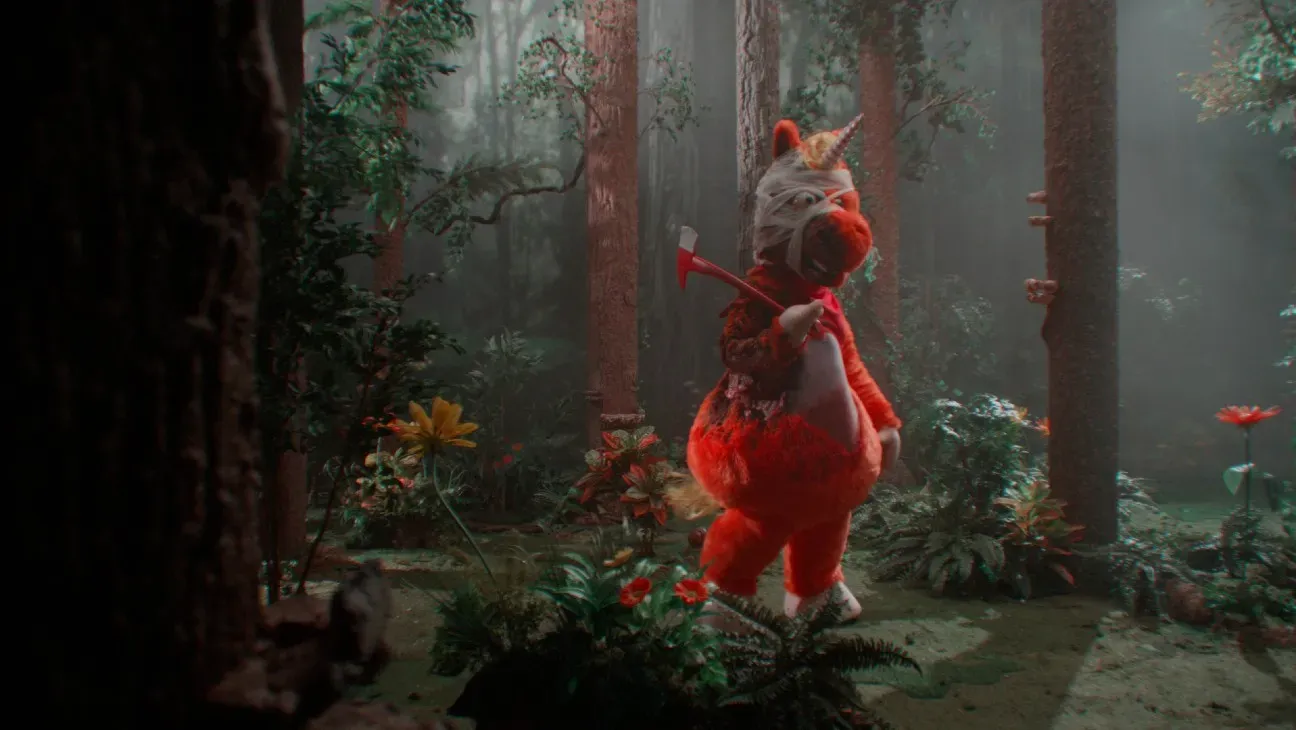
Casper Kelly, known for Adult Swim's Too Many Cooks, helmed the feature behind the Buddy trailer. The film premieres at Sundance and hits theaters next month, giving studios a live test of how far “horror” can go toward family audiences.
Casper Kelly, known for Adult Swim's Too Many Cooks, helmed the feature that the Hollywood Reporter describes through the release of the Buddy trailer. The movie brings horror to children’s TV sensibilities, a tonal mashup that is instantly market-relevant because it asks a hard question executives track all the time: what happens when you sell the “wrong” genre to the “right” audience?
The answer matters even before the first ticket is sold. The feature premiered at Sundance, and it hits theaters next month. That Sundance-to-theatrical path is a high-signal funnel for decision-makers, because it turns festival buzz into a deadline-driven rollout. If the trailer narrative is anything to go by, the studio is betting that a creepy, genre-forward approach can travel into family viewing without getting politely rebranded into something safer.
For executives, this is not just a programming choice. It is a positioning problem with real costs. Trailers set expectations for parents, guardians, and kids, and mismatches can bleed into opening-week performance and word-of-mouth. Horror carries baggage and stakes. It can widen appeal by targeting audiences who want intensity, but it also risks triggering the parental “nope” reflex that can shut down distribution in practice, even when the content is technically “family.” The Buddy trailer’s existence suggests the filmmakers and the backers decided the upside of bold positioning was worth the friction.
There is also the category tension. Adult Swim’s Too Many Cooks is known for adult-oriented weirdness, while children’s television typically lives on clarity: the audience should immediately understand what’s safe and what’s not. Turning horror into a format associated with kids forces an adaptation not only in tone but in how suspense is staged, how characters behave, and how the story signals consequences. Even if the source does not spell out those creative mechanics, the core executive challenge is clear. You are taking a brand-adjacent style and asking it to survive contact with an audience that has lower tolerance for ambiguity.
Sundance matters here because it tends to reward inventive takes, not committee-proof formulas. Kelly’s involvement, given his Adult Swim association, positions the project as a creative gamble with a recognizable track record. That can help internal stakeholders who need to justify marketing spend after a festival premiere. But it also raises the bar for the theatrical handoff. Festival audiences can embrace oddness; theatergoers decide in minutes whether the promise in a trailer matches what the film delivers.
From a boardroom perspective, there is a second-order implication: the studio’s ability to greenlight risk may be tested by the results of a tonal crossover like this. “Horror to children’s TV” is the kind of concept that, if it lands, creates a new template for seasonal tentpoles and evergreen library value. If it misses, the lesson can be blunt. Executives learn not only whether the film performed, but whether the market believes the genre hybrid is repeatable.
Then there is the operational layer that rarely makes headlines but always shows up in results: classification, marketing approvals, and distribution strategy. Family horror requires careful calibration to avoid mis-selling. Even without regulatory specifics in the source, the business logic is consistent across markets. Studios often need to ensure messaging aligns with rating outcomes and audience expectations, because those systems influence theater bookings, streaming placement, and advertising partnerships. A Sundance premiere followed by a next-month theatrical release suggests the project is already moving through the compliance and commercial steps required to get in front of wide audiences on a fixed timeline.
Finally, for peers making similar decisions, Buddy is a useful benchmark for what “audience expansion” can look like when you do it with genre, not just with IP. Executives in film, streaming, and even adjacent formats will watch whether the trailer-driven hype translates into measurable demand. If it does, it supports a strategy of bold tonal experiments with a path to mainstream screens. If it doesn’t, it is a reminder that horror is an emotional lever, and children’s media is a trust business. You can pull harder, but only up to the point where trust still holds.
This story's Key Insights and Take-aways are locked.
Create a free account to unlock Executive Actions for one credit.
Register to UnlockAlways free for Executives Club members. Join the Club
More in Entertainment

12TB Steam 'teraleak' goes beyond Valve: GTA 3, Mafia 2 prototypes exposed
A 12-terabyte dump of Steam data reveals prototypes and builds of third-party classics like GTA 3 and Mafia 2, plus unreleased Valve content, rewriting game history.

LinkedIn's romance problem: 1 in 4 workers say dating on it is fair game
A new survey shows a quarter of U.S. employees treat the professional network as fair game for romance, even as LinkedIn bans it and removes hundreds of thousands of offending posts.

Enhypen's first No. 1 album breaks K-pop's Billboard 200 streak
The K-pop group's 98,000-unit debut tops the chart while Dolly Parton's catalog reentry shows how death reshapes streaming.