
Cate Blanchett helps launch a free registry tool to control AI likeness at EU Parliament
The Human Consent Registry lets people license or withhold AI use of their name, face, and voice, in Brussels.
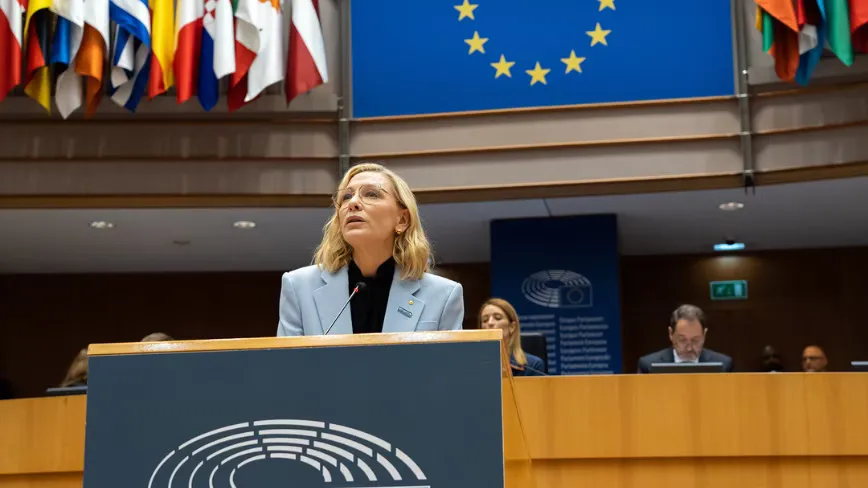
Actress Cate Blanchett and MEP Eva Maydell revealed RSL Media’s Human Consent Registry at the European Parliament. The tool aims to let individuals set the terms under which AI can use their likeness.
Cate Blanchett and MEP Eva Maydell revealed RSL Media’s free Human Consent Registry at the European Parliament, putting a new lever on the table: consent for AI use of your likeness. The premise is disarmingly simple. Your name, face, and voice get treated as something closer to “property” you can license or withhold, rather than raw material that models can scrape and move on from.
For decision-makers, the key is not the celebrity packaging. It is the registry’s promise of control. The Human Consent Registry is designed so anyone can set the terms on which AI can use their name, face, and voice. That matters because AI systems increasingly operate on patterns of human data, and consent is turning from a moral argument into an operational requirement that legal teams, product teams, and risk committees will have to manage.
To understand why this is landing in the European Parliament, zoom out to how AI governance is evolving in Europe. The EU has been pushing rules that treat personal data and related rights more seriously than “best effort” compliance. Even if the details of how any specific registry would be enforced are still a policy question, the direction is clear: regulators and lawmakers want traceable permissions, not vague assurances. A registry like this is basically an attempt to make permission auditable, so that when AI companies claim they have the rights to use certain inputs, there is at least a standardized path to show whether individuals opted in, opted out, or imposed conditions.
There is also a product and market incentive hiding under the political stage. AI companies want to train and deploy systems quickly, and they want fewer legal bottlenecks. If a credible consent mechanism exists and is widely adopted, it can reduce uncertainty. Boards, in turn, will care because uncertainty is expensive. When data provenance is muddy, litigation risk and regulatory exposure rise, and timelines stretch. A free registry lowers friction for individuals to participate, which can make the whole ecosystem more complete and potentially more defensible.
And yet, governance is never just about building a tool. It is about establishing norms and expectations across actors who do not all have the same incentives. Individuals typically have little time or leverage to negotiate permissions one by one. AI developers and deployers, on the other hand, often scale faster than consent processes. That is why a centralized registry is an appealing bridge. It tries to translate “you must have my consent” from a user-level demand into an infrastructure layer that machines, vendors, and intermediaries can reference.
There is also the uncomfortable second-order implication executives should watch: registries can become part of due diligence. If organizations start requiring vendors to demonstrate that they respect opt-out and licensing signals, a registry could shift from a public-facing statement to a procurement checklist item. That changes how contracts are drafted, how compliance is operationalized, and how audit trails are stored. In other words, even if the Human Consent Registry is voluntary, it can become mandatory-by-process inside company workflows.
For peers in adjacent roles, the strategic stake is immediate. Content and identity rights are moving from “creative industry headaches” to mainstream AI risk management. If AI can generate or mimic human name, face, and voice, then consent frameworks will increasingly influence product scope, marketing claims, and deployment decisions. Cate Blanchett and Eva Maydell unveiling the Human Consent Registry at a high-visibility EU venue signals that consent is being positioned as an institutional expectation, not a niche option. The companies and boards that plan for that reality early will likely spend less time reacting later to complaints, regulatory scrutiny, or sudden restrictions on data use.
This story's Key Insights and Take-aways are locked.
Create a free account to unlock Executive Actions for one credit.
Register to UnlockAlways free for Executives Club members. Join the Club
More in Technology

Nvidia's $89B data center quarter: the 9 companies cashing in
The AI buildout is minting fortunes beyond GPUs, and memory, cloud, and cooling suppliers are riding the same wave.

Google quietly links your phone number to every Android account on your SIM
Adding a SIM now ties your phone number to all Google accounts - and future accounts inherit it. Here's the security and privacy stakes.

Hijacker AI 'Skynet mode' runs 100,000 attack steps against exposed models
Symantec caught a criminal AI agent that borrows other models, steals data, and mines crypto; the only relief is no confirmed victims yet.