

CATL logs record Q2 profits, but EV demand softness trims revenue and net profit
Despite record 147.79 billion yuan revenue and 22.5 billion yuan profit, CATL slightly missed estimates as EV demand weakens.
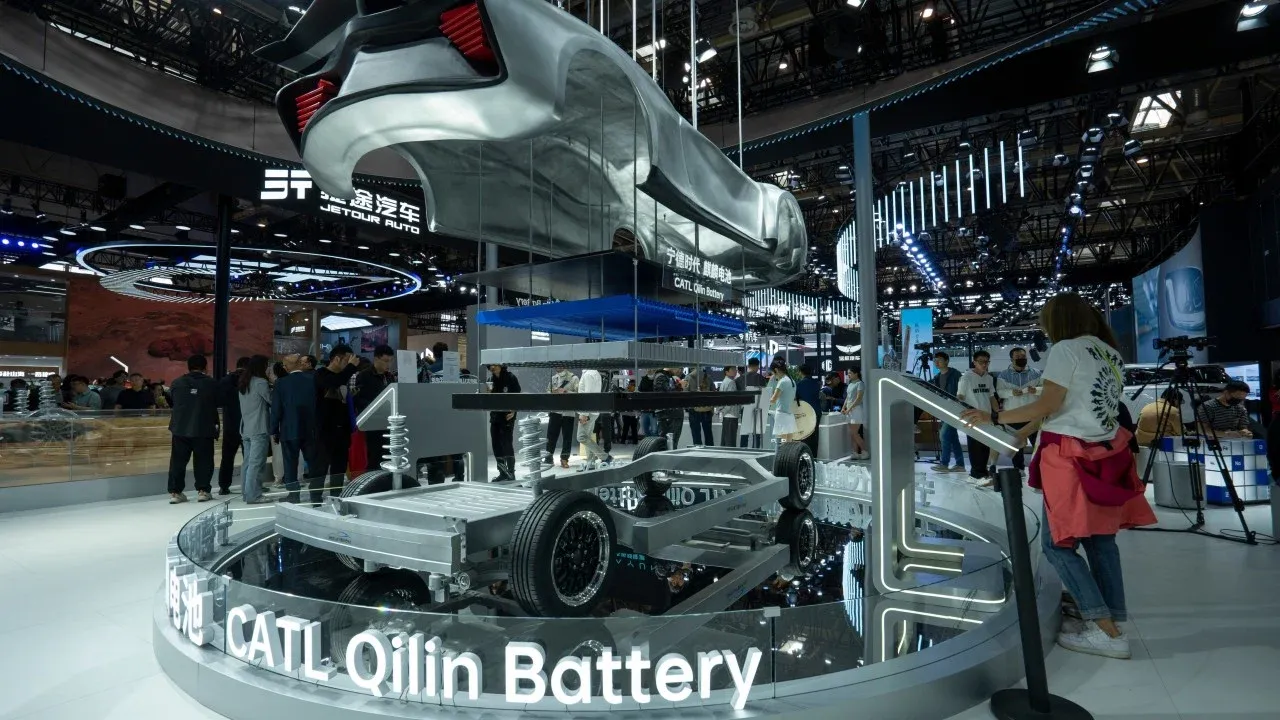
CATL, the world's largest battery maker, reported record second-quarter revenue of 147.79 billion yuan (US$21.8 billion) and record net profit of 22.5 billion yuan. But China’s weakening EV demand outweighed an energy shock benefit, leaving CATL slightly below market estimates.
CATL, China’s battery giant and the world’s largest battery maker, posted record results for the second quarter: 147.79 billion yuan (US$21.8 billion) in revenue and 22.5 billion yuan in net profit. Those figures rose sharply year over year, with revenue up 56.92% and net profit up 36.5%, according to the report.
The catch for decision-makers is that CATL “slightly missed market estimates” for both revenue and net profit. In other words, the company hit big numbers and still landed a bit short of what investors were pricing in. The market is effectively telling CATL: records are nice, but the direction of China’s EV cycle matters more than any single quarter’s headline.
So what changed? The source points to a simple but high-stakes mix: China’s weakening demand for electric vehicles (EVs) outweighed benefits from the “energy shock.” Translation for non-battery folks: CATL’s business is tightly coupled to how quickly automakers ramp EV production and how pricing and incentives shift across the supply chain. When EV demand slows or becomes more uncertain, battery orders can soften even if the underlying technology and manufacturing scale remain strong.
Meanwhile, the energy shock benefit sounds like a tailwind, but the story implies it was not strong enough to fully offset EV weakness. That matters because battery companies often operate with a planning discipline that assumes policy momentum and consumer demand stick. If one side of that equation weakens, it can show up quickly in revenue timing and profit conversion, even if the company is still growing rapidly.
From a regulatory and policy perspective, the tension is familiar in China’s green energy push. EV demand has been influenced by subsidies, charging infrastructure rollout, and broader industrial policy aimed at accelerating electrification. The source frames CATL’s results within that macro backdrop: a green energy boom is present, but it is not a straight line. When policy-driven demand and market-driven demand diverge even slightly, the “world’s largest battery maker” can still face estimate pressure.
This is also why the “record” label can feel misleading to the market. A quarter can be operationally strong and still be a disappointment on guidance or expectations. For boards, CFOs, and investment committees, the key question becomes: are the missing estimates a one-off timing issue, or are they a signal that EV demand in China is cooling enough to reset expectations for near-term battery volumes and pricing?
The second-order implications extend beyond CATL’s P&L. CATL’s scale makes it a reference point for the entire battery ecosystem, from upstream raw materials to downstream automakers and even competitors investing in next-generation chemistries. When the sector’s pricing power or order flow is pressured, competitors may accelerate capacity or adjust commercial terms. Automakers, for their part, may renegotiate battery supply contracts based on delivery schedules and cost assumptions. In short, even a “slight miss” can ripple through procurement, hedging decisions, and capital allocation.
For executives at other companies exposed to the EV cycle, this quarter is a reminder to separate two concepts: growth from scale and growth from market momentum. CATL’s revenue and net profit grew year on year at very strong rates, but investor expectations appear to have been set even higher, likely influenced by the idea that green energy momentum and supply chain constraints would keep improving.
Here’s the strategic stakes, directly tied to the numbers: CATL’s record 147.79 billion yuan revenue and 22.5 billion yuan profit show the business can still compound. But missing market estimates, even slightly, suggests the market is tightening the link between EV demand and battery earnings. For peers deciding how to ramp capacity, price contracts, or manage inventory risk, the message is clear. You can achieve records and still get punished if the EV demand trajectory wobbles faster than the market expects.
This story's Key Insights and Take-aways are locked.
Create a free account to unlock Executive Actions for one credit.
Register to UnlockAlways free for Executives Club members. Join the Club
More in Business

Anthropic’s Levant Alpöge cracks the Jacobian conjecture after 87 years
A Harvard valedictorian used Claude to hit a 1939 breakthrough, but the missing “why” is the real problem.

Uber buys Delivery Hero for nearly $15B, vaulting to top food delivery outside China
The deal doubles Uber's dual-services footprint and pushes a ride-and-eats bundling play into 50 more markets.

Epic and Google drop settlement bid, forcing rival Android app stores by July 22
Google told the court it is ready to carry third-party app stores starting Wednesday, July 22.