

CD Projekt locks Witcher 3 expansion Songs of the Past for gamescom 2026 and 2027
Opening Night Live gets the reveal, Fool’s Theory co-development continues, and Geralt’s third expansion ships on PS5, Xbox Series X|S, and PC in 2027.
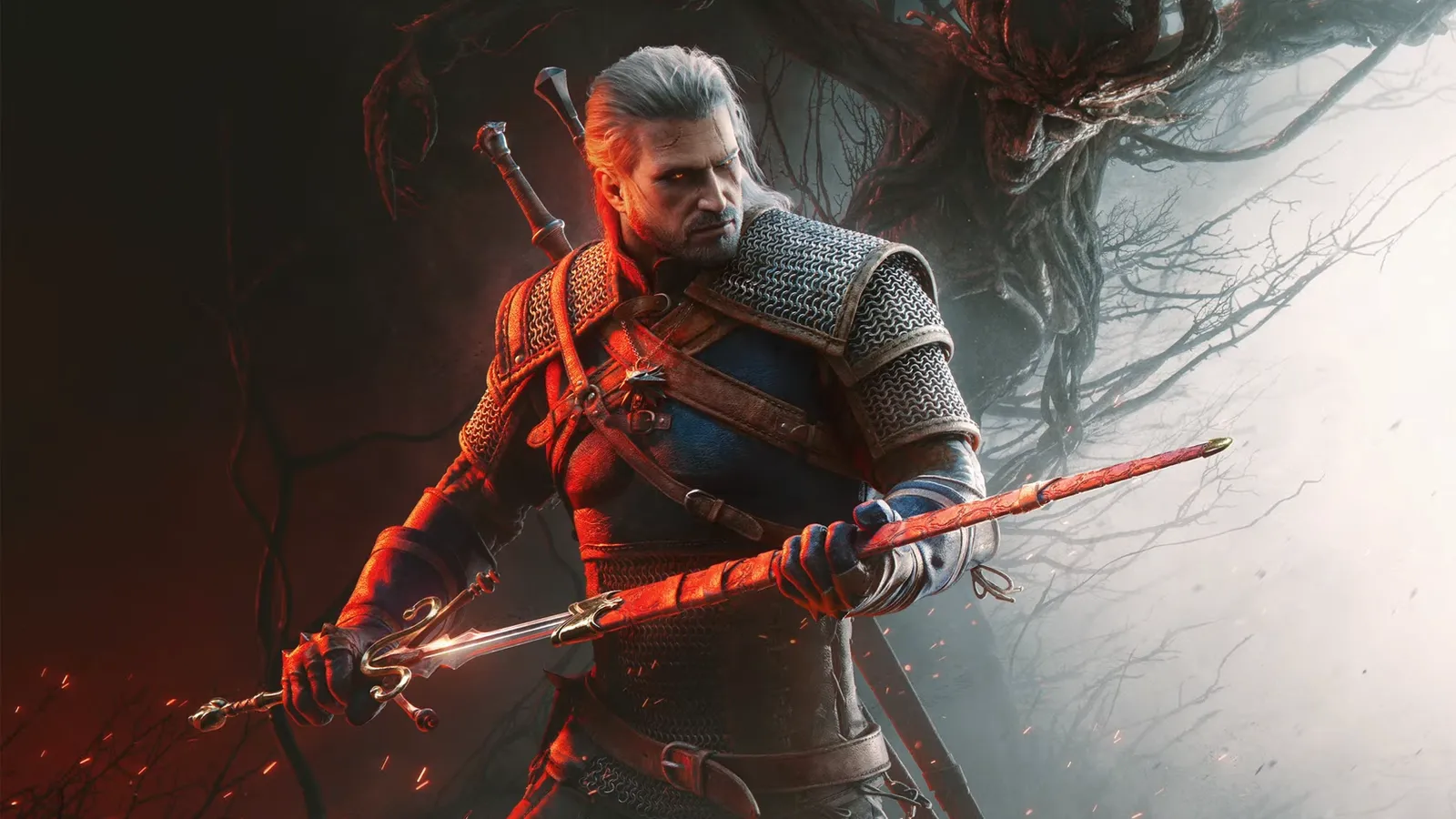
CD Projekt announced that The Witcher 3: Wild Hunt - Songs of the Past will be revealed at gamescom 2026 during Opening Night Live, with co-development by Fool’s Theory. For decision-makers, the 2027 launch shift signals deliberate scope and positioning, while anchoring attention ahead of The Witcher 4.
CD Projekt just pinned down two major calendar points for one of gaming’s longest-running “wait, what’s next?” storylines. The Witcher 3: Wild Hunt - Songs of the Past will be revealed at gamescom 2026 during Opening Night Live, and the expansion itself is due out in 2027. That’s not a vague “soon” or a soft window. It is a confirmed show-and-ship moment, with platforms already lined up: PlayStation 5, Xbox Series X|S, and PC.
The other real decision hiding behind those dates: CD Projekt is choosing to take extra time. Its joint CEO Michał Nowakowski said the company had assumed Songs of the Past would be released this year, but decided together with the development team to launch in 2027 to achieve the “best possible result from the consumer standpoint.” And yes, he explicitly framed it as the “only ultimate thing that really matters,” which matters because expansions are not just content. They are reputation management, re-engagement strategy, and a bridge product that has to earn its place.
Songs of the Past is positioned as the third expansion for CD Projekt’s fantasy masterpiece. It will bring players back to Geralt of Rivia, the legendary monster slayer, for a brand new adventure when it launches in 2027. CD Projekt also confirmed it is co-developing the expansion with Fool’s Theory, a team described as “industry veterans” who worked on The Witcher 3. That is a meaningful staffing and continuity signal. When a sequel-adjacent product is built by people who already shipped the original, it reduces certain execution risks, even if it does not eliminate them.
CD Projekt’s messaging goes beyond “more Witcher.” Nowakowski suggested that Songs of the Past will help set the stage for The Witcher 4. He described it as a prologue “in a way,” with an indirect purpose: “maintain certain chatter on The Witcher 3.” Importantly, he also said it is not a verbatim prologue. In other words, the company is not selling a direct narrative handoff only. It is also using the expansion to keep the franchise conversation alive while the next mainline entry remains in development.
That’s where strategic stakes get interesting for industry peers. Long-running franchises live and die by attention cycles. A 12-year gap after The Witcher 3 launched, and 11 years after Blood and Wine, means the audience is older, the market is louder, and “waiting” becomes a competitive disadvantage unless you actively rebuild momentum. CD Projekt is effectively choosing a structured re-entry: reveal the expansion at a major trade show window during Opening Night Live on gamescom 2026, then give it time to land in 2027 with the kind of polish that lets the expansion feel like it belongs in the same universe as Blood and Wine.
CD Projekt also teed up what the story focus could feel like through fan-facing hints. During a livestream aimed at The Witcher fans, senior community and social media manager Laura Beitzel teased that there are “hints waiting for you on a very important evening in Witcher lore, Belleteyn Night.” That comes with details tied to an artwork and poem posted on social media in April: Geralt resting by a bonfire as Dandelion plays the lute while villagers dance, plus Geralt holding a mysterious new sword. The sword is highlighted again in the Songs of the Past reveal artwork, including an unusual ornate curved crossguard.
CD Projekt’s Amelia Korzycka added a concrete narrative promise: Geralt is holding a sword, and it is “a very important sword for the story,” which players will “get to know” when the game comes out. In execution terms, that kind of prop-driven storytelling often correlates with meaningful mechanics or quest architecture, because studios usually do not spotlight a distinct weapon design unless it is doing work in the gameplay loop.
Beitzel also addressed expansion size and expectations. She said Songs of the Past will be aligned with what players are familiar with in Blood and Wine, and that “It’s an expansion, let’s make it clear.” Beyond narrative and scope messaging, CD Projekt confirmed two other practical items: the expansion will include more Gwent cards, and the company was still working on cross-platform mod support for The Witcher 3 to launch at some point in the future. And despite all the confirmations, CD Projekt has not yet shown Songs of the Past in any gameplay form since announcing it in May. So the most likely next inflection point is the trailer, and possibly gameplay, at ONL on August 25. The show kicks off at 11am PT / 2pm ET / 7pm UK time / 8pm CEST.
Zooming out, the franchise context is huge. The Witcher 3 recently hit 65 million copies sold. That matters for investors, board members, and executive teams because it changes how expensive it is to get “good enough” wrong. You can’t treat a decade-old blockbuster like a normal live-service add-on. Every expansion becomes a stress test of whether the studio can keep delivering at a premium bar after years of change in both tech and audience expectations.
Meanwhile, CD Projekt is busy on multiple fronts: working on The Witcher 4 with no release window yet, and developing Cyberpunk 2. In that kind of portfolio pressure, delaying an expansion to 2027 is not just a timeline tweak. It is a capital allocation and production management decision. The company is telling the market it would rather ship later than compromise on quality, and that it wants the expansion to function as a bridge that supports The Witcher 4’s narrative and marketing runway.
For other executive teams watching, the headline lesson is straightforward: confirmed reveal windows and confirmed launch years are rare in a business where “eventually” is the default. CD Projekt is acting like a studio that knows its audience is still there, but only if the next move feels deliberate, premium, and worth the wait.
This story's Key Insights and Take-aways are locked.
Create a free account to unlock Executive Actions for one credit.
Register to UnlockAlways free for Executives Club members. Join the Club
More in Business

Anthropic’s Levant Alpöge cracks the Jacobian conjecture after 87 years
A Harvard valedictorian used Claude to hit a 1939 breakthrough, but the missing “why” is the real problem.

Uber buys Delivery Hero for nearly $15B, vaulting to top food delivery outside China
The deal doubles Uber's dual-services footprint and pushes a ride-and-eats bundling play into 50 more markets.

Epic and Google drop settlement bid, forcing rival Android app stores by July 22
Google told the court it is ready to carry third-party app stores starting Wednesday, July 22.