

Celtic leaders quietly game UK breakup if Reform wins, with Farage in the mix
Across Ireland, Northern Ireland, Scotland, and Wales, politicians brace for constitutional turmoil even if Reform only leads opposition.
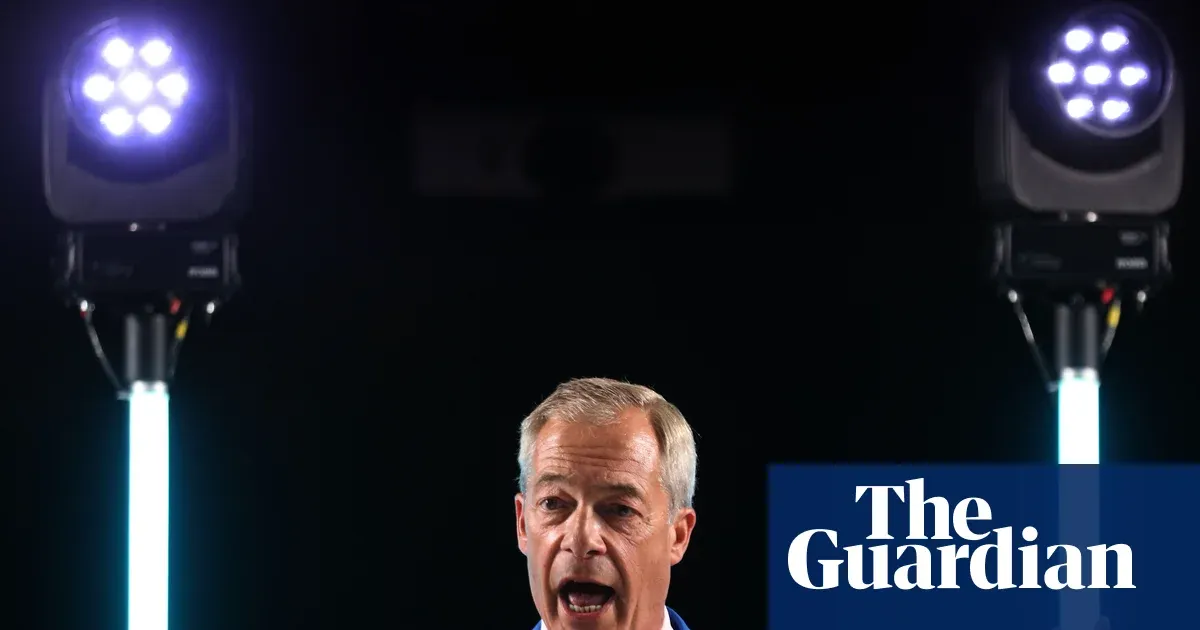
Nigel Farage’s Reform UK has triggered scenario planning by political leaders across Ireland, Northern Ireland, Scotland, and Wales. The consequence is clear: decision-makers are preparing for possible constitutional turmoil after the next election, whether Reform governs or holds strong opposition power.
Politicians across Ireland, Northern Ireland, Scotland, and Wales are quietly gaming the unthinkable: a breakup of the United Kingdom. The trigger is the rise of Nigel Farage and the prospect that Reform UK could emerge triumphant after the next election, with Farage either as prime minister or as official leader of the opposition.
That distinction matters, because the source is explicit: leaders are bracing for constitutional turmoil not only if Reform UK ends up in government, but even if it only becomes a strong opposition. In other words, the fear is not limited to who sits in office. It is about what a newly empowered Farage-led bloc could do to the constitutional temperature of the UK, spilling into the nations that have their own complicated relationship with Westminster.
To understand why this kind of planning is getting airtime now, zoom out to how the UK’s constitutional settlement functions in practice. Devolution means Scotland, Northern Ireland, and (in different ways) Wales can exercise power in areas where they live with their own political incentives. Ireland adds another layer of sensitivity because of Northern Ireland’s status and the fact that constitutional change there is never “internal-only.” So when political leaders start running breakup scenarios, it is not because someone suddenly woke up dreaming of independence. It is because incentives shift when a party that is openly associated with breaking the status quo gains the leverage to force decisions, delay agreements, or make existing arrangements politically untenable.
And Reform UK’s rise is being treated as leverage, not just messaging. If Reform wins and Farage becomes prime minister, unionists who want to save the union and nationalists who want to end it both have strong reasons to test boundaries immediately. Unionists may push for clearer protections, tighter coordination, or renegotiation of powers to keep the union cohesive. Nationalists may see political cover to accelerate independence arguments, because a UK-wide governing party with disruptive energy can make “waiting” feel pointless.
The source also underlines a second path to instability: even a strong opposition can produce the same kind of constitutional jolt. If Farage becomes official leader of the opposition, the opposition can still reshape parliamentary arithmetic and agenda-setting, drive negotiations into high conflict, and force repeated votes that exhaust institutions and staff. In a system already stressed by constitutional questions, repeated confrontations are not just theater. They can be a mechanism for turning constitutional disputes into ongoing governance problems. That is what leaders in the Celtic nations are bracing for, as the text puts it: constitutional turmoil.
There is a market logic to this kind of political planning, even when the source is strictly political. Financial markets, investors, and cross-border businesses tend to price uncertainty early. When leaders game constitutional outcomes, they are implicitly acknowledging how regulatory and legal plumbing would be affected by any breakup pathway. That plumbing includes everything from UK-wide frameworks that businesses rely on to the administrative reality of how decisions get made, enforced, and appealed. Even without naming any specific regulators, the practical implication is that firms operating across the UK’s component nations face higher uncertainty about which rules apply, who has the authority to change them, and what transition looks like.
For executives and boards, the second-order effect is that “constitutional risk” becomes an operating risk. It can show up as delayed investment decisions, contract renegotiations, changes in supply chain planning, and compliance teams spending more time on scenario analysis than execution. That is especially true for businesses with cross-border relationships involving Northern Ireland and the wider Ireland question, because administrative shifts there tend to have outsized operational consequences. Even for companies that are not “political,” the constitutional setup determines legal authority, enforcement, and timelines. When those are uncertain, it forces leadership to treat politics like a variable in risk models, not a background condition.
Finally, there is a governance dynamic that matters beyond the nations directly involved. The source frames a standoff between unionists and nationalists: those who wish to save the union versus those who wish to end it. That tension is being operationalized through scenario planning across multiple political jurisdictions, which signals how seriously leaders are taking the possibility of Reform UK’s success. If you are a CEO, CFO, or board member in any UK-adjacent or UK-dependent organization, the strategic stake is straightforward: plan for outcomes where institutions are not just changing leadership, but potentially changing the rules of the game itself. The headline here is not simply “Reform could win.” It is “political leaders are already preparing for constitutional turmoil that could follow, whether Reform governs or stands as a dominant opposition.”
This story's Key Insights and Take-aways are locked.
Create a free account to unlock Executive Actions for one credit.
Register to UnlockAlways free for Executives Club members. Join the Club
More in Politics

Glacial collapse, not rain, killed 180 in Nepal's Himalayan flood
The Himalaya's extreme geography hid the true cause of Nepal's catastrophic flood, a glacial collapse that turned a geological battleground into a mass-casualty zone.

Iran’s Esmail Baghaei says Oman talks start shipping via Hormuz, not US talks yet
Temporary route plans with Oman aim to restart commerce while Tehran says Washington dialogue is not on the table.

Standards watchdog opens probe into Reform UK deputy leader Richard Tice over interests
The parliamentary standards commissioner says it began an investigation on 28 July into a possible undeclared interest.