
Charli xcx drops a black-and-white theatrical film with Music, Fashion, Film: 1 album, 11 visuals
The short film rollout turns an album release into a full-screen creative thesis, plus a concrete lead-in to her Lollapalooza headline.

Charli xcx released a short black-and-white theatrical film to accompany her Music, Fashion, Film album on Friday (July 24). The move turns the project’s narrative into a visual experience and tees up live performances including Lollapalooza on July 31 and a September North American arena tour.
Charli xcx didn’t just release Music, Fashion, Film on Friday (July 24). She built an accompanying theatrical short film, shot entirely in black-and-white, and designed it as the “why” behind the “what” of the album. The clip plays like more of a journal entry than a conventional intro, with Charli walking viewers through her inspiration and creative process before the music fully kicks in. For fans, it’s an invitation to watch her work the same way they would watch a film draft. For everyone else in the industry, it’s a not-so-subtle proof of concept: music releases are becoming multi-format story packages, and the visual component is no longer optional.
That creative framing matters because the album itself operates like an end-to-end visual system. Every song essentially functions as a music video, packed with mountains of cigarettes, fashion shoots, and roaming through London. Charli even uses the transitions to provide context heading into each track, turning the tracklist into a sequence rather than a playlist. That means the theatrical film is not a detached bonus. It is the front door to how she wants you to interpret what you hear, starting from the film’s black-and-white aesthetic and continuing through the album’s cinematic structure.
The backstory to the rollout is also unusually explicit about authorship. Ahead of the album’s arrival, Charli showed the film in theaters to audiences across the globe, asking viewers to hear and process it visually as she intended. In the lead-up, she framed the album process as collaborative and fast-moving: “Throughout this album process, I’ve been making things with my friends and I’ve been loving every minute of it. I made the whole album with A.G. Cook and Finn Keane,” she said. “Two people that have become my close, close friends through working on music and creating things together. I’m so excited for you to hear this album.” That matters for decision-makers because it signals a production model built around creative partnership, not just studio schedules. When the film and album launch are treated as one package, the team’s internal rhythm becomes a competitive advantage.
The film’s content also reinforces how Charli is turning specific pop tropes into actual scenes. Before “Card Declined,” she details her love for shopping while traveling through cities like Paris and London, which is exactly the kind of personal-throughline that helps audiences remember the narrative logic of a project. On “Camera,” actor Vincent Cassel stars in a video that is explicitly about the relationship between performer and camera, described by Charli as tempting and exciting, but also “unbelievably vulnerable and a bit embarrassing.” That line is doing work. It’s not only an artistic statement; it helps explain why the visuals look the way they do. The camera is not just a recording device in her world, it is a character that forces exposure.
And then there are the high-profile cameos, which show how big-name film and music identities are increasingly overlapping. The album closer “No One Lasts Forever” features an appearance from director David Cronenberg. Charli gives deeper context into their conversation that took place in Toronto, centered on the mortality of life and its connection to art. Whether you’re a creative executive or a board member tracking audience engagement, this is the strategic blend: pop culture reach plus film credibility, all packaged in a consistent visual language. The black-and-white choice is the connecting tissue. It keeps the project from feeling like a random collage and makes it feel like an actual authored film experience.
There is also a live-business angle to all of this. Music, Fashion, Film follows Charli helming the Wuthering Heights soundtrack in February, which debuted at No. 8 on the Billboard 200, and 2024’s Brat blockbuster. That track record matters because it suggests her experiment with cinema-and-music synthesis is not a one-off. It is a repeatable growth strategy that can translate from studio to chart performance and then into performance settings. Charli will perform cuts from her new album when she headlines Lollapalooza next Friday (July 31) at Chicago’s Grant Park. She’ll then embark on a North American arena tour in September. From an operator’s standpoint, the sequencing is clean: theatrical exposure creates early narrative buy-in, then festivals and arenas convert that buy-in into mass attention and ticket demand.
For peers thinking about rollout design, the second-order implication is clear: the “release” is no longer just a date. It’s a multi-stage media event. The fact that the film was shown in theaters globally before the album dropped raises the bar for how artists can mobilize distribution channels. At the same time, the project doesn’t rely on pure scale alone. It relies on coherence: black-and-white cinematography, track-to-track transition context, and scenes that connect personal experiences like shopping trips to broader themes like vulnerability and mortality. The strategic stake is simple: whoever can turn an album into a cohesive world builds more than streams. They build a permission slip for audiences to spend time, attention, and money on the experience.
This story's Key Insights and Take-aways are locked.
Create a free account to unlock Executive Actions for one credit.
Register to UnlockAlways free for Executives Club members. Join the Club
More in Entertainment

'It's a Magic Trick': Ballet Experts Say Rosalía's SNL Pose Is Impossible
Three ballet experts tell Rolling Stone Rosalía's gravity-defying SNL stillness shouldn't be possible - and why the debate is now part of the show.

Activision CMO: GTA 6 Will Boost Call of Duty, Not Bury It
Activision's top marketer says Rockstar's blockbuster will drive players back to consoles and into Modern Warfare 4, even as the company admits its recent strategy failed.
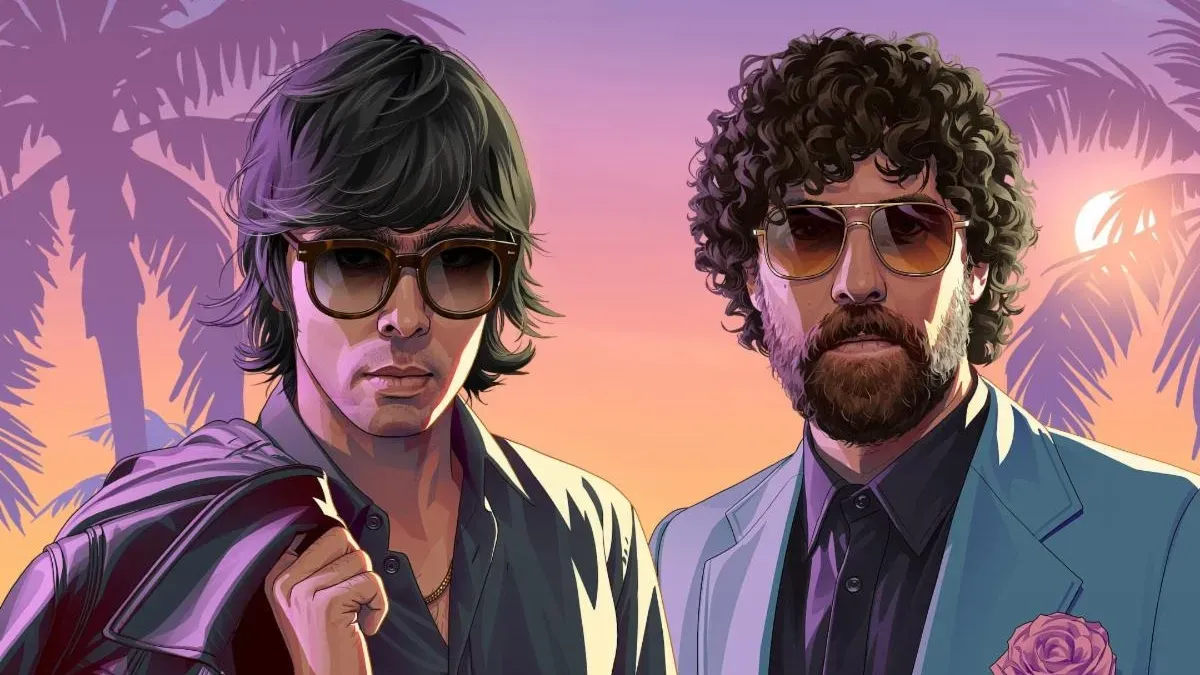
Justice to Score GTA 6, Share New Song with Tame Impala, SZA, King Gizzard
Rockstar taps the French duo for the GTA VI score, and the first taste is a genre-melting collab with Tame Impala, SZA, and King Gizzard & The Lizard Wizard.