

Chemours settles PFAS penalties and cleanup with $450M price tag across three states
A DOJ consent decree orders penalties, long-term mitigation spending, and clean-water delivery in West Virginia, North Carolina, and New Jersey.
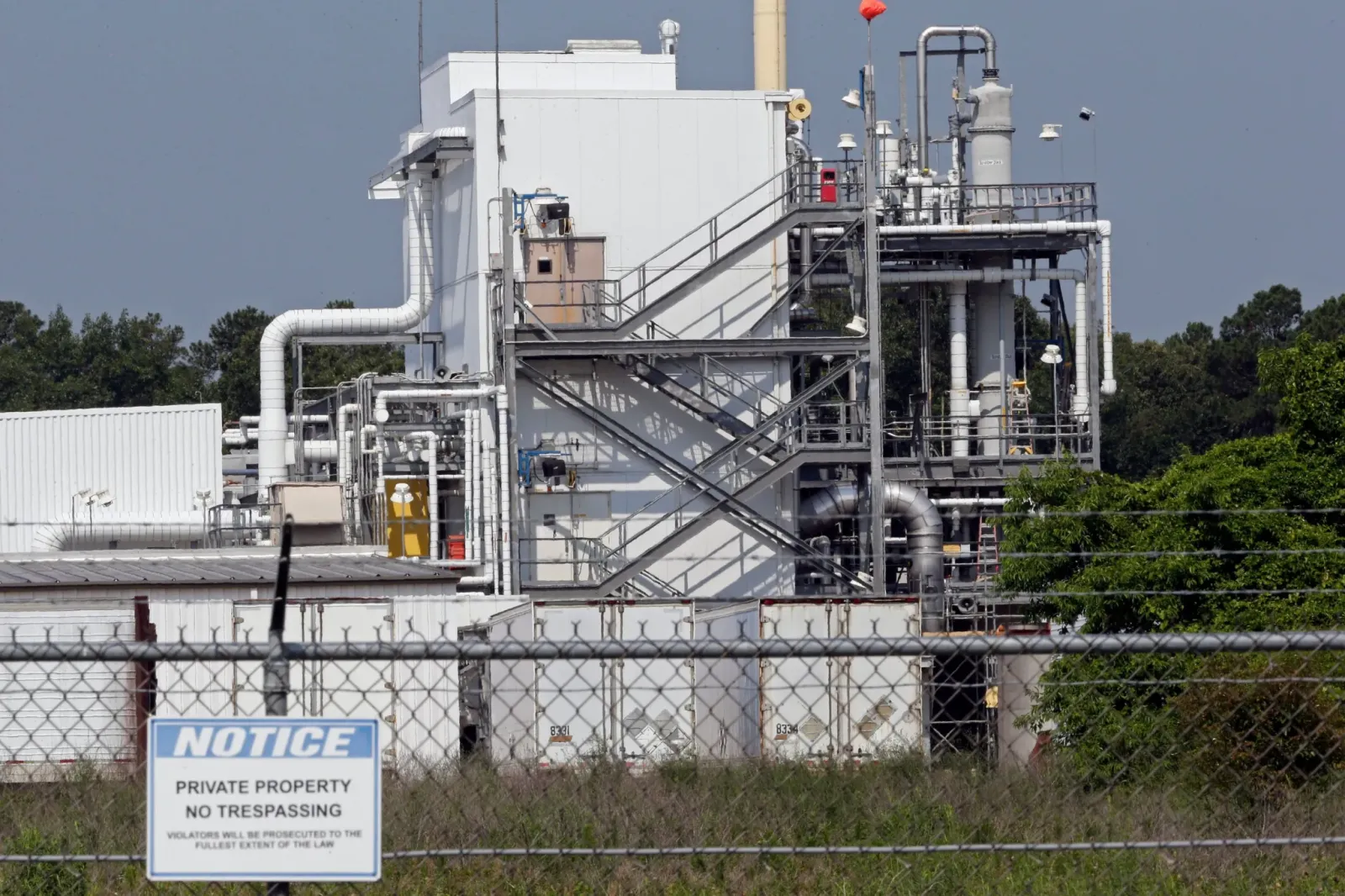
The U.S. Justice Department reached a multi-state settlement with Chemours Co. to resolve federal enforcement claims tied to PFAS discharges. The deal totals at least $450 million in penalties and relief programs and requires pollution controls plus clean drinking water around affected facilities.
Chemours is on the hook for at least $450 million to settle a long-running PFAS enforcement case, according to the U.S. Department of Justice. The agreement requires a $22.5 million civil penalty plus roughly $90 million over 15 years for mitigation programs in West Virginia, North Carolina, and New Jersey, and the overall penalties and relief programs are estimated to cost at least $450 million.
The money is not just a fine. Chemours must install PFAS pollution controls and improve treatment for surface water discharges and air emissions at a West Virginia facility, at an estimated cost of $60 million. It also must supply clean drinking water to communities near its West Virginia and New Jersey sites at an estimated cost of $280 million, and implement controls to reduce releases from its North Carolina facility based on a pending independent assessment.
Here is why this settlement matters beyond the headlines: it is described as the first federal government resolution of enforcement claims against a manufacturer of PFAS. The Justice Department says the settlement allows Chemours to continue manufacturing PFAS for commercial and military applications while preventing future contamination and protecting communities from existing pollution. In other words, regulators are trying to draw a line between “you can keep operating” and “you pay to clean up and stop new harm,” which is exactly the kind of balancing act that will test boards and compliance teams across the chemicals and industrial supply chain.
The case is rooted in alleged illegal discharges of synthetic “forever chemicals” used to make products resistant to water, grease, and stains. The settlement was filed in federal court in West Virginia. DOJ says Chemours facilities in the three states discharged PFAS into the Ohio River, the Cape Fear River, and the Delaware River, respectively, in violation of permits required by the Clean Water Act and state laws. DOJ also says Chemours violated legal requirements under the federal Toxic Substances Control Act at all three facilities, and that people living near the facilities were exposed to illegal PFAS. The violations, according to DOJ, continued for over a decade.
Corporate history is part of the regulatory story, even when it cannot change liability in the moment. The facilities were previously owned for many decades by DuPont, and the settlement announced Wednesday does not resolve DuPont’s liability for past PFAS violations. That means the chemical industry can still expect legal ripples even after a settlement, because different companies and different jurisdictions can move on separate tracks. For context, DuPont, Chemours, and Corteva agreed last year to pay New Jersey up to $2 billion to settle environmental claims stemming from PFAS, but DOJ’s federal settlement does not affect the state case.
There is also a court backdrop that signals how hard regulators have already leaned on compliance. A federal judge last year ordered Chemours to stop discharging unlawful levels of cancer-causing chemicals into the Ohio River from the company’s Washington Works plant in West Virginia. U.S. District Judge Joseph Goodwin’s August 2025 order said the pollutants endanger the environment, aquatic life, and human health. The West Virginia Rivers Coalition had asked the judge to require immediate compliance with permit limits after violations for more than five years.
North Carolina’s reaction shows why these cases can become politically combustible. North Carolina Attorney General Jeff Jackson called the settlement “an insult to the people of eastern North Carolina,” saying the state is “ground zero for GenX contamination” but that the deal “does practically nothing to clean up our water.” GenX is a trade name for a synthetic chemical developed by Chemours as an alternative to PFAS, and it has raised significant health and environmental concerns. Even without inventing new facts, the signal is clear: regulators and attorneys general may agree on enforcement in one forum and still argue the remedy is inadequate in another. In practical terms, boards should assume settlement terms can be questioned publicly and challenged legally, even when the company signs.
Timing is another complication. The settlement arrives as the Trump administration is expected to propose softening Biden-era limits on “forever chemicals” in drinking water while delaying, but keeping tough standards for two common types of the substance. Those Biden-era limits were finalized during the previous administration, and the agency at the time found they increased the risk of cardiovascular disease, certain cancers, and babies born with low birth weight. EPA Administrator Lee Zeldin said the agency is committed to addressing PFAS in drinking water while following the law and ensuring regulatory compliance is achievable for drinking water systems. For business leaders, the non-obvious takeaway is that even if drinking-water rules move, PFAS enforcement tied to Clean Water Act permits and federal toxic substance obligations can remain very real, very expensive, and very specific.
At the executive level, this settlement is a reminder that PFAS compliance is turning into an operating-cost line item, not a “someday risk.” The federal consent decree calls for 14 specific treatment systems to reduce PFAS in wastewater, stormwater, and groundwater from the West Virginia plant. Chemours must test drinking water near the West Virginia and New Jersey sites and provide treated or alternative clean water. Meanwhile, DOJ says the settlement will greatly reduce PFAS contamination of water, land, and air and even begin to mitigate past harm. For peers in regulated manufacturing, the strategic stakes are straightforward: when regulators shift how they price risk, the companies that already built measurement, treatment, and proof into operations do not just avoid headlines. They control the bill.
This story's Key Insights and Take-aways are locked.
Create a free account to unlock Executive Actions for one credit.
Register to UnlockAlways free for Executives Club members. Join the Club
More in Business

A flaw in PHP just forced governments to pull their own sites offline
European agencies from Belgium to Germany took websites dark to patch a critical weakness in the language behind almost 70% of the web, and the blast radius extends far beyond government portals.

BioWare shuts down, Mass Effect 5 dead after $55B EA buyout
The legendary RPG studio's closure lands months after a $55 billion investment group buyout of EA, raising tough questions for gaming's biggest acquirers.

Musk weighs Tesla-SpaceX mega-merger as boards form review panels
Special committees at both companies will examine a tie-up that could fuse electric vehicles and space launch, forcing a fresh look at governance and valuation.