

China hit a global nuclear record in 2025, outbuilding US and Europe combined
In 2025, China supplied more than all net growth while US output stayed flat and Europe fell again.
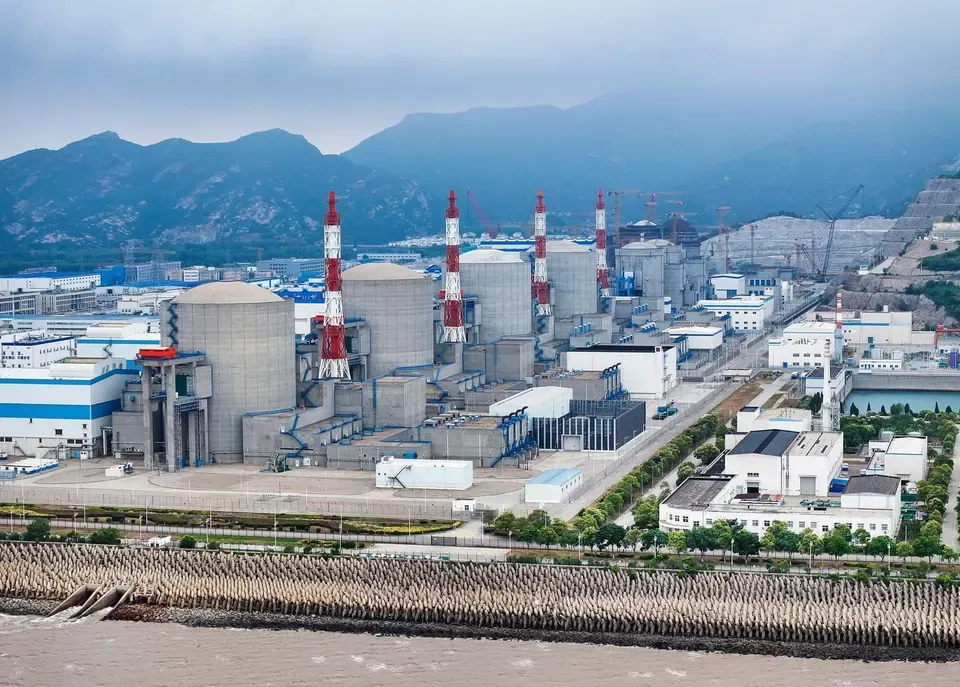
China drove global nuclear power generation to a record in 2025, supplying more than all net growth. The shift leaves decision-makers to rethink demand forecasts and capacity risk across US and European grids.
China drove global nuclear power generation to a new record in 2025, and it did so by carrying more weight than the rest of the world combined. The key point, spelled out in the reporting: China supplied more than all net growth in nuclear generation during the year. Meanwhile, U.S. nuclear output stayed flat and European generation fell further.
That is the headline in numbers without the mystery. In 2025, the global nuclear story was not a synchronized rebound. It was a split screen: China growing fast enough to dominate the net increase, and the U.S. offering stability rather than momentum while Europe continued to lose ground. If you are an executive tracking power supply, grid reliability, or long-cycle energy capex, this matters more than the usual “sector trend” headline because it changes who the world can lean on for baseload electricity.
To understand why this kind of record is so consequential, remember how nuclear power planning typically works. New build is measured in multi-year timelines, regulatory approvals can be slow, and construction risk accumulates over time. When one country runs ahead and the others do not, it does not just move generation charts. It shifts the center of gravity for equipment demand, fuel supply arrangements, and the engineering pipeline that supports the next generation of projects. In other words, a “record” is also an industrial signal, telling markets where future contracts, skilled labor demand, and supply chain focus are likely to concentrate.
The incentives behind those differences are often structural. China’s continued growth implies sustained policy and capital commitment to expanding nuclear capacity, which then translates directly into operating generation. By contrast, the source points to U.S. output staying flat. Flat output can still mean investments and lifecycle management are happening, but it also suggests the net effect in 2025 was not enough to produce growth on the same scale. For Europe, the reporting says generation fell further. That combination is a setup where global net growth does not come from “global recovery,” it comes from one driver.
Europe’s additional decline, alongside U.S. flat output, also matters for how planners think about regional power balance. Even if demand is growing or shifting, a falling nuclear contribution forces more reliance on alternatives. That can mean greater dependence on dispatchable generation, imports, or other energy sources. The second-order effect for executives is that the marginal supply coming from nuclear is not evenly distributed. That changes procurement priorities for utilities, contract structures for industrial buyers, and the risk calculus for anyone underwriting power availability.
Then there is the policy and regulatory framing. Nuclear is not just a commodity power source. It is also a regulated asset with strict oversight, safety requirements, and long-term licensing regimes. When one country consistently increases output while others plateau or decline, it signals that the regulatory environment and project pipeline are producing results. Decision-makers at utilities, equipment vendors, lenders, and large industrials should treat those signals as real constraints and opportunities. If the “next increment” of global nuclear generation is likely to be concentrated, the market dynamics for capacity expansion, component availability, and financing terms can follow.
Finally, consider what this implies for competition and strategy beyond the power sector. If China is supplying more than all net growth, it is effectively setting the pace for global nuclear capacity. That can affect global standards and expectations for performance and reliability, which then influences investor sentiment about nuclear economics. Boards and executive teams should also think about how their own capital allocation decisions might be judged against a world where nuclear growth is not a broad-based trend, but a concentrated one. In that environment, assumptions about the timing and geography of new baseload supply become a core input to planning, not a background variable.
This story's Key Insights and Take-aways are locked.
Create a free account to unlock Executive Actions for one credit.
Register to UnlockAlways free for Executives Club members. Join the Club
More in Business

Anthropic’s Levant Alpöge cracks the Jacobian conjecture after 87 years
A Harvard valedictorian used Claude to hit a 1939 breakthrough, but the missing “why” is the real problem.

Uber buys Delivery Hero for nearly $15B, vaulting to top food delivery outside China
The deal doubles Uber's dual-services footprint and pushes a ride-and-eats bundling play into 50 more markets.

Epic and Google drop settlement bid, forcing rival Android app stores by July 22
Google told the court it is ready to carry third-party app stores starting Wednesday, July 22.