
China may be a stealth buyer of U.S. debt - Canada's stash jumped to $465B
Official data shows Beijing's Treasury holdings at an 18-year low, but custodial shifts suggest the real number is far higher - and Canada is the tell.
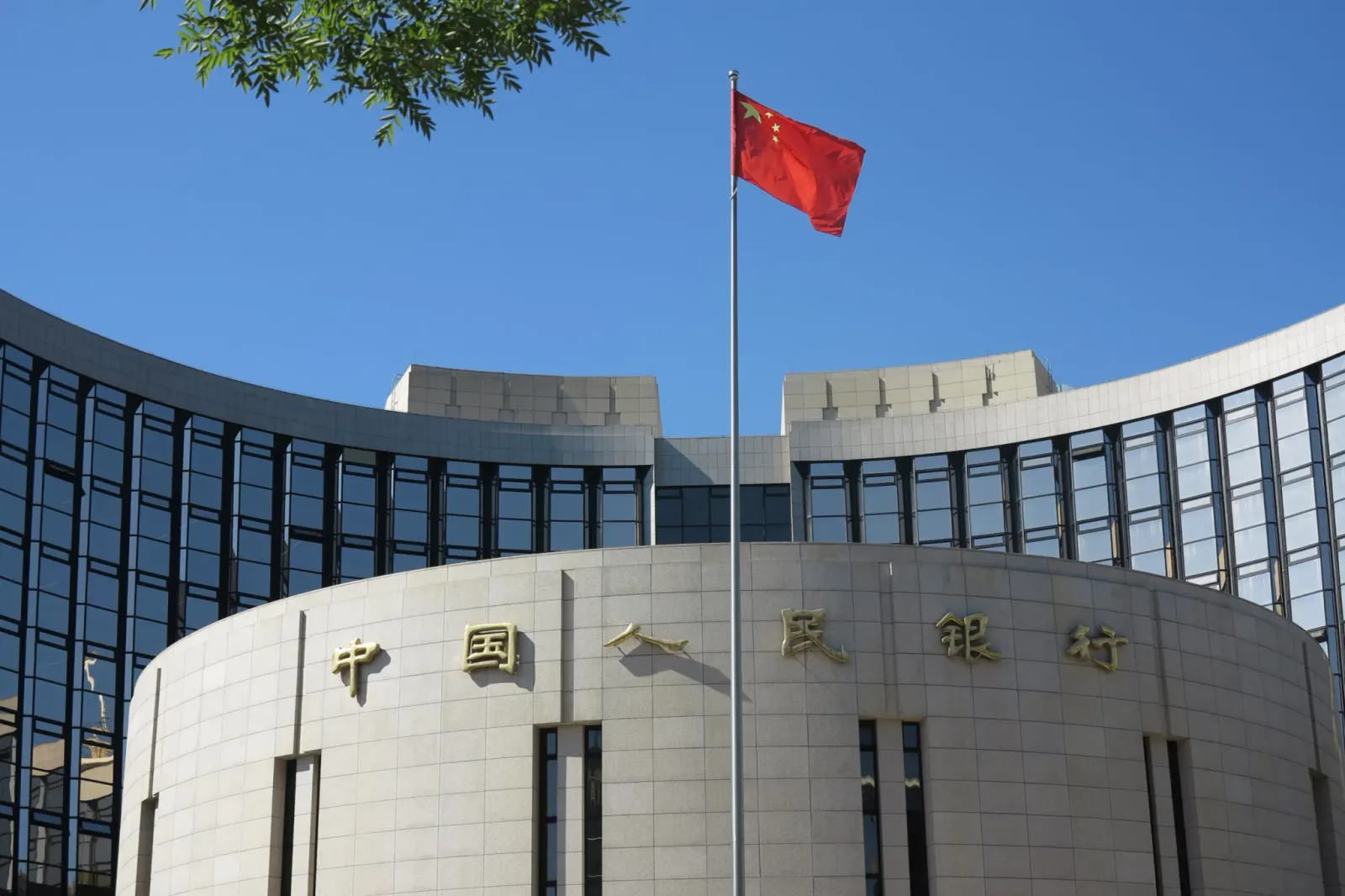
China's reported U.S. Treasury holdings fell to $591 billion in August, the lowest in 18 years, but former Treasury official Brad Setser argues Beijing is masking a far larger stash via custodians in Canada and Europe. For CFOs and treasurers tracking dollar flows, the gap between official data and reality could reshape assumptions about de-dollarization and reserve diversification.
China may be quietly buying U.S. debt through back channels, and the tell is sitting in Canada. Official U.S. data shows Beijing's Treasury holdings fell to $591 billion in August, the lowest in 18 years, but Canada's reported stash of U.S. Treasuries has exploded to $465 billion from $169 billion five years earlier - a jump that China watchers say points to Beijing parking its dollar assets in foreign custodians to mask its true footprint.
The numbers are not a coincidence. Brad Setser, a senior fellow at the Council on Foreign Relations and a former U.S. Treasury official, has documented how China's official decline aligns with suspicious surges in custodial accounts in Canada, Belgium, Luxembourg, and the U.K. Belgium's holdings, for instance, climbed to $490.5 billion from $228 billion over the same five-year span. Setser's estimate: add in those custodial centers and China's true U.S. financial holdings could be as high as $500 billion - roughly 50% to 55% of its entire reserve portfolio.
Why does the official data miss so much? The Treasury Department itself acknowledges the limitation: data is collected primarily from U.S.-based custodians and broker-dealers, so securities held in overseas custody accounts may not be attributed to actual owners. That opens a massive blind spot for anyone trying to gauge Beijing's dollar exposure - and for markets trying to price de-dollarization risk. If China is indeed hiding hundreds of billions in plain sight, the widely reported 'dumping' narrative is at best incomplete, and at worst a misread of the world's largest cross-border capital flow.
The context makes the stealth-buyer theory more plausible. China's reported selloff began in earnest around 2021, and as recently as April 2022 Beijing still held $1 trillion in Treasuries. Since then, the official number has been whittled down to $591 billion, a decline of more than 40% from a year earlier when it stood at $700 billion. The geopolitical incentives to sell are obvious: U.S. sanctions on Russia after its 2022 invasion of Ukraine pushed the People's Bank of China and other central banks to diversify away from dollar reserves and toward gold and other alternatives. President Donald Trump's trade war, particularly focused on China, gave Beijing even more reason to decouple.
Yet China's economic model creates a powerful counterweight. With domestic demand stagnant amid a festering property crash and debt hangover, Beijing has relied more heavily on export-led growth. The result: a record $1.2 trillion trade surplus in 2025, the largest in recorded history, growing three times faster than global goods trade. This year looks even bigger - the first nine months of 2026 alone produced a $938 billion surplus. Massive surpluses must be recycled somewhere, and Treasuries remain one of the few markets deep enough to absorb that scale. Selling them all would leave Beijing with a dollar-denominated income problem.
So instead of a wholesale exit, China appears to be rotating its holdings into non-U.S. custodian banks, keeping the assets off the official radar while still earning dollar yields. Setser notes that since roughly 2020, there has been a huge increase in Treasuries held in custodians in the U.K., France, Luxembourg, and Belgium. Even a conservative adjustment looking only at Canada, Luxembourg, and France since 2022 puts China's holdings at around $300 billion. The pattern is consistent with deliberate obfuscation, not accidental accounting.
The implications extend far beyond China watchers. For global treasurers and CFOs, the data gap means official cross-border capital flow figures may be systematically understating China's dollar demand. It also suggests the de-dollarization narrative is more nuanced than headline numbers suggest - Beijing isn't abandoning the dollar so much as hiding it. For policymakers, it raises questions about how effective sanctions and tariff pressure really are if China can simply shift custodians. And for investors, it means the 'China is selling everything' story is likely overdone.
Setser's bottom line: 'Both the Treasury and the Agency portfolios need to be adjusted for the bonds that China keeps on custody in Canada and in Europe. That adds to uncertainty around the estimate, as it seems likely that China is now using multiple non-U.S. custodians to mask its true holdings.' The uncertainty itself is the story. For anyone making capital allocation, FX hedging, or trade policy decisions, the official data is no longer a reliable map. The strategic takeaway: don't mistake a headline for a trend. China's reported Treasury holdings are at an 18-year low, but the real exposure is likely far larger and deliberately obscured. Look past the official numbers - and to Canada.
This story's Key Insights and Take-aways are locked.
Create a free account to unlock Executive Actions for one credit.
Register to UnlockAlways free for Executives Club members. Join the Club
More in Business

Elon Musk unveils a flying car, and SpaceX helped build it
The Tesla CEO's showcase at a SpaceX facility signals a future where road and rocket engineering converge.

Apple's $2,000 iPhone Duo opens preorders, taking on Samsung and Google
Apple's first foldable hits the market at a premium price, reshaping a category Samsung and Google have led.

Pope Leo XIV, first American pope, diagnosed with lung cancer
The 71-year-old Chicago-born pontiff underwent successful surgery on his right lung, and his diagnosis raises new questions about his AI-focused papacy and the Vatican's future.