

China plans US$2.2B Hong Kong sovereign bond sale next week as yuan demand grows
Ministry of Finance targets 15 billion yuan in offshore markets, reinforcing Hong Kong’s role for investors shifting currency exposure.
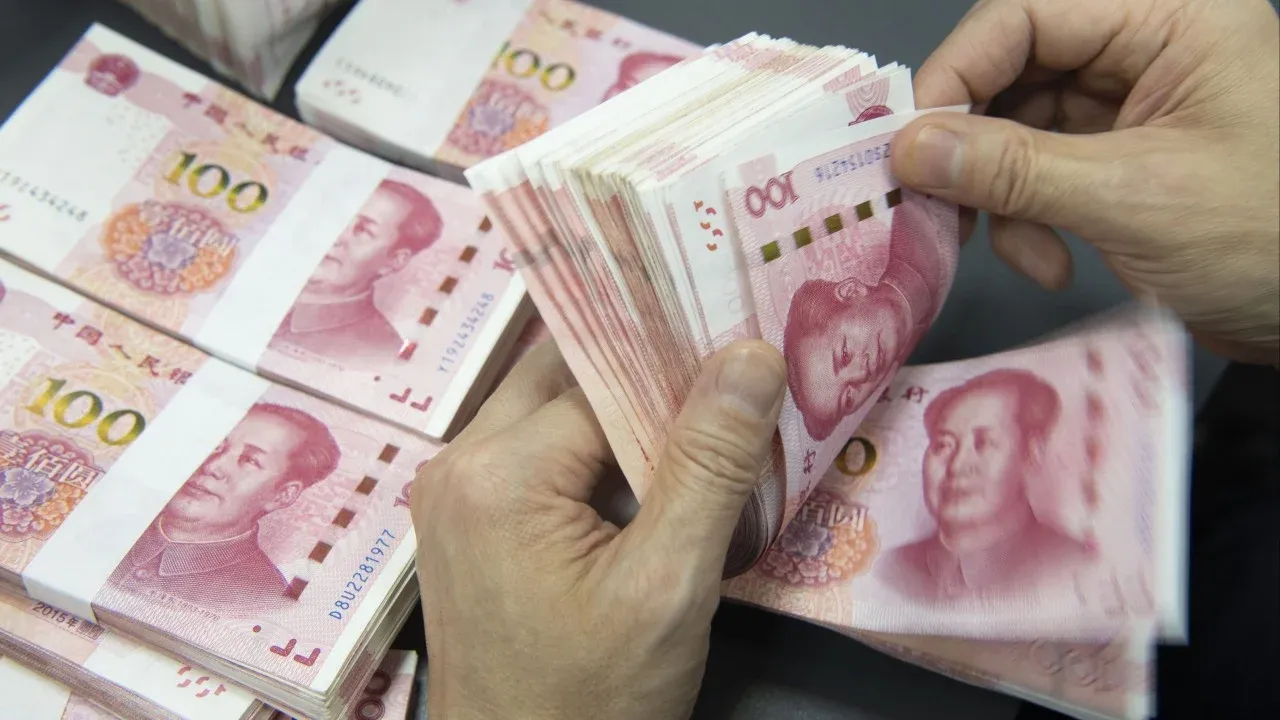
China’s Ministry of Finance announced it will issue 15 billion yuan (US$2.2 billion) of sovereign bonds in Hong Kong next week, its third issuance this year. For decision-makers, it signals continued official support for offshore yuan demand and portfolio diversification amid ongoing geopolitical uncertainty.
China’s Ministry of Finance is preparing a US$2.2 billion sovereign bond sale in Hong Kong next week. The announcement, made on Wednesday, puts 15 billion yuan of bonds on the table and marks the Ministry’s third issuance in 2024.
That timing matters. This is happening in Hong Kong, and the point is not subtle: the move is designed to strengthen the city’s position as the world’s largest offshore yuan trading hub. In other words, it is official issuance adding fuel to a market that already attracts global investors looking for yuan exposure outside mainland China’s onshore system.
So why would investors line up for this specific sale? The immediate logic in the reporting is currency momentum. Analysts expected demand to be strong because the yuan had been appreciating against other currencies. When a currency is strengthening, investors who own that currency (or want exposure to it) often find the trade more attractive. Add in that many international investors were diversifying their portfolios amid geopolitical tensions, and you get a pretty clear demand recipe: seek assets with different risk drivers, and do it using a currency that is moving in your favor.
Also, look at what “third issuance this year” implies. It is not a one-off trial; it is a pattern. When a government repeatedly taps offshore markets, it is effectively teaching global participants to expect supply and to build the plumbing for it. Bond issuance is more than fundraising. It is a market signal that helps establish liquidity, benchmarks, and expectations for future yuan-denominated assets in Hong Kong.
For executives and boards, the operational relevance is straightforward: offshore yuan bonds can be a gateway to broader yuan allocation. Many institutional investors do not treat currency exposure as a standalone bet. They wrap it into portfolios through instruments that are tradable, regulated, and familiar. A sovereign offering, priced and distributed in Hong Kong, gives investors a scalable way to gain yuan exposure while also anchoring the market around official paper.
There is another practical layer here: Hong Kong’s role as the offshore yuan trading hub is already globally central, and government issuance is one of the mechanisms that keeps it that way. Sovereign bonds create reference points for pricing, duration, and yield expectations. The more these exist, the easier it becomes for other issuers and investors to participate, whether they are institutions hedging currency risk, multinational firms managing settlement exposure, or funds adjusting country and currency mix.
And we should not ignore the macro backdrop referenced in the story. Geopolitical tensions have been pushing some international investors to diversify. Diversification does not automatically mean “buy the riskiest asset.” Often it means spread risk across different currencies, jurisdictions, and market structures so a single shock does not dominate the portfolio. Yuan appreciation, as cited by analysts, adds a timing advantage: diversification that also benefits from favorable currency movement tends to attract attention.
What does this mean as a second-order effect for peers? If official issuance in Hong Kong continues to meet demand, offshore yuan instruments can become a more routine part of how investors express global exposure. That can shift competitive dynamics. It can also influence treasury strategies at companies with cross-border flows, particularly those that need a credible local market for yuan liquidity. In a world where currency markets can reprice quickly, having deeper offshore yuan channels can reduce friction and improve execution for those who manage cash, hedges, or investments.
Bottom line: the Ministry’s planned 15 billion yuan (US$2.2 billion) sovereign bond sale next week is a concrete action, not a headline-only theme. It reinforces Hong Kong’s role as the world’s largest offshore yuan trading hub, and it is arriving at a moment when analysts expect strong demand due to yuan appreciation and investor portfolio diversification amid geopolitical tensions. For decision-makers watching markets from both the capital markets and risk angles, this is a reminder that currency strategy is increasingly being expressed through the official issuance pipeline, and that pipeline is pointing straight through Hong Kong.
This story's Key Insights and Take-aways are locked.
Create a free account to unlock Executive Actions for one credit.
Register to UnlockAlways free for Executives Club members. Join the Club
More in Business

Anthropic’s Levant Alpöge cracks the Jacobian conjecture after 87 years
A Harvard valedictorian used Claude to hit a 1939 breakthrough, but the missing “why” is the real problem.

Uber buys Delivery Hero for nearly $15B, vaulting to top food delivery outside China
The deal doubles Uber's dual-services footprint and pushes a ride-and-eats bundling play into 50 more markets.

Epic and Google drop settlement bid, forcing rival Android app stores by July 22
Google told the court it is ready to carry third-party app stores starting Wednesday, July 22.