
China's brain-computer approvals accelerate, challenging Musk's Neuralink
Beijing's health regulators have approved a wave of brain-computer interface products this year, as domestic startups target paralysis, Alzheimer's, and depression - putting China in direct competition with Elon Musk's Neuralink.
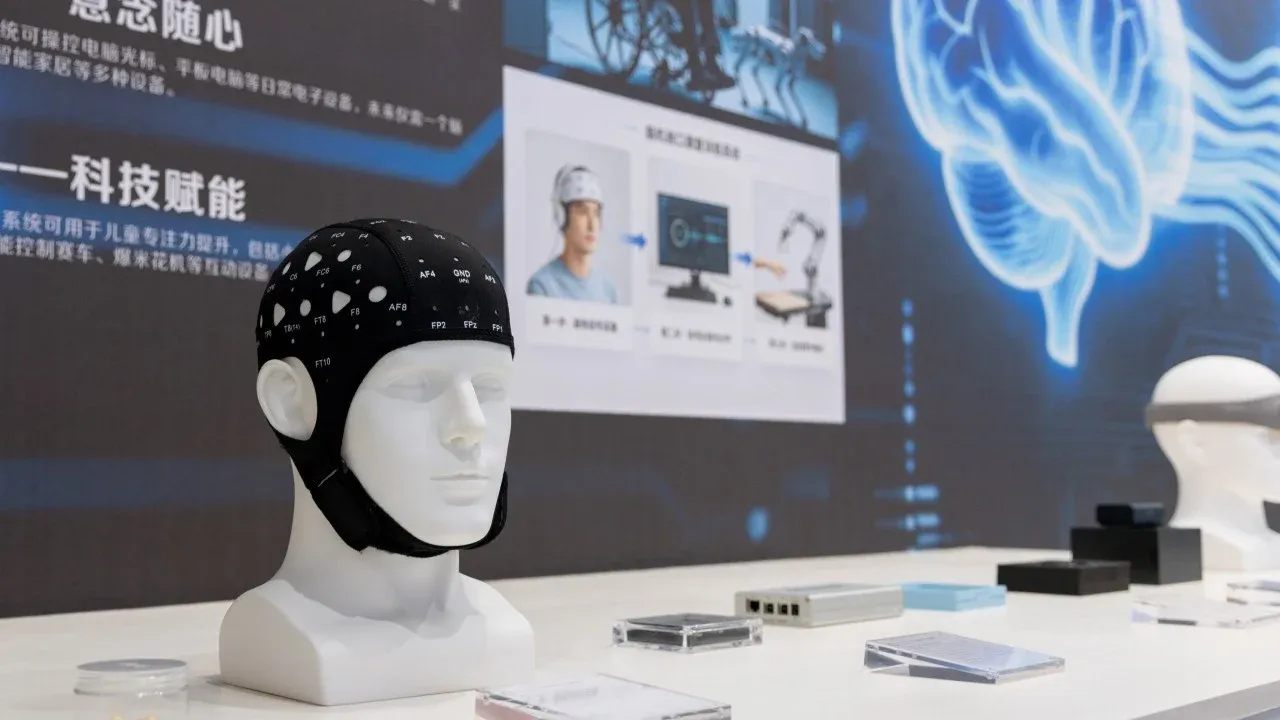
China's health regulators have approved multiple brain-computer interface products this year, signaling a major push by Beijing to lead the global BCI market. This accelerates the race against Elon Musk's Neuralink, with Chinese startups targeting conditions like paralysis, Alzheimer's, and depression, potentially reshaping the competitive landscape for neurotechnology.
China's health regulators have quietly approved a string of brain-technology products this year, a clear signal that Beijing is serious about leading the global brain-computer interface (BCI) race. These approvals cover devices designed to treat conditions ranging from paraplegia to Alzheimer's disease and depression, according to recent reports. The move puts China in direct competition with Elon Musk's Neuralink, which has been the most visible player in the field.
Brain-computer interfaces are devices that allow patients to control digital systems using thought alone. They work by reading neural signals and translating them into commands for computers, prosthetics, or other devices. For patients with severe paralysis, a BCI can restore the ability to communicate or move a cursor. For those with neurodegenerative conditions like Alzheimer's, the technology might eventually help slow cognitive decline or improve quality of life. The potential is enormous, and China is now moving to commercialize it.
The approvals are not just a scientific milestone; they are a strategic move. Beijing has made clear its ambition to lead the world in emerging technologies, and BCI is a key frontier. By fast-tracking regulatory approvals, China is giving its domestic startups a head start over international rivals. Elon Musk's Neuralink has been working on similar technology for years, but it has faced regulatory hurdles in the United States. China's approach appears to be more streamlined, at least for now.
The regulatory environment in China is notably different from that in the West. The government has been actively supporting BCI research and development, both through funding and through policies that encourage rapid clinical adoption. This year's approvals are a testament to that support. While the exact number of products approved is not disclosed, the fact that multiple have been cleared suggests a deliberate push to create a domestic BCI ecosystem. This could attract investment and talent, further accelerating progress.
The competitive implications are significant. If Chinese startups can bring effective BCI products to market faster, they could capture a large share of the global market. The conditions targeted - paraplegia, Alzheimer's, depression - represent millions of patients worldwide. The market for neurotechnology is projected to grow substantially in the coming years, and whoever leads in BCI could dominate the sector. China's approvals are a clear signal that it intends to be that leader.
However, there are challenges. BCI technology is still in its early stages, and safety and efficacy remain paramount. Regulatory approvals are just the first step; long-term clinical data will be needed to prove that these devices are safe and effective. Ethical concerns also loom large, particularly around data privacy and the potential for cognitive enhancement. Both China and the US will need to navigate these issues carefully.
For executives and investors, the takeaway is clear: the BCI race is heating up, and China is no longer a bystander. Companies in the neurotechnology space should watch China's regulatory moves closely, as they could reshape the competitive landscape. For patients, the promise of new treatments is exciting, but it will take time to see which technologies truly deliver. In the meantime, the world is watching as Beijing and Silicon Valley vie for control of the brain-computer interface.
This story's Key Insights and Take-aways are locked.
Create a free account to unlock Executive Actions for one credit.
Register to UnlockAlways free for Executives Club members. Join the Club
More in Business

Tim Cook steps down as Apple CEO, stays on as chair with $45M equity
The 'Trump whisperer' keeps his White House and Beijing access as Apple navigates tariffs and a $4.6 trillion market cap.

Snowflake shares surge as AI data demand crushes estimates, lifting full-year forecast
Stocks jumped on stronger-than-expected guidance, signaling enterprise AI workloads are accelerating faster than Wall Street priced in.

Tim Cook's 15-year Apple CEO run ends: 3 lessons for any successor
After 15 years, Tim Cook hands Apple to John Ternus - here's how he turned a $350B company into a $4.6T juggernaut.