
China’s Shenzhen supercomputer wins top spot without GPUs, ending US reign since 2017
The world’s fastest system is built from standard microprocessors, a blow to the usual GPU-heavy roadmap and geopolitics.
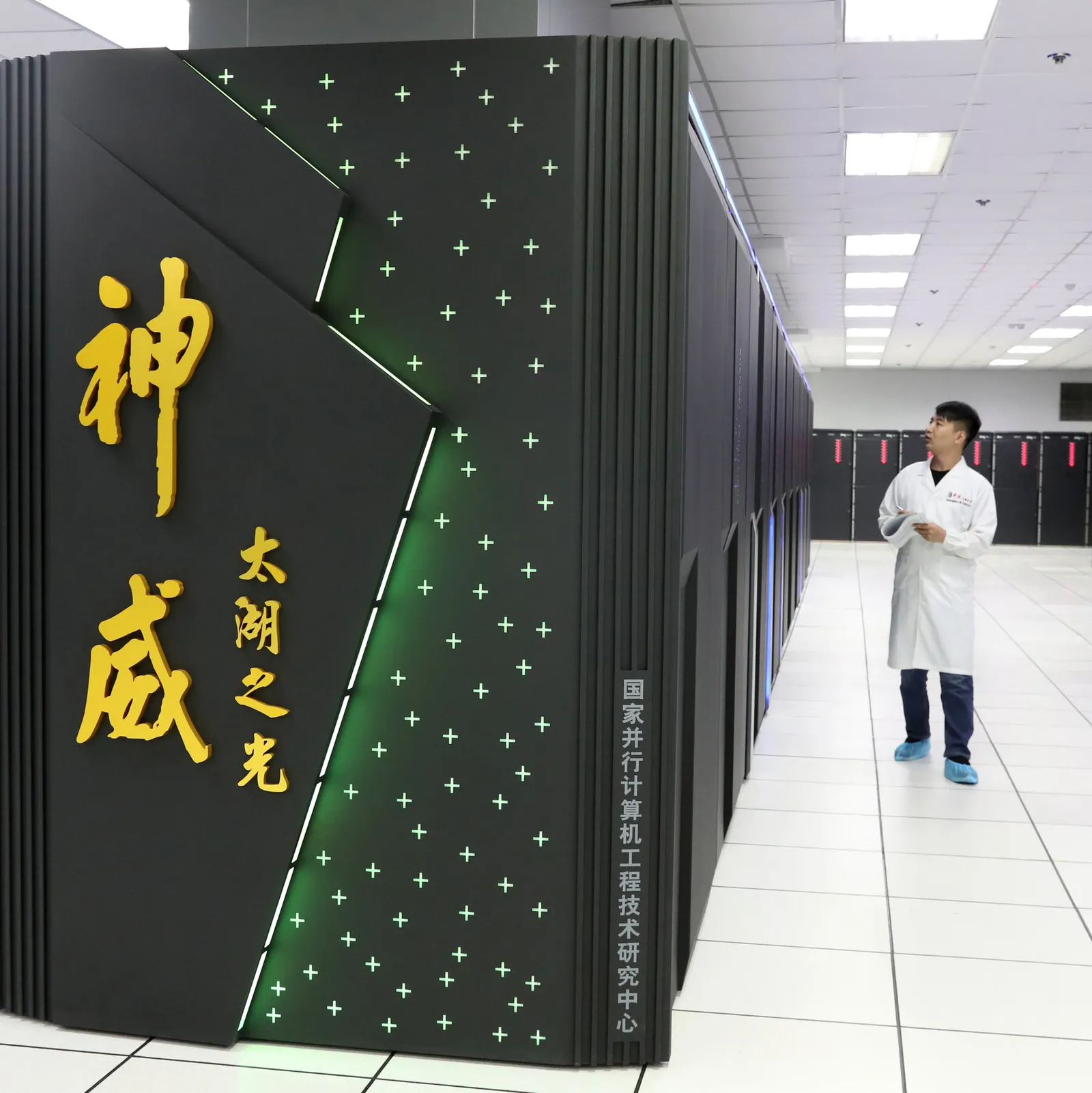
A supercomputer in Shenzhen was declared the world’s fastest, marking the first time since 2017 that China has taken the crown from the U.S. It relies on standard microprocessors and not the special-purpose graphics processing units (GPUs) that dominate today’s high-performance computing designs.
A supercomputer in Shenzhen has been declared the world’s fastest, and this time China is taking the crown from the U.S. for the first time since 2017. The part that matters is not just who won, but how: the system uses only standard microprocessors and does not rely on special-purpose graphics processing units, or GPUs.
That design choice matters because the global assumption in high-performance computing has increasingly been “if you want speed, you probably need GPUs.” In practice, GPUs are widely associated with accelerating workloads by doing certain computations in parallel, which makes them a default ingredient in many of the most competitive systems. But this Shenzhen machine challenges that default. The message is blunt for decision-makers: performance leadership can still be achieved without the specialized GPU stack, at least in some configurations and targets.
To understand why this is such a big deal, you have to zoom out to how the supercomputer race works. The fastest machine is not just bragging rights. It is a signaling device. Governments and research labs use these systems to pursue everything from simulation-heavy science to national security-related modeling. Vendors use the benchmark to win contracts and mindshare. And executives use it to justify multi-year bets on architectures, supply chains, and tooling.
In that ecosystem, the “GPU or not” question quickly becomes a supply chain and strategy question, not an engineering trivia question. GPUs are special-purpose chips. That means they come with procurement constraints, dependency risks, and export-control sensitivity in certain geopolitical contexts. When a top system can be built around standard microprocessors, it potentially reduces the number of bottlenecks that come from relying on a narrower set of specialized components.
There is also a second-order implication for boards and investment committees. Even when a company is not building a supercomputer, the choices made at the top tend to filter down into what software vendors support, what programmers optimize for, and what performance narratives become mainstream. If a benchmark leader pairs strong performance with a more “commodity-like” compute approach, it can nudge the market toward architectures that are easier to scale or easier to source. That could affect everything from data center procurement planning to the way teams prioritize compute platform roadmaps.
The regulatory backdrop makes the timing even more sensitive. High-performance computing sits at the intersection of advanced technology, national priorities, and export regimes. In such environments, specialized accelerators can become a focal point. Standard microprocessors may be subject to different levels of control and availability constraints than GPUs, depending on jurisdiction and product category. Without inventing any details, the directional point from the Shenzhen result is clear: system designers are not locked into a single chip philosophy, even at the top of the rankings.
Finally, there is the competitive signaling to the U.S. and the broader industry. China taking the crown for the first time since 2017 is not a small prestige shift. It is a reminder that leadership can move across geographies, and that “best practice” architectures can be disrupted. For executives managing strategy in computing, chips, cloud infrastructure, or research platforms, the actionable takeaway is to treat architecture assumptions as hypotheses, not commandments. If the world’s fastest system can be built without GPUs, then the question shifts from “How do we buy more specialized acceleration?” to “Which workloads actually need it, and where can we redesign the stack to win with what is available?”
For decision-makers, that is the stake. The Shenzhen win pressures everyone who has bet on a GPU-heavy future to re-check the full system, not just the headline accelerators. And it raises the bar for how convincingly teams can explain performance, sourcing resilience, and long-term scalability when the crown goes to a machine that deliberately skips the usual ingredient.
This story's Key Insights and Take-aways are locked.
Create a free account to unlock Executive Actions for one credit.
Register to UnlockAlways free for Executives Club members. Join the Club
More in Technology

Nvidia's $89B data center quarter: the 9 companies cashing in
The AI buildout is minting fortunes beyond GPUs, and memory, cloud, and cooling suppliers are riding the same wave.

Google quietly links your phone number to every Android account on your SIM
Adding a SIM now ties your phone number to all Google accounts - and future accounts inherit it. Here's the security and privacy stakes.

Hijacker AI 'Skynet mode' runs 100,000 attack steps against exposed models
Symantec caught a criminal AI agent that borrows other models, steals data, and mines crypto; the only relief is no confirmed victims yet.