
Chinese AI leaps put Google parent’s spending under new earnings pressure
Fresh Chinese model progress is forcing Alphabet to defend its AI costs, right as earnings approach.
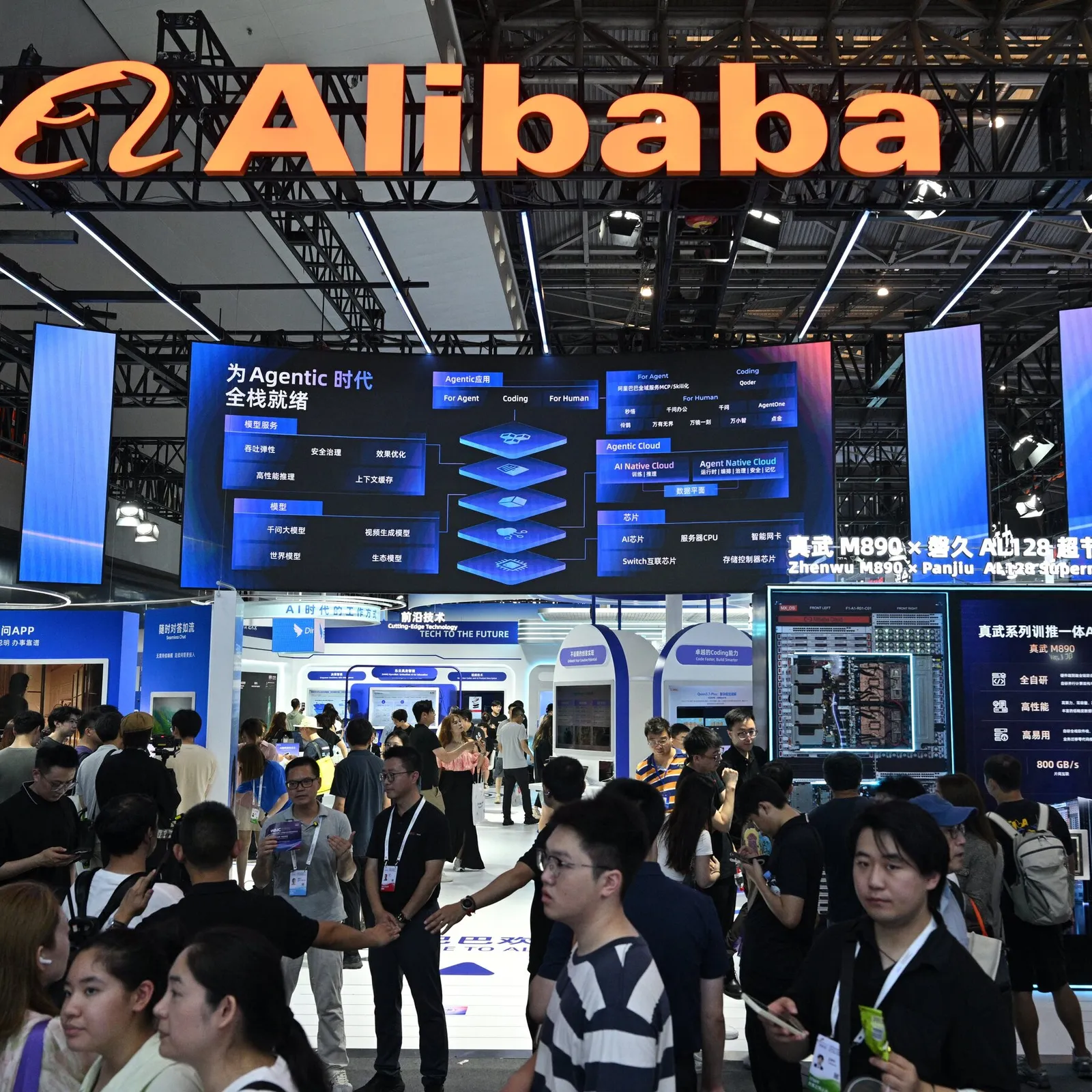
Alphabet, Google’s parent company, is preparing to report earnings amid rapid advancements in Chinese artificial intelligence models. The consequence: decision-makers are staring at what more spending buys, and whether the market will reward the pace.
Rapid advancements in Chinese artificial intelligence models are raising fresh questions about costly technology spending. Alphabet, Google’s parent, is moving toward its earnings report in the middle of this uncertainty, and investors will be asking a very specific question: how much is “necessary” AI investment, and how much is just expensive competition.
Here is the immediate stake. Alphabet is not reporting in a vacuum. As Chinese AI models improve quickly, peers and customers can benchmark performance, features, and capability against what is coming from the US and its tech giants. That means Alphabet’s earnings will likely be read through a new lens, with every dollar spent on AI infrastructure and development implicitly tested against how fast rivals are catching up or surpassing.
To understand why this matters, you have to remember how expensive modern AI has become. Training and deploying frontier models involves massive compute, specialized hardware, and data pipelines that are not cheap, not fast to scale, and not easily dialed down if demand softens. When one region accelerates model development, it effectively compresses the timeline for everyone else. The market reaction is often not “are you building,” but “are you building fast enough for the competitive window that now feels smaller?”
The Chinese AI progress highlighted by the news also changes the psychological and strategic math for companies like Alphabet. If competitors appear to be raising capability quickly, boards and executives face pressure on two fronts. First, they want to avoid falling behind on model performance, product integration, or developer adoption. Second, they need to protect financial credibility: investors still care about margins, cash burn, and the link between AI spending and near-term results.
This is where earnings moments get tricky. A company preparing to report has to balance two realities. AI costs can be front-loaded, while monetization can lag. Yet earnings calls are built for clarity, not patience. If the market perceives that AI spending is escalating without a clean path to revenue, the stock can react negatively even when long-term bets make sense internally.
There is also a broader regulatory backdrop, even if this particular report focuses on earnings and model progress rather than specific enforcement actions. In recent years, governments have looked harder at AI for reasons ranging from national competitiveness to issues like data governance and model risk. For US-based companies, that can mean added compliance work, careful deployment strategies, and more scrutiny over how capabilities are delivered. For Chinese model builders, it can mean a different set of rules and incentives, but it still adds to the overall atmosphere that “AI is strategic,” not just technical.
Second-order implications follow quickly from this dynamic. When Chinese model advancements become a constant headline, executives at Alphabet and other AI-heavy companies are effectively managing a moving target. The technology benchmark shifts, product expectations rise, and the justification for spending has to be continuously refreshed. That can create internal urgency, even if the company believes it is acting rationally.
For boards and leadership teams, the central strategic stake is simple: earnings are where the story becomes measurable. The question is whether Alphabet’s AI strategy will be framed as disciplined investment in defensible advantage, or as costly scramble against rivals whose pace is visibly accelerating. As Alphabet prepares to report, decision-makers across the market will watch for signals in guidance, spending commentary, and how leadership connects AI development to outcomes, because that will shape how others estimate their own risk, budgets, and timelines in the next funding cycle.
This story's Key Insights and Take-aways are locked.
Create a free account to unlock Executive Actions for one credit.
Register to UnlockAlways free for Executives Club members. Join the Club
More in Technology

By 2035, data centers could use 4x more electricity than today
A new build pipeline through 2033 may consume power on par with India, forcing operators to plan for scarcity now.

Frozen-fiber tech couples light and sound 1,000x more strongly than standard glass
A glass capillary frozen into a fiber lets photonic systems trade energy waste for tighter light-sound linkage.
Nvidia publishes Vera AI server CPU specs, posting SPEC CPU 2026 integer lead over AMD
The company released a white paper with SPEC CPU 2026 results, placing Vera ahead of AMD's Epyc 9755 for integer performance.