

Chip Stocks Tumble as Chinese Rival Breakthrough Fans A.I. Spending Fears
South Korea's market took the hardest hit as investors weigh a reported Chinese chip breakthrough against the durability of the A.I. capex boom.
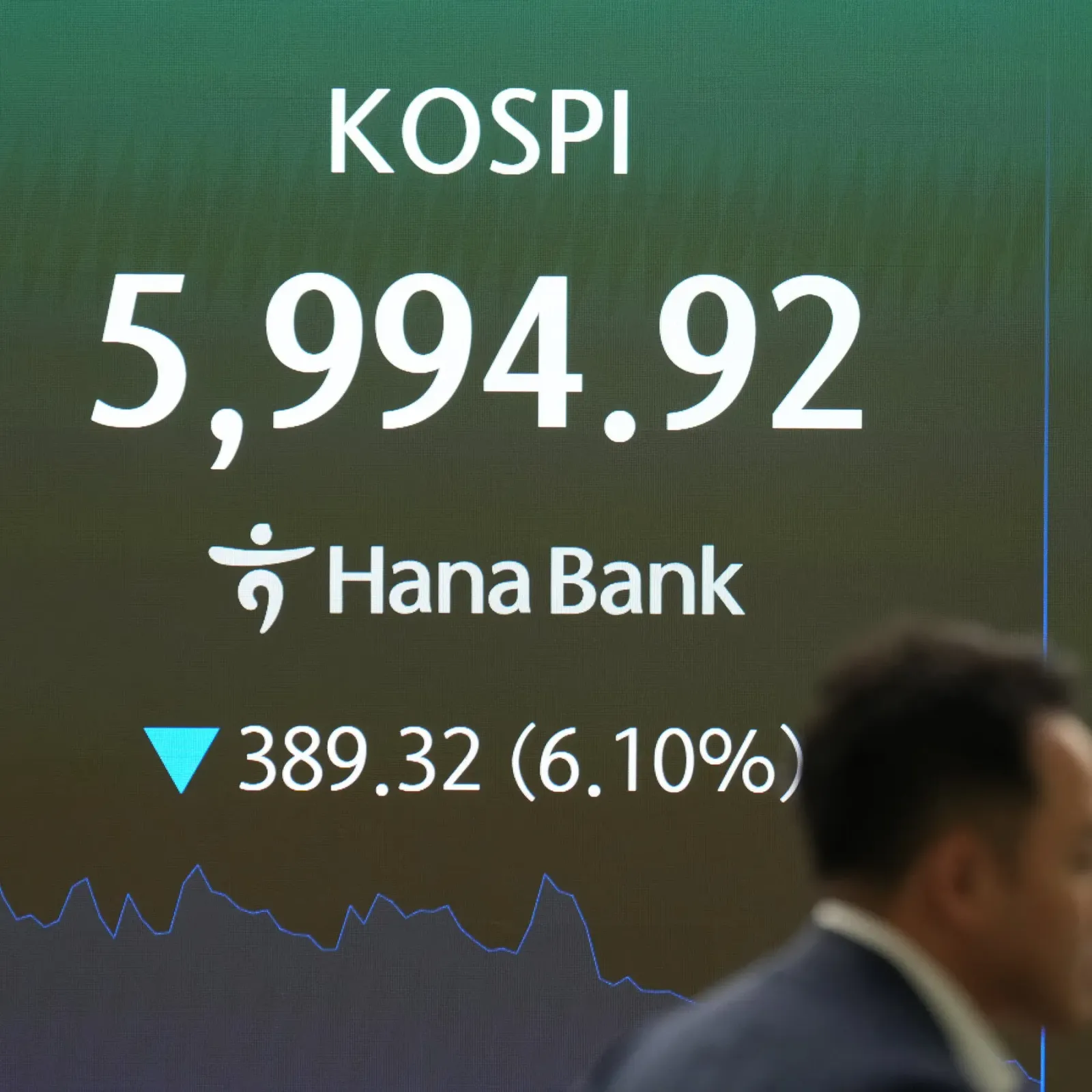
Chip stocks fell sharply, with South Korean markets leading the decline, after reports of a breakthrough by a Chinese chip rival intensified fears about A.I. spending and competition. For decision-makers, the sell-off signals that the market is starting to price in both a potential A.I. capex slowdown and a stronger Chinese challenger.
Chip stocks tumbled as reports of a breakthrough by a Chinese chip rival collided with growing fears that the artificial-intelligence spending boom is losing momentum. South Korean stocks took the hardest hit in particular, a sign that investors are now pricing in both a potential slowdown in A.I. capital expenditures and a stronger challenger to the established semiconductor order.
The sell-off is a reminder that the A.I. trade, which has powered much of the market's recent gains, is increasingly sensitive to two variables: whether the hyperscale companies pouring billions into data centers will see a return, and whether China's push for chip self-sufficiency can produce credible alternatives. The reported breakthrough, if confirmed, suggests that the competitive moat around Western and South Korean chipmakers may be narrower than many investors assumed.
For South Korea, the stakes are especially high. The country is home to some of the world's largest memory chip producers, and its stock market has become a bellwether for the global semiconductor cycle. When investors worry about A.I. demand, they sell the names most exposed to that demand; when they worry about Chinese competition, they sell the names most exposed to that competition. South Korea sits at the intersection of both concerns.
The broader backdrop is a market that has grown increasingly twitchy about the scale of A.I. investment. For the past year, the dominant narrative has been that the build-out of A.I. infrastructure is a once-in-a-generation opportunity, justifying enormous capital outlays by cloud providers and other tech giants. But as those outlays grow, so do questions about when the revenue will arrive. Any sign that the spending cycle is peaking, or that a competitor can deliver comparable capability at lower cost, is enough to trigger a repricing.
The Chinese breakthrough reports also land against a backdrop of escalating export controls. The United States has spent the past several years tightening restrictions on the sale of advanced chips and chipmaking equipment to China, arguing that they are essential to national security. Those controls have, in turn, accelerated China's efforts to build a domestic semiconductor supply chain. If Chinese companies are now making meaningful progress on the design or manufacturing front, it could blunt the effectiveness of the export-control strategy and reshape the competitive landscape for everyone else.
For executives and boards, the immediate takeaway is not to panic over a single day's move, but to recognize that the market's assumptions are shifting. The companies that will fare best are those that can demonstrate pricing power, technological differentiation, and a supply chain that is resilient to geopolitical shocks. The ones that are merely riding the A.I. wave, without a clear moat, will find themselves increasingly vulnerable to exactly the kind of sentiment swing that hit South Korean stocks.
The sell-off also has implications for capital allocation. If the market is beginning to discount the durability of A.I. spending, then companies with large, unproven A.I. projects may face higher costs of capital, while those with strong cash flows and conservative balance sheets become relatively more attractive. For investors, the episode is a reminder that the semiconductor trade is not a one-way bet; it is a cyclical, competitive, and deeply geopolitical business.
In the coming weeks, the key question will be whether the reports of the Chinese breakthrough hold up to scrutiny, and whether the A.I. spending fears are a blip or the start of a broader reassessment. Either way, the message from the market is clear: the era of unquestioning enthusiasm for all things A.I. is over. From now on, every claim of progress, every capex number, and every competitive threat will be met with a more skeptical eye.
This story's Key Insights and Take-aways are locked.
Create a free account to unlock Executive Actions for one credit.
Register to UnlockAlways free for Executives Club members. Join the Club
More in Business

Elon Musk unveils a flying car, and SpaceX helped build it
The Tesla CEO's showcase at a SpaceX facility signals a future where road and rocket engineering converge.

Apple's $2,000 iPhone Duo opens preorders, taking on Samsung and Google
Apple's first foldable hits the market at a premium price, reshaping a category Samsung and Google have led.

Pope Leo XIV, first American pope, diagnosed with lung cancer
The 71-year-old Chicago-born pontiff underwent successful surgery on his right lung, and his diagnosis raises new questions about his AI-focused papacy and the Vatican's future.