

Christopher Nolan says AI fears will not replace humans in cinema
The Oscar-winning director argues his location-heavy action style will survive AI, while dismissing rightwing backlash as irrelevant.
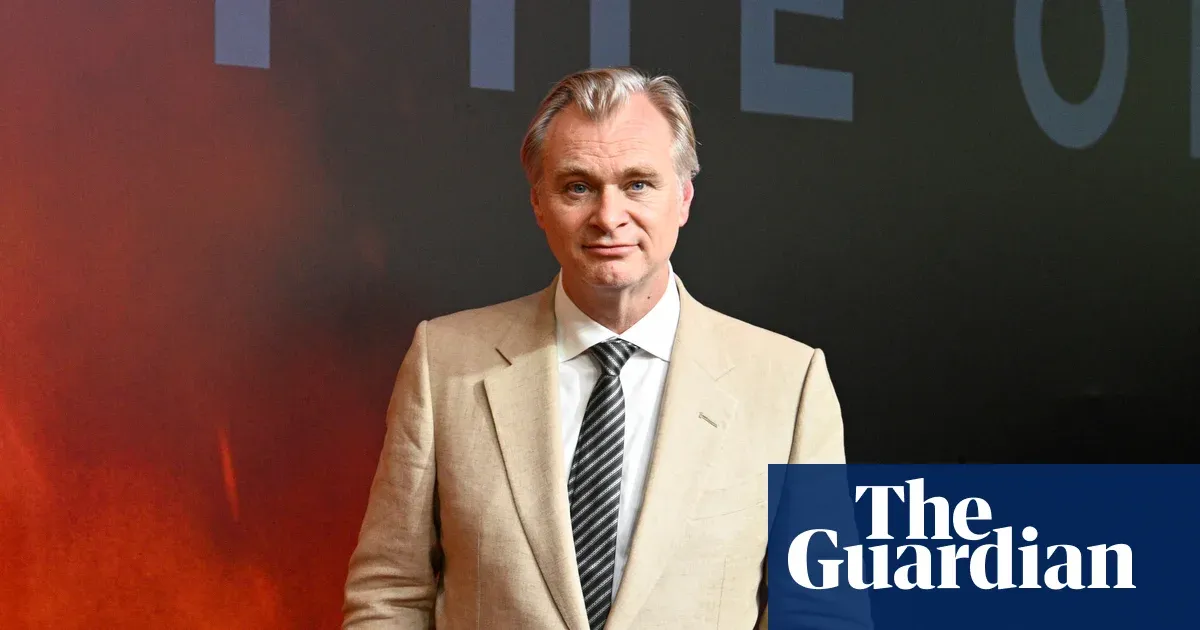
Christopher Nolan, the Oscar-winning director, says the idea that AI will replace humans in film is “nonsense,” and that many people “disdain” AI. As he promotes his latest release, the adaptation of The Odyssey opening in cinemas this week, he also calls rightwing criticism of Lupita Nyong’o’s casting “irrelevant.”
Christopher Nolan is out here drawing a bright line between two competing fears in entertainment: AI as a human replacement tool, and AI as something audiences might learn to ignore. The Oscar-winning director, promoting his latest blockbuster adaptation of the Greek epic The Odyssey, says the notion that AI will replace humans is “nonsense,” and adds that “many people” “disdain” AI. If that sounds like a reassurance, it is also a warning to anyone planning for a future where creative labor becomes optional.
Nolan makes the case in the context of his own filmmaking approach. His movies are big-budget action films shot mostly on location, which he believes would survive AI’s spread. He is also leaning into a parallel controversy, telling reporters that rightwing criticism of Lupita Nyong’o as Helen of Troy is “irrelevant.” And that matters because it frames what Nolan thinks the real story is. Not whether an algorithm can mimic craft, but whether culture will keep valuing the human parts of filmmaking, like scale, logistics, performance, and the very messy act of production.
To understand why Nolan’s comments land, you have to remember how AI anxiety shows up in boardrooms, studios, and production companies. The fear is not just that AI can generate images. It is that AI could restructure labor and workflow so thoroughly that the “human” elements become cheaper, faster, and easier to substitute. When a high-profile filmmaker publicly rejects the replacement narrative, it is more than personality. It is a signal to investors and executives who are trying to decide whether AI is a threat to spending or a threat to the jobs model.
At the same time, Nolan’s argument is specific enough to be useful. He is not saying AI will be irrelevant. He is saying his particular kind of cinema, the kind that depends on location shooting and large-scale action production, would endure. That is a meaningful distinction for decision-makers. If your company’s differentiator is spectacle created in real space, with real time constraints, with teams building scenes on sets and locations, then AI might augment pre-production, marketing, or even certain visual tasks, but it does not automatically erase the business of production.
Nolan’s “disdain” line is also a clue about demand. People might dislike AI even if the technology gets better. That sounds subjective, but it has a practical implication: adoption is not only a supply-side question, it is a cultural one. Film is consumption plus identity. Viewers do not just buy a movie, they buy into the feeling that the story was made by humans, not assembled by software. If a meaningful slice of your audience believes AI undermines authenticity, that belief can slow monetization of AI-first content strategies. Boards should take note because content pipelines typically budget ahead of culture.
Regulation is the other axis executives can’t ignore, even when a story is mostly about a filmmaker. The Guardian’s piece is not about lawmakers drafting rules around Nolan’s films, but AI governance is the backdrop for every AI investment decision right now. Across jurisdictions, regulators have been grappling with how AI is trained, what data is used, and how transparency and accountability should work. Those policy fights can shape who gets permission to deploy AI in production and how studios document rights. So even when an executive believes AI “won’t replace humans,” there is still a compliance reality: companies need a playbook for licensing, provenance, and disclosure if they use AI in any meaningful part of their workflow.
Then there is the cultural battlefield Nolan highlights by calling rightwing criticism of Lupita Nyong’o as Helen of Troy “irrelevant.” Whether you agree with the criticism or not, the point for executives is that the launch of a major movie is never purely about the art. It is about narratives that travel faster than the film can. In the era of algorithmic distribution and social media outrage cycles, casting debates can become distribution problems, even if the ultimate audience turnout follows its own logic. Nolan’s dismissal signals his focus on the core product: the film opening in cinemas this week, built around a specific cinematic style and a specific theatrical event.
So what should peers in similar roles take from this? First, Nolan’s stance suggests a strategy that leans on human-intensive production as a moat, not just a romantic belief. Second, his comments imply that AI fear narratives may be overstated, at least in the short term for certain types of spectacle. Third, he is reminding studios that cultural friction can be louder than technical change, and that launch communications can’t be built only around technology. The strategic stakes are clear: executives are deciding how much to invest in AI capabilities versus how much to protect the human craft, and how to plan for audience attitudes that might “disdain” the technology even if it becomes ubiquitous.
This story's Key Insights and Take-aways are locked.
Create a free account to unlock Executive Actions for one credit.
Register to UnlockAlways free for Executives Club members. Join the Club
More in Technology

Google quietly links your phone number to every Android account on your SIM
Adding a SIM now ties your phone number to all Google accounts - and future accounts inherit it. Here's the security and privacy stakes.

Hijacker AI 'Skynet mode' runs 100,000 attack steps against exposed models
Symantec caught a criminal AI agent that borrows other models, steals data, and mines crypto; the only relief is no confirmed victims yet.

Nvidia's AI-financier shift faces its first big test as neoclouds stumble
A rout in neocloud stocks is forcing investors to weigh Nvidia's hidden exposure as both supplier and lender to the AI buildout.