
Christopher Nolan says The Odyssey’s “at least” three-year gap is for his stamina, too
The director confirms he hit his limits on the shoot, pushing his next film “at least” three years out.
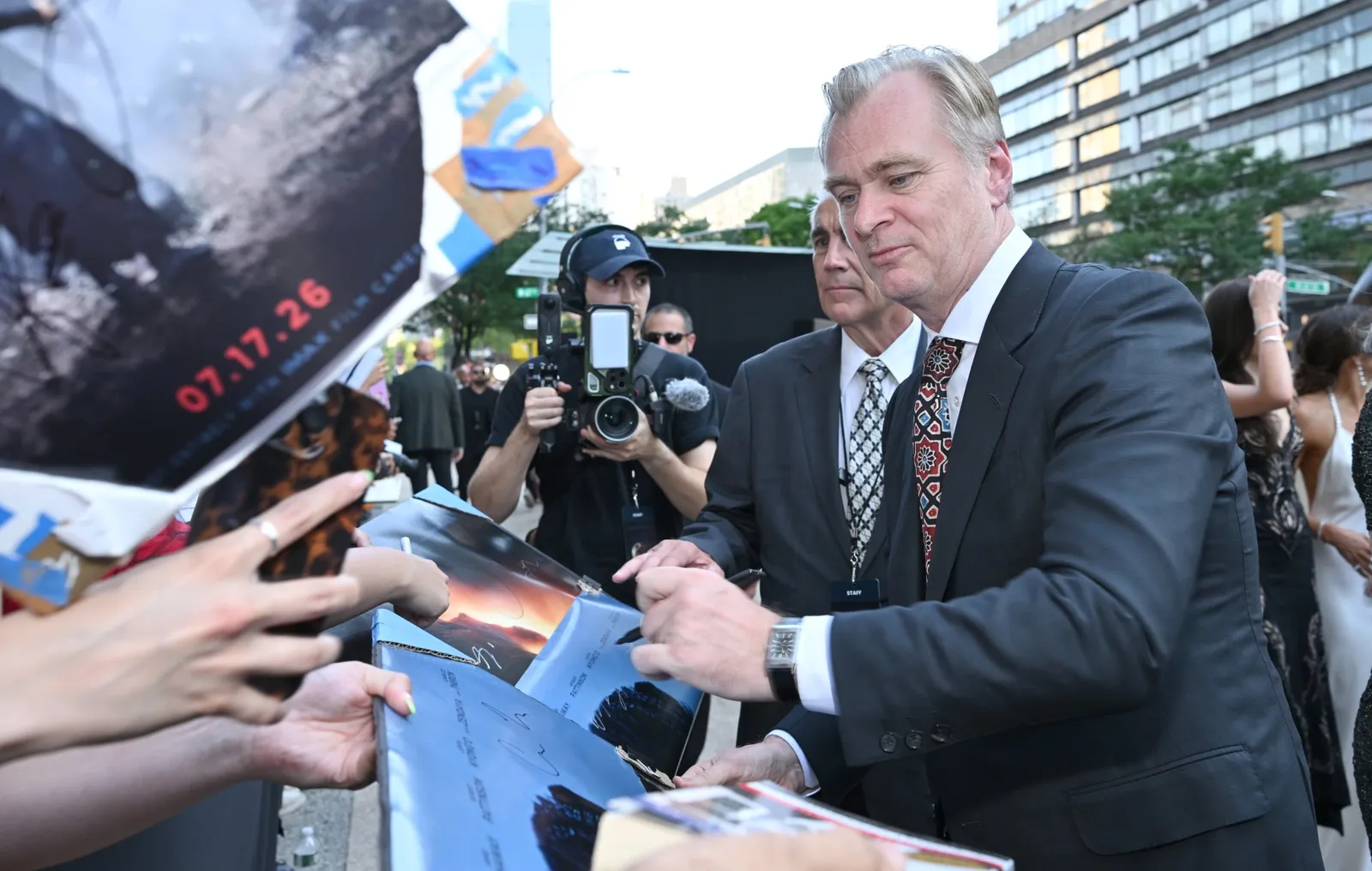
Christopher Nolan says his follow-up to The Odyssey will not arrive for “at least” three years, following a gruelling production that he said tested “everybody’s stamina.” For decision-makers, it signals how long tentpoles and global releases can ripple through studio calendars and talent pipelines.
Christopher Nolan just gave a production-timetable answer that is more human than Hollywood. After the gruelling shoot for The Odyssey, the director said his next film is at least three years away. In his words, “Oh, at least,” when asked whether it would be another three years before his next release.
Nolan also explained why the timeline is not just scheduling. He said he “definitely hit the limits of my own stamina and everybody’s stamina,” and insisted that it should feel difficult because the scale of the project demands it. “We’re not doing the job right making a film of ‘The Odyssey’ if it doesn’t seem difficult,” he said. Translation: the clock is driven by the physical and creative grind, not just a marketing plan.
The Odyssey, which hit cinemas on Friday (July 17), is Nolan’s first release since unexpected box-office hit Oppenheimer. Oppenheimer earned him his first-ever Oscar, amid seven wins in total. The Odyssey is quickly becoming Nolan’s best-reviewed film, and it brings a cast and story engine that studios typically envy: a massive, familiar myth with a contemporary blockbuster distribution mindset.
The movie stars Matt Damon as Odysseus, the king of Ithaca, who embarks on a treacherous journey home after the Trojan War. Tom Holland plays Odysseus’s son Telemachus, and Anne Hathaway plays his wife Penelope. Also on board are Zendaya, Robert Pattinson, Lupita Nyong’o, Charlize Theron, Jon Bernthal, Benny Safdie, John Leguizamo, Elliot Page, Himesh Patel, Samantha Morton and Mia Goth. This is not a “small team making a passion project” profile. This is a high-throughput production, and Nolan’s comments underline how that throughput comes with limits.
During a recent appearance on Today, Nolan described how challenging it was to pull off the film after conceptualizing it for two decades. That context matters for executives thinking in cycles, because a two-decade idea does not automatically translate to a short runway. Nolan framed his motivation as creative permission: “Now, I can get something made that I couldn’t otherwise get made.” He also said that taking on Greek mythology on a big modern cinematic canvas is something that “hasn’t been done.”
On set details, Nolan recalled warning Matt Damon that shooting the near three-hour film would be tough. Nolan said he suspected Damon “didn’t really understand until we got on the boat.” Then came the gradual realization, a “slow creeping” recognition that filming “was not going to be easy.” Nolan tied that understanding to the lived experience of the production, saying it is “not until you get there and you start, you know, hiking up a goat’s path to cyclops’ cave.” For boards and producers, those anecdotes are not trivia. They are a reminder that schedule risk and cost risk are often rooted in physical execution as much as creative design.
And the reception signals that the risk was meant to pay off. NME’s Paul Bradshaw awarded The Odyssey five stars, writing, “Cinema may have peaked with Christopher Nolan’s blockbuster epic,” and adding that this “mind-boggling adventure should be seen on the big screen.” Put plainly, the film is landing as a landmark release rather than a stopgap. That matters when studios plan release windows and when distributors decide whether to hold premium screens, because a Nolan tentpole can shift audience expectations for what “big” cinema should feel like.
Still, the post-release conversation has another edge: casting backlash. Nolan responded to criticism of some of The Odyssey’s casting choices this week, calling it “irrelevant.” The backlash followed casting of Nyong’o as Helen of Troy and Clytemnestra drawing reactions from figures including Elon Musk, while others criticized Travis Scott’s role as a bard and Page’s casting as the Greek soldier Sinon. Nyong’o has previously dismissed the criticism, emphasizing that the film is adapting “a mythological story.” For executives, this is a reminder that even when the business case is artistic scale, the business reality includes public scrutiny that can complicate messaging, press cycles, and social sentiment tracking.
Nolan also shared additional creative process details that help explain how the film’s difficulty connects to language and performance. He explained why he opted for modern English dialogue in The Odyssey, saying he wanted to find “language that has emotional not intellectual meaning to people,” using contemporary accents and dialogue over a more theatrical approach. He also recently revealed that Samantha Morton’s performance as the goddess Circe earned an ovation on set that reminded him of Heath Ledger’s work on The Dark Knight.
So what does “at least three years” mean beyond Nolan’s personal stamina? It’s a signal to an industry that elite filmmaking is increasingly calendar constrained. When one of the biggest brand names in theatrical blockbuster production says their next release will be pushed out for stamina and difficulty, other producers and talent managers have to treat tentpole readiness as a multi-year resource, not a just-in-time lever. For peers planning their own release strategies, it is a nudge that execution intensity can create genuine lead-time windows. The operational question becomes: how do you protect ambition, while also respecting the production limits that Nolan just described in plain, physical terms?
This story's Key Insights and Take-aways are locked.
Create a free account to unlock Executive Actions for one credit.
Register to UnlockAlways free for Executives Club members. Join the Club
More in Entertainment

12TB Steam 'teraleak' goes beyond Valve: GTA 3, Mafia 2 prototypes exposed
A 12-terabyte dump of Steam data reveals prototypes and builds of third-party classics like GTA 3 and Mafia 2, plus unreleased Valve content, rewriting game history.

LinkedIn's romance problem: 1 in 4 workers say dating on it is fair game
A new survey shows a quarter of U.S. employees treat the professional network as fair game for romance, even as LinkedIn bans it and removes hundreds of thousands of offending posts.

Enhypen's first No. 1 album breaks K-pop's Billboard 200 streak
The K-pop group's 98,000-unit debut tops the chart while Dolly Parton's catalog reentry shows how death reshapes streaming.