
Christopher Nolan tells mainstream filmmakers: playing it safe is the biggest risk
His New York Times advice is simple: audiences show up for something new, and intermediaries are the real bottleneck.
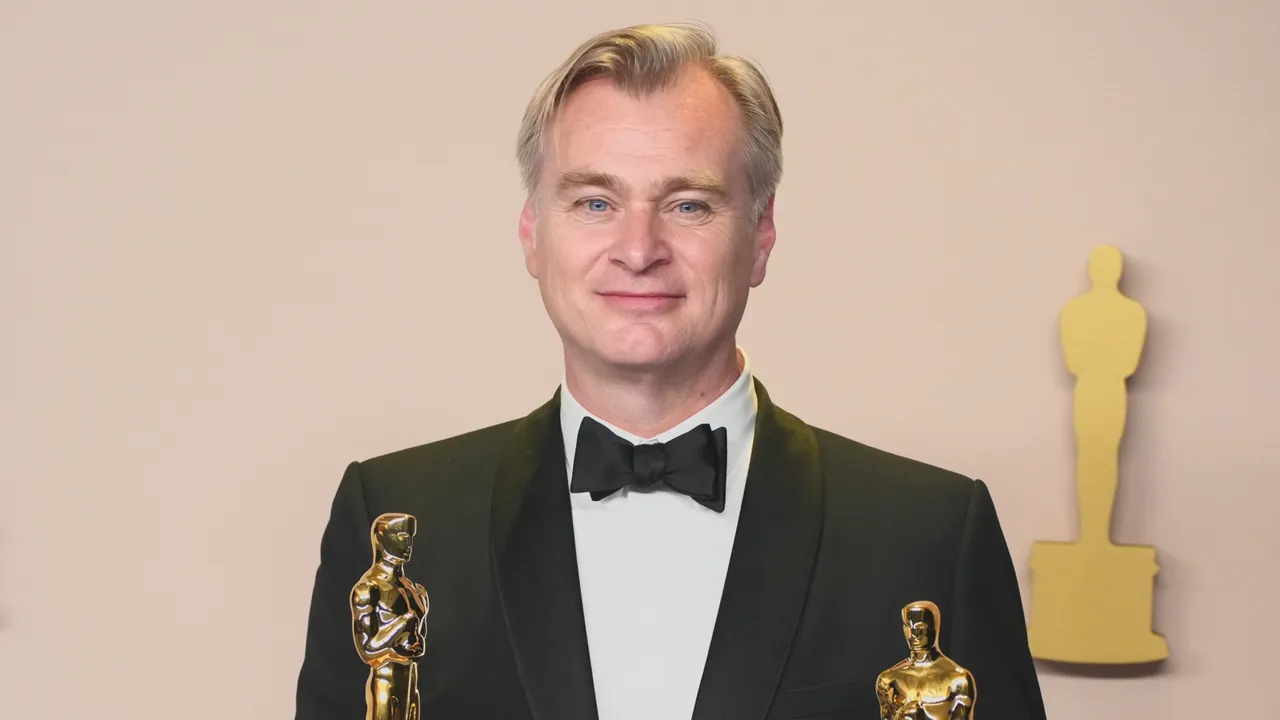
Christopher Nolan, director of films like Interstellar and Tenet, argued in an interview with The New York Times that mainstream movies can succeed only by taking meaningful risks. For decision-makers, his point lands on a clear pressure test: whether studios and financiers will bet on audiences instead of hedging their way to mediocrity.
Christopher Nolan has a blunt warning for mainstream movie makers: “The biggest risk of all is to play it safe.” In a recent interview with The New York Times, the director of Interstellar and Tenet laid out the logic behind it, arguing that audiences do not reliably reward predictability. If you want success at scale, you need to offer something different, not just package familiarity for comfort.
Nolan’s core claim is not subtle. “If you’re really interested in movies and the history of movies,” he said, “the one thing you see absolutely is that you have to take risks to succeed.” Then he pushed the needle harder: “That’s what, consistently in mainstream movies, doesn’t work. The audience is looking for something new.” That is the payoff to his headline-level thesis. He is not saying risk is fun, or art is pure. He is saying risk is structurally required for mainstream success, because “playing it safe” fails to differentiate.
To understand why that matters to executives, you have to look at how mainstream film decisions get made. Big studio and financing ecosystems often reward reduced variance. If revenue is the scoreboard and opening weekend is the clock, the business incentives can quietly drift toward safer bets, safer scripts, and safer marketing angles. Nolan’s argument is basically a counterweight to that entire machine: the audience is not a spreadsheet you can smooth with familiarity. The audience is a crowd of specific tastes, and tastemakers tend to migrate toward novelty.
Nolan did not cite a specific list of films he thinks “play it safe,” but he did offer evidence from his own track record and the kinds of bets that survived internal skepticism. He pointed to his 2000 film Memento as an example. He recalled showing the script to his wife and producer, Emma Thomas, and that she “responded well” to its backwards structure, but she also felt it “was taking a lot of risk.” Nolan then made the case that risk is manageable if the movie has a unique enough reason to exist. As he put it, “No, I can do this.”
The operational lesson is in what he added next: “There are a lot of filmmakers who can do it in a more straightforward way. Actually having something new to bring to the table mitigates the risk, it gives you a way to distinguish yourself.” That is a very executive-friendly framing. If your differentiator is real, you do not just ask financiers to tolerate chaos. You offer them a path to standing out, which can reduce the business risk of being interchangeable. Nolan also admitted the selling challenge: he tried to sell Memento “to people who didn’t get it,” adding that Thomas was “completely right.”
That detail matters because it reframes “risk” as a distribution problem as much as a production one. Even when a film is designed to play differently, it still has to clear the intermediaries. Nolan explicitly called those intermediaries out: “The risk is the intermediaries - the financiers, the studio.” In other words, the risk is not in the director’s imagination, it is in the capital chain’s fear. He followed that by emphasizing his belief that if you can reach the audience directly enough, there can be upside: “I’m not making any predictions for [The Odyssey], but in the past we’ve been well rewarded for having faith in the audience.”
Nolan’s confidence is not theoretical. The most recent example in the source is Oppenheimer, which retold the real-life story of atomic bomb creator J. Robert Oppenheimer in 2023. The biopic pulled in a box office total just shy of $1 billion, via Box Office Mojo, despite being non-linear and running for three hours. In mainstream terms, that is a credential: a long runtime plus a non-linear structure is the kind of combination that traditional “safe” instincts often resist. Yet it worked well enough that it earned the “don’t play it safe” argument a real-world reference point.
This is where the next-order implications kick in for boards, studios, and anyone approving budgets. Nolan is returning to theaters in July with The Odyssey, a nearly three-hour movie adapting Homer’s ancient Greek epic, set to premiere July 17, 2026. The source also notes that scalpers have already started reselling tickets for hundreds of dollars. That is not a financial model, and Nolan did not predict results for this specific release. But it does highlight something executives obsess over: demonstrated demand signals can show up early, before a film is even fully understood. The question becomes whether intermediaries and decision-makers can recognize that signal instead of defaulting to hedges.
For peers watching from the operator level, the strategic stakes are immediate. Nolan’s advice is not just “take creative chances.” It is a warning that conservative approval processes can strangle differentiation before a film even reaches its audience. If your review committee wants to sand down distinctiveness to feel safer, you may be pushing your project into the exact category Nolan says “consistently” fails. The boardroom risk, in his framing, is that “safe” may cost more than “risky,” because the audience is looking for something new.
This story's Key Insights and Take-aways are locked.
Create a free account to unlock Executive Actions for one credit.
Register to UnlockAlways free for Executives Club members. Join the Club
More in Entertainment

Russell Brand's accuser 'bewildered and confused' as he denies 7 sex charges
The criminal case against the comedian is a live test of how media companies manage talent risk when serious allegations go public.

'It's a Magic Trick': Ballet Experts Say Rosalía's SNL Pose Is Impossible
Three ballet experts tell Rolling Stone Rosalía's gravity-defying SNL stillness shouldn't be possible - and why the debate is now part of the show.

Activision CMO: GTA 6 Will Boost Call of Duty, Not Bury It
Activision's top marketer says Rockstar's blockbuster will drive players back to consoles and into Modern Warfare 4, even as the company admits its recent strategy failed.