

Cipher Digital sells $810M junk bonds for Amazon’s 15-year Texas data center lease
A 6.25% yield and an Amazon-backed lease help Cipher finish its 100-megawatt Stingray campus in Andrews, Texas.
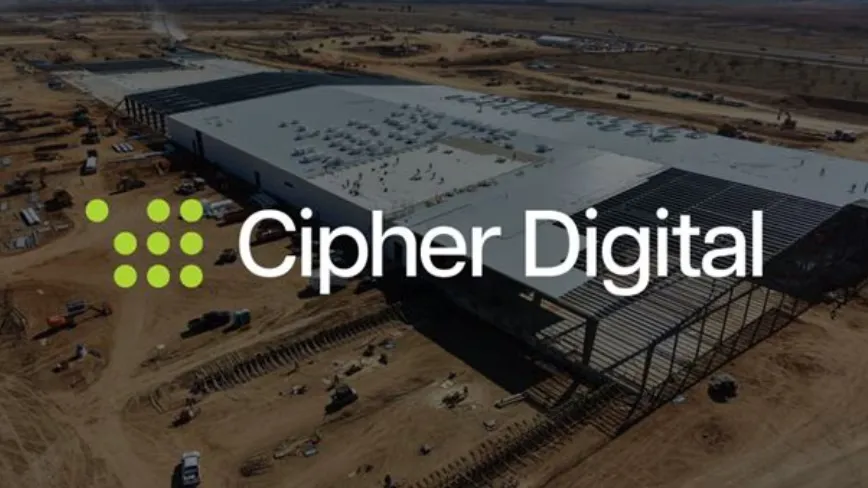
Cipher Digital is raising $810 million through a junk-bond sale, according to Bloomberg, to complete its Stingray Facility in Andrews, West Texas. Amazon will lease the facility for 15 years, shaping the financing and risk profile for decision-makers.
Cipher Digital is raising $810 million via a junk-bond sale, according to Bloomberg, to fund a new data center in West Texas that Amazon will lease for 15 years. The company is pitching the deal at a yield of about 6.25%. In other words: this is not a small “capex refresh.” It is a full-on financing campaign to get a major compute campus over the finish line.
That lease is the lever. Cipher’s fundraising is tied to the remaining construction costs of its Stingray Facility, described as a 100-megawatt computing campus in Andrews. With Amazon as a long-term tenant, Cipher can convert a hyperscaler’s demand into a cashflow story that investors can underwrite, then use that cash to complete the build.
So why does this matter beyond one campus and one buyer? Because data centers are increasingly the gravity well for capital markets. When demand from cloud and AI workloads rises, the bottleneck often moves from “do we have customers” to “can we finance and deliver the physical capacity on time.” Stingray is exactly that kind of bottleneck play: build a large-scale power-and-compute site, then lock in revenue through a long lease. The junk-bond structure signals that the market is pricing the remaining risk somewhere between “investment grade” and “venture-like uncertainty,” even if the lease reduces some of the demand risk.
The economics are also doing a balancing act. A 6.25% yield does not scream bargain. But for infrastructure developers that need billions, the math is usually about meeting construction deadlines and preserving the option value of delivered capacity. If the company can secure a long lease with a tenant like Amazon, it improves the probability that the future cashflows will materialize as planned. That makes the bond sale more feasible, and it makes the eventual operational revenue stream more legible to credit investors.
This financing approach has its own logic in the capital markets ecosystem. Junk bonds, or high-yield debt, tend to be used when companies need scale funding and cannot (or do not want to) rely solely on equity dilution. The trade-off is that investors demand a higher yield to compensate for greater credit risk. In this case, the source material frames the goal clearly: the bond proceeds fund remaining construction costs, which means the company is using debt to reduce the uncertainty of “finishing the build” rather than simply refinancing past spend.
There is also an industrial coordination angle. A 100-megawatt campus is not a weekend project. The buildout depends on land, permitting, power interconnection, and construction sequencing. Any delay can inflate costs and extend the period before cashflows begin. By moving to raise $810 million now, Cipher is effectively trying to remove timing friction from the equation. The Amazon lease for 15 years then serves as a backstop for the revenue side, helping convert a construction-heavy phase into an operations-heavy phase with an anchor tenant.
For executives watching the sector, the second-order implication is how hyperscaler leasing is shaping the risk calculus across the grid. When a hyperscaler signs a long lease, it can reduce tenant demand risk for the facility developer. That can widen access to funding, even in higher-yield instruments. But it does not magically erase every risk. There is still construction execution risk, cost risk, and macro risk around power and operating assumptions. The market response, reflected in that approximately 6.25% yield, hints at how much of those risks investors still care about.
Board members and finance leaders at other data center developers should see this as a template and a warning. The template part is straightforward: pair large-scale capacity with a long lease to improve underwriting. The warning part is equally real: the capital you raise in the high-yield market is expensive, and it comes with expectations that the project gets delivered and performs. Cipher’s Stingray Facility, financed by an $810 million junk-bond issuance aimed at finishing the build, is a concrete reminder that in data centers, funding is not just a fundraising event. It is a project delivery mechanism, and it determines whether expansion plans become operating revenue or expensive delays.
This story's Key Insights and Take-aways are locked.
Create a free account to unlock Executive Actions for one credit.
Register to UnlockAlways free for Executives Club members. Join the Club
More in Business

Anthropic’s Levant Alpöge cracks the Jacobian conjecture after 87 years
A Harvard valedictorian used Claude to hit a 1939 breakthrough, but the missing “why” is the real problem.

Uber buys Delivery Hero for nearly $15B, vaulting to top food delivery outside China
The deal doubles Uber's dual-services footprint and pushes a ride-and-eats bundling play into 50 more markets.

Epic and Google drop settlement bid, forcing rival Android app stores by July 22
Google told the court it is ready to carry third-party app stores starting Wednesday, July 22.