

Circana’s June US gaming spend slips everywhere, except Xbox’s year-on-year growth
The monthly hardware and software readout is mostly down, but Xbox’s relative strength comes with an unavoidable catch.
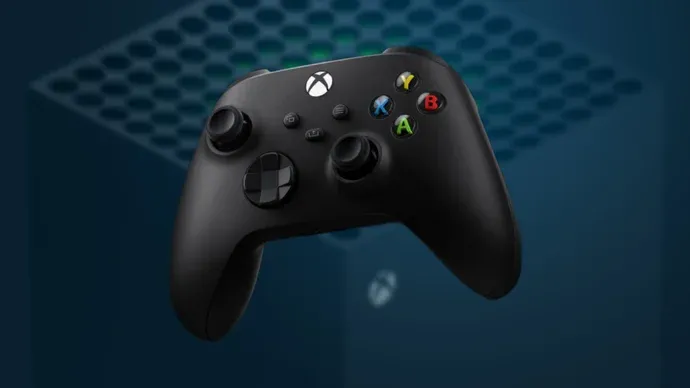
Circana, the market analysis firm tracking US game hardware and software spend, published its latest monthly report for June. It shows near-universal declines across platforms, with Xbox as the only exception for year-on-year growth, though the improvement is not clean.
Circana’s latest monthly report on US game spending, released in its June edition, is another bleak scan: the market mostly declined again, nearly across the board, when you compare current performance to the prior year and to recent months. The firm’s scope is straightforward but strategically important. It tracks how much consumers spend on game hardware and software in the United States. In other words, it is not asking whether players are excited. It is measuring whether they are paying.
Here is the one detail that stops buyers, investors, and operators from fully zoning out. Among the platforms, Xbox is the only one that has “just grown year-on-year.” That does not mean the environment is healthy. It means Xbox is the only platform in Circana’s readout that avoided the general slide in the year-over-year direction. Put differently: if you are trying to map where budgets and expectations should go, Xbox is the lone spot that did not move backward, even if the broader market is doing exactly that.
To understand why this matters, you have to translate “platform spend” into boardroom reality. Platform holders and ecosystem partners typically plan revenue assuming a baseline level of consumer demand. When a monthly market readout shows near-universal decline, CFOs do not just mark the P&L. They re-price risk across the whole portfolio: marketing budgets, internal development schedules, and the timing of hardware launches and software investments. The second-order issue is that when most platforms decline together, relative winners can look stronger than the market actually feels. Xbox’s year-on-year growth, even as the rest slips, can become a narrative flywheel for internal teams. But that flywheel has to be tested against the underlying “spend” signal, not just the relative comparison.
Circana’s report is also a reminder of how quickly incentives shift in gaming when consumer spending tightens. Hardware and software are linked. Lower discretionary spending often hits hardware first, then follows through software attach rates, or it hits software directly when players delay purchases. Platform economics are built on that linkage: hardware gets you the installed base; software monetizes engagement and ownership. When “near-universal decline” is the dominant theme in a given month, the industry has to ask whether demand is simply cooling off, or whether something structural is changing about how and when players spend.
This is where the “big catch” matters, even without extra numbers in the source excerpt you provided. The headline points to a specific distinction: Xbox grew year-on-year, while others did not. But “grown” can still be compatible with an overall soft market. In practice, executives should treat that as a range of possibilities, not as a guarantee of momentum. Xbox could be growing because other platforms fell harder, or because it was less exposed to a particular hardware cycle. Either way, it still sits inside a broader environment where June’s edition is “another bleak one.” If you are on a platform or an adjacent company, the caution is that relative strength can hide absolute weakness.
There is another strategic wrinkle for decision-makers: US spending data tends to act like a compass for global operators, even if the report is US-specific. When Circana’s monthly tracking says the market is mostly down, investors and analysts often convert that into expectations for quarterly results, guidance, and forward-looking demand models. That means Xbox’s year-on-year outperformance can draw attention, but it can also sharpen scrutiny. Boards may ask: is Xbox sustaining growth because of durable drivers, or is it temporary insulation against a broader decline? The catch is not just “why Xbox is different.” It is what that difference implies for capital allocation decisions in the next cycle.
So what should peers in similar roles do with this? If you are a CFO, you want to know whether Xbox’s year-on-year growth changes the category’s trajectory or merely changes the ordering. If you are a CEO or a product leader, you want to understand whether the market’s weakness is concentrated in specific segments of hardware and software, or whether it is broad-based and synchronized. If you are an investor, you want to separate “one platform grew” from “consumer demand is intact,” because those are not the same story. Circana’s June report says the first part clearly and the second part indirectly. The near-universal decline sets the baseline. Xbox’s year-on-year growth sets the anomaly. Your job is to figure out whether the anomaly is a signal of resilience or just a relative cushion inside a continuing downturn.
This story's Key Insights and Take-aways are locked.
Create a free account to unlock Executive Actions for one credit.
Register to UnlockAlways free for Executives Club members. Join the Club
More in Entertainment

12TB Steam 'teraleak' goes beyond Valve: GTA 3, Mafia 2 prototypes exposed
A 12-terabyte dump of Steam data reveals prototypes and builds of third-party classics like GTA 3 and Mafia 2, plus unreleased Valve content, rewriting game history.

LinkedIn's romance problem: 1 in 4 workers say dating on it is fair game
A new survey shows a quarter of U.S. employees treat the professional network as fair game for romance, even as LinkedIn bans it and removes hundreds of thousands of offending posts.

Enhypen's first No. 1 album breaks K-pop's Billboard 200 streak
The K-pop group's 98,000-unit debut tops the chart while Dolly Parton's catalog reentry shows how death reshapes streaming.