
Citroen revives the 2CV as an EV to fight China's cheap-car onslaught
The French icon returns as an electric car, a direct answer to the Chinese rivals squeezing Europe's automakers.
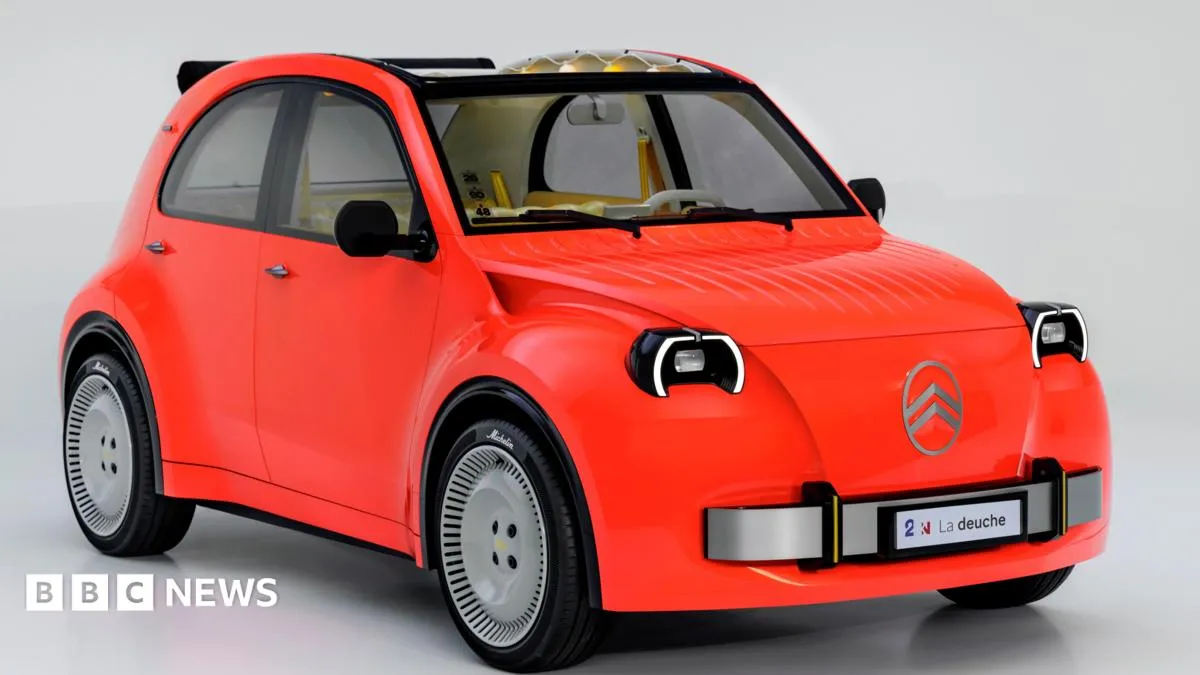
Citroen is reviving its iconic 2CV as an electric vehicle, a direct response to intensifying pressure from Chinese carmakers on Europe's auto industry. For decision-makers across the sector, the revival signals that heritage and affordability are becoming the key weapons in the fight for EV market share.
Citroen is bringing back the 2CV, the bare-bones French icon that defined affordable motoring for generations, and this time it runs on batteries. The revival is the French automaker's answer to a brutal new reality: Chinese rivals are flooding Europe with cheap electric cars, and legacy carmakers are scrambling for a response that actually moves metal.
The original 2CV, produced from 1948 to 1990, was never glamorous. It was the opposite: a tinny, slow, brilliantly practical car famously designed to carry four people and a basket of eggs across a plowed field without breaking them. It was the car that put France on wheels after the war, and it stayed in production for more than four decades, a testament to how right the original idea was. That utilitarian DNA is exactly why the nameplate matters again. In an EV market where Chinese manufacturers have mastered low-cost production, Citroen is betting that nostalgia plus simplicity can win buyers who want an electric car that is cheap, honest, and unmistakably characterful.
The pressure is real and mounting. Chinese EV makers have spent years building out European distribution, undercutting local brands on price, and forcing the continent's automakers into a defensive crouch. Chinese brands have captured a growing slice of European EV sales, and their share keeps climbing with each new model launch. European manufacturers have responded with a wave of retro-styled electric models, from the Renault 5 to the Fiat 500e to the Mini Electric, all trading on heritage to justify a premium in a market where margins are thinning. The 2CV revival is the most aggressive version of that play yet: a nameplate that practically invented the idea of a car for everyone, reimagined for the electric age.
For context, Citroen has already tested the waters with the Ami, a tiny, ultra-cheap electric quadricycle that became a cult hit in European cities. The 2CV revival would sit above that, presumably as a proper small car with real range and real safety, but carrying the same philosophy: keep it simple, keep it affordable, make it desirable. If Citroen can pull that off, it becomes a template for how legacy automakers fight back against Chinese cost advantages without surrendering their identity.
The regulatory backdrop makes the timing anything but accidental. The European Union has been tightening emissions rules and has set a 2035 deadline for ending sales of new combustion-engine cars, forcing every manufacturer to electrify its lineup on a fixed timetable. At the same time, Brussels has imposed tariffs on Chinese-built EVs to protect local industry, buying European automakers a window to get their affordable electric strategy right. A revived 2CV, positioned as a genuinely cheap electric car, would be a direct attempt to use that window before Chinese brands close the gap with local factories.
The stakes extend well beyond Citroen. Every European automaker is watching to see whether heritage can carry an EV lineup, because the alternative, competing purely on price and battery technology, is a race most legacy players are currently losing. Tesla's repeated price cuts have already compressed margins across the industry, and Chinese manufacturers apply the same playbook with an even lower cost base, thanks to massive scale, vertically integrated supply chains, and a domestic market that lets them absorb losses. European brands have history, design, and emotional attachment on their side. The 2CV revival is a bet that those assets still matter in an era of spreadsheet-driven car buying.
For executives in the auto sector, the lesson is straightforward: the brands that win the next decade will be the ones that convert cultural equity into electric sales without pricing themselves out of the market. Citroen's parent company, Stellantis, has been among the most aggressive legacy players on cost-cutting and platform sharing, and the 2CV revival fits that strategy: reuse the brand, simplify the product, target the volume segment where Chinese rivals are strongest. That means ruthless platform sharing across the group's many brands, aggressive supplier negotiations, and a willingness to cannibalize pricier models if that is what it takes to defend market share.
None of this guarantees success. Retro EVs have a mixed record, and the 2CV's charm was its cheapness, which is hard to replicate when batteries are the most expensive component in any car. But the revival signals something important: after years of watching Chinese rivals define the affordable EV category, European automakers are finally fighting back with their own most potent weapon, the cars people already love.
This story's Key Insights and Take-aways are locked.
Create a free account to unlock Executive Actions for one credit.
Register to UnlockAlways free for Executives Club members. Join the Club
More in Business

Elon Musk unveils a flying car, and SpaceX helped build it
The Tesla CEO's showcase at a SpaceX facility signals a future where road and rocket engineering converge.

Apple's $2,000 iPhone Duo opens preorders, taking on Samsung and Google
Apple's first foldable hits the market at a premium price, reshaping a category Samsung and Google have led.

Pope Leo XIV, first American pope, diagnosed with lung cancer
The 71-year-old Chicago-born pontiff underwent successful surgery on his right lung, and his diagnosis raises new questions about his AI-focused papacy and the Vatican's future.