

CJ ENM and UMG Republic team for Girls Planet 2027 global girl group launch
The CJ ENM-owned Mnet and Universal’s Republic Collective will back production through a U.S. debut, reshaping K-pop’s expansion playbook.
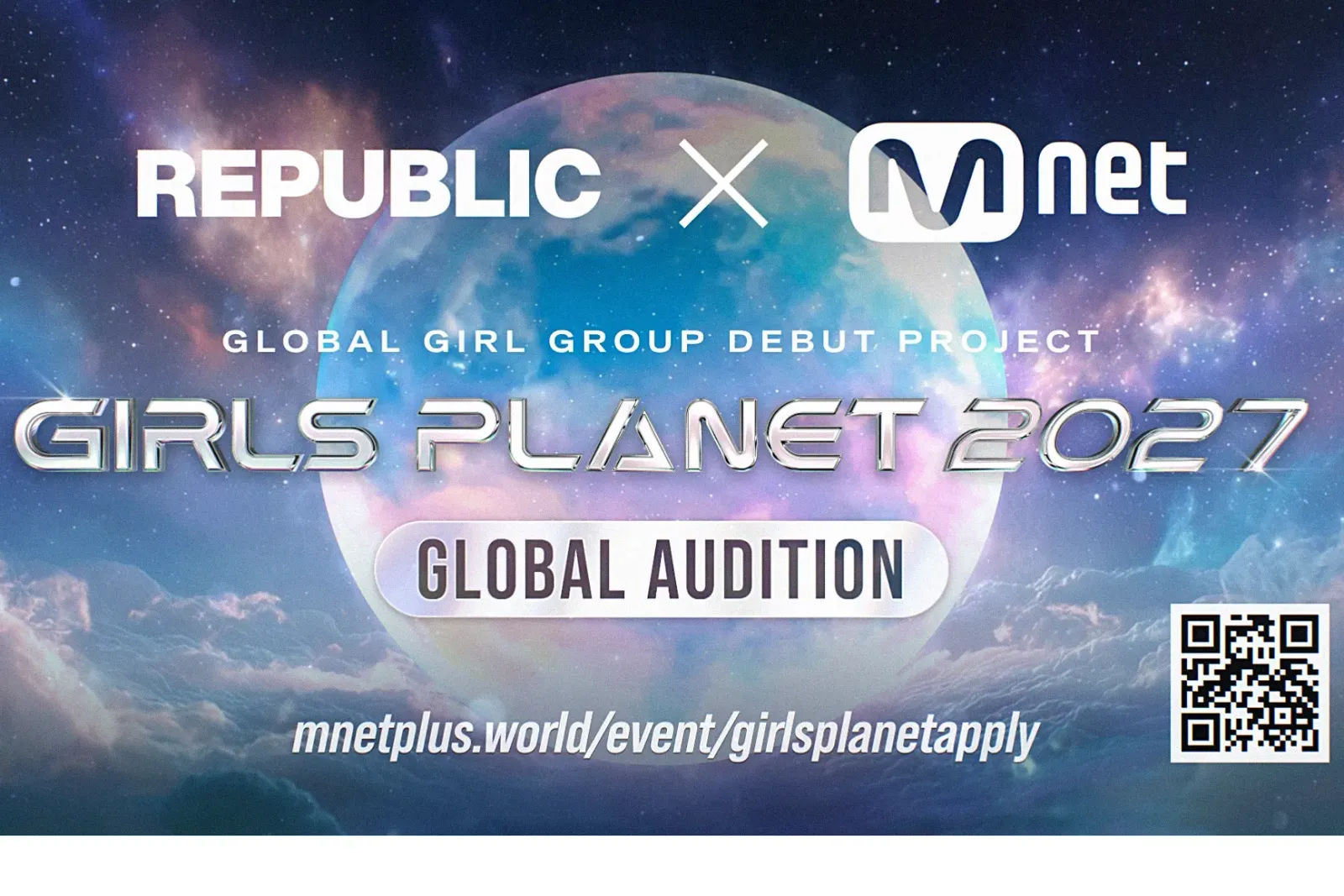
CJ ENM’s Mnet is partnering with Universal Music Group’s Republic Collective to produce and launch a global K-pop girl group via Girls Planet 2027. The collaboration spans the project’s full lifecycle, giving decision-makers a new blueprint for scaling K-pop outside Korea.
CJ ENM’s music entertainment channel Mnet, owned by CJ ENM, is teaming up with Universal Music Group’s (UMG) Republic Collective to produce and launch a global K-pop girl group. The effort is branded Girls Planet 2027, and Republic will collaborate across the full scope of the project, from production through to the debut group’s U.S. rollout.
This matters because it is not a one-off licensing deal or a marketing cameo. It is an end-to-end partnership, with Republic Collective involved from the earliest stages of production all the way to where most global pop strategies ultimately get tested: the United States. In other words, the pitch is simple and high-stakes. Build the group in a way that can survive the translation from K-pop demand inside Korea to mainstream attention abroad.
To understand why executives should care, zoom out to how global pop expansion usually works. Labels and entertainment brands typically separate production, distribution, and promotion into different lanes, then “hand off” creative to whichever partner owns the next step. The Girls Planet 2027 structure flips that model by tying production decisions to a known end destination. When Republic Collective is embedded across the full lifecycle, it can align promotional strategy, release planning, and audience-building with what has to work in the U.S. market, rather than improvising later.
There is also a structural advantage to the brands involved. Mnet comes from the CJ ENM ecosystem, which is built around music programming and entertainment operations. That matters because K-pop is not just a genre. It is a system that relies on production pipelines, content cadence, talent grooming, and audience capture. On the other side, UMG’s Republic Collective operates within a global recorded music and artist development context, which tends to emphasize scalable distribution and market-specific execution. Pairing the two is a bet that the “talent factory” and the “global launch machinery” should be coordinated from day one.
From a deal-structure perspective, full-scope involvement also changes how incentives get managed. When a partner is only brought in for distribution or a U.S. campaign, the risk is that they are stuck reacting to creative that was optimized for another market. With Republic collaborating through production and debut, the project can be designed with the end market in mind. That can reduce the friction that often shows up when entertainment concepts move from one cultural and commercial environment to another.
Regulatory and compliance dynamics are less visible in the headline, but they are part of the background for any international talent project that aims at the U.S. The industry has to handle complex issues around music rights, releases, advertising, and promotional claims across jurisdictions. Even when the collaboration is primarily about creative and launches, the operational reality remains: international distribution is where paper cuts become operational headaches. The fact that the partnership explicitly includes the debut group’s U.S. scope signals that UMG’s Republic Collective is expected to help navigate the friction points that arise when global strategies become real releases, not just concept trailers.
The bigger implication is for boards and leadership teams at other entertainment companies watching the K-pop business. Global launches are no longer just “exporting” content. They are increasingly about building internationally compatible products. A full lifecycle partnership like this suggests the industry may be moving toward models where production is co-designed with global partners, not merely financed or marketed by them. For executives, the question is not whether global audiences exist. It is whether the company has the organizational setup to reach them efficiently.
For peers, this partnership also raises the competitive bar in partnership selection. If Republic Collective is present from production through U.S. debut, that can compress timelines and tighten execution. In pop music, speed matters, but alignment matters more. The market rarely rewards projects that look great in one region yet stumble on the transition to another. Girls Planet 2027, as described in the announcement, is structured to minimize that transition risk by keeping the U.S. end point inside the production tent from the start.
Bottom line: Mnet and Republic Collective are building a global K-pop girl group through Girls Planet 2027 with Republic collaborating across the full scope, including a U.S. debut. For decision-makers, the strategic signal is clear. The next generation of global pop plays will be judged less by hype and more by how smoothly the creative pipeline connects to the launch machine in the world’s largest music market.
This story's Key Insights and Take-aways are locked.
Create a free account to unlock Executive Actions for one credit.
Register to UnlockAlways free for Executives Club members. Join the Club
More in Entertainment

12TB Steam 'teraleak' goes beyond Valve: GTA 3, Mafia 2 prototypes exposed
A 12-terabyte dump of Steam data reveals prototypes and builds of third-party classics like GTA 3 and Mafia 2, plus unreleased Valve content, rewriting game history.

LinkedIn's romance problem: 1 in 4 workers say dating on it is fair game
A new survey shows a quarter of U.S. employees treat the professional network as fair game for romance, even as LinkedIn bans it and removes hundreds of thousands of offending posts.

Enhypen's first No. 1 album breaks K-pop's Billboard 200 streak
The K-pop group's 98,000-unit debut tops the chart while Dolly Parton's catalog reentry shows how death reshapes streaming.