

Clicks’ $499 Communicator shows BlackBerry-style keyboard in new hands-on video
A pre-production look at hardware and internal software answers whether a physical-keyboard comeback is real this year.
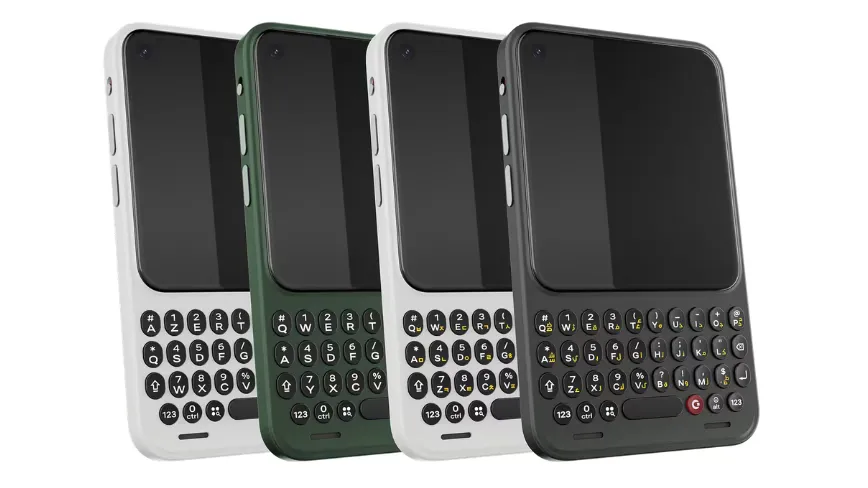
Clicks Technology released a new video Tuesday showcasing pre-production hardware and internal software of its Communicator, a $499 smartphone with a physical keyboard. For decision-makers, it signals how fast traditional smartphone UX niches are being re-entered with a priced-to-move launch timeline.
Clicks Technology is back on the keyboard. In a new hands-on video released Tuesday, the company showed pre-production hardware and internal software for its Communicator, a $499 smartphone built around a physical keyboard and positioned as the closest thing to a new BlackBerry anyone has built in years.
The Communicator, first unveiled at CES in January, is on a schedule to ship in the fourth quarter, according to the reporting. That timing matters because it places the device directly into the busiest buying window in consumer electronics, right when shoppers decide which form factors feel worth carrying for the next 12 months.
If you are a founder, operator, or investor tracking the smartphone market, the headline isn’t just “a new phone is coming.” It is a bet on a specific interaction pattern: tactile, deliberate typing. Physical keyboards became a defining feature of BlackBerry-era productivity. Over time, the rest of the industry moved almost entirely toward glass slabs and software keyboards. The Communicator’s pitch is that the pendulum can swing back, but not by recreating everything from the past. Instead, it tries to reintroduce the keyboard as the core experience while still behaving like a modern smartphone via the internal software shown in the video.
The pre-production angle is also a tell. By highlighting “pre-production hardware and internal software,” Clicks is doing two things at once. First, it is inviting the market to evaluate the device before mass production, which can help build momentum and reduce uncertainty among early adopters who are skeptical of “concept phone” hype. Second, it is signaling that engineering work is far enough along that internal software is meaningful to discuss, not just a demo shell. In other words, this is not purely an aesthetic exercise; the company is presenting the mechanics of how the phone is supposed to work.
Now zoom out to incentives. In a world where most smartphone launches compete on cameras, chip benchmarks, and brand ecosystems, a $499 price point creates a different strategic problem. Companies at the low-to-mid end do not win by outspending; they win by narrowing the value proposition. A physical keyboard is a narrower claim than a new camera sensor stack. That means the Communicator’s success, or failure, will likely hinge on whether a defined group of users prefers the physical experience enough to tolerate tradeoffs. Those tradeoffs could include battery expectations, size and weight, and how well modern app workflows adapt to keyboard-first usage. The reporting does not list those details, but the structure of the bet is clear: Clicks is betting there is demand for a “different daily driver,” not a mainstream replacement.
This matters to boards and investors for a simple reason. Smartphone product cycles are brutal. Even when a device launches with solid hardware, distribution, carrier relationships, developer support, and supply chain execution can make or break the real-world outcome. The Communicator being first unveiled at CES in January and moving toward a fourth-quarter shipment suggests Clicks is aiming for a standard hardware rollout cadence, not an open-ended research project. A defined ship window gives decision-makers a concrete milestone to underwrite, monitor, and stress test.
It also matters to competitors, because the Communicator is a reminder that “platform nostalgia” can become a product category. BlackBerry is not just a brand reference here; it is a pointer to an interaction style. If users respond, other companies could explore physical keyboards or keyboard-adjacent designs, especially in segments where productivity features are valued. Even if competitors do not copy the design, they might feel pressure in UX and retention, because a portion of the market always wants faster input and fewer errors than glass-only typing.
Finally, for operators and founders building adjacent devices, there is a second-order implication: demonstrating internal software and pre-production hardware publicly can be a forcing function. It pressures teams to converge toward a product that is not only functional, but legible to buyers. A keyboard is easy to market. What is harder is making the software and workflow feel native enough that the keyboard is a benefit, not a compromise. The video preview is Clicks’ way of tackling that risk early, and if it holds up through the remainder of the pre-production phase, the Communicator could turn “closest thing to a new BlackBerry” from slogan into repeatable demand by the fourth quarter.
This story's Key Insights and Take-aways are locked.
Create a free account to unlock Executive Actions for one credit.
Register to UnlockAlways free for Executives Club members. Join the Club
More in Technology

Nvidia's $89B data center quarter: the 9 companies cashing in
The AI buildout is minting fortunes beyond GPUs, and memory, cloud, and cooling suppliers are riding the same wave.

Google quietly links your phone number to every Android account on your SIM
Adding a SIM now ties your phone number to all Google accounts - and future accounts inherit it. Here's the security and privacy stakes.

Hijacker AI 'Skynet mode' runs 100,000 attack steps against exposed models
Symantec caught a criminal AI agent that borrows other models, steals data, and mines crypto; the only relief is no confirmed victims yet.