

Climate.gov’s 15-year archive returns via Climate.us after Trump shuts it down
Former NOAA staff relaunch the missing data and educational content, raising a high-stakes question: who controls public climate knowledge?
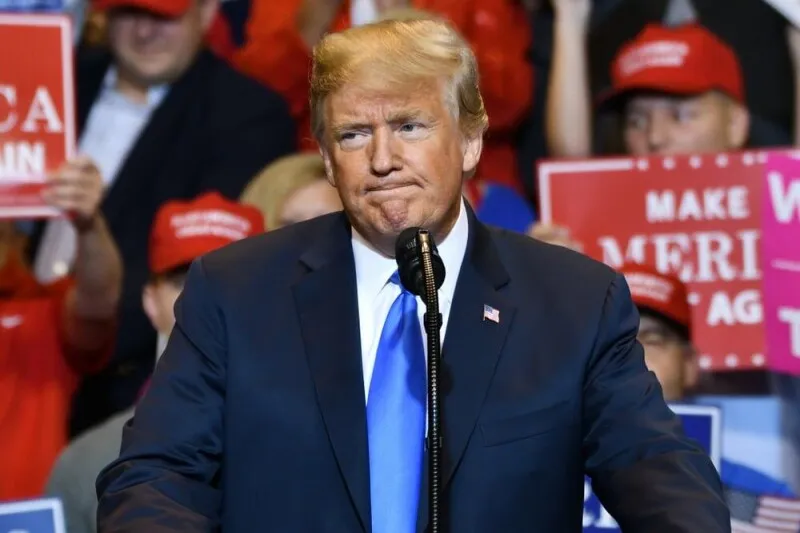
After Trump shuttered NOAA’s Climate.gov in July 2025, former Climate.gov program manager and lead editor Rebecca Lindsey helped restart much of the missing archive via an independent nonprofit platform, Climate.us. For decision-makers, the return highlights a new governance risk: climate data access can be rewired by political and procurement decisions.
It’s back. The 15-year archive of climate information that NOAA’s Climate.gov lost after it was shut down in July 2025 is returning via a new domain run through nonprofit hands, with Climate.us relaunching “much of it” that had been cut off from the public.
The person driving that comeback is Rebecca Lindsey, who previously served as the Climate.gov program manager and lead editor. In a press release, Lindsey, now managing director of Climate.us, said: “Trusted climate information should not disappear when politics change.” In an email to The Register, Lindsey added that she and a web developer were among the first people “caught up in government purges” when DOGE swept through the department in late February 2025, and that in May political appointees directed removal of the remaining Climate.gov editorial and GIS/data visualization staff from the contract.
What happened at Climate.gov is not just a story about one website going dark. Climate.gov was built as a bridge between scientists studying the climate and the public, and it included educational materials, maps, data pathways, climate status reporting, expert blogs, and national assessments. Lindsey told The Register that Climate.us is created in cooperation with sustainability nonprofit accelerator Multiplier, aiming to be an independent alternative to the prior.gov site. In plain English: when the federal pipeline for communicating climate science gets disrupted, someone else has to keep the lights on, or the public loses continuity.
The federal disruption itself was anchored in an executive order. Climate.gov was taken offline in July 2025 following a Trump executive order that prioritized “gold standard science.” The order decried what it called politicization of science under the prior administration, explicitly referencing an approach that “encourag[ed] agencies to incorporate diversity, equity, and inclusion considerations into all aspects of science planning, execution, and communication.” It also singled out climate change science, arguing prior climate science models relied on worst-case scenarios, which the order treated as reason to change the public availability of 15 years of climate data and reporting. Lindsey told The Register that changes began before the final shutdown.
Before her termination, Lindsey said the Climate.gov team was ordered to search its archives and remove any information that violated Trump’s Gulf of America order and ban on DEI programs. She noted that guides on teaching climate change and principles of climate literacy were among documents purged during that sweep. The source also reports scientist concern tied to the timing of the shutdown. The shuttering of Climate.gov followed a day after the executive order, and University of Arizona climate scientist Kathy Jacobs told The Guardian in July 2025 that it was evidence of “serious tampering with the facts and with people’s access to information,” potentially increasing “the risk of people being harmed by climate-related impacts.” The Register also reports that other climate information was removed from public repositories.
Here’s the part executives should not miss. Even though Climate.gov now redirects to a NOAA page about climate, Lindsey said it hosts none of the data the shuttered site used to contain. In other words, the public-facing brand and URL remain, but the substance that made it useful is gone. That is a governance and operational continuity failure mode, not just a political headline. Lindsey told The Register that Climate.us and Climate.gov both serve as bridges between scientists and the public, and she described losing access to federal expertise as “a real blow,” especially because Climate.gov content was designed in partnership with federal scientists to keep it accurate.
If you’re an investor, operator, or board member in climate-adjacent sectors, the second-order implication is brutal but practical: data and educational infrastructure can be quietly reallocated by contract decisions, staffing removals, and archive purges, even when the subject matter is supposed to be “science.” The story states that in May, political appointees directed removal of editorial and GIS/data visualization staff from the contract, and Lindsey also described the DOGE sweep through the department in late February 2025. That suggests the real lever was not only policy language, but also procurement and personnel control, which are easier to move quickly than scientific consensus and much harder for outsiders to monitor.
Lindsey’s stance on what happens next adds another governance angle. She told The Register that rapidly changing political winds have led her to believe government is not the right place for the mission to continue, and that she would have concerns about returning the site to federal management if a future administration changed its position on climate change. She also said she believes fostering climate literacy is a public good that benefits society, not something that should be trapped in “a hamster wheel” each time politics shift. Meanwhile, Climate.us plans to continue the same mission: getting climate science in front of the public in an understandable way so people can make their own decisions about how to respond. Lindsey said, “We aren’t trying to tell people what to do about climate change. We just think that people will come up with better strategies to confronting the world’s climate challenges if they understand what the science is telling us.”
So the “archive is back” headline is only half the story. The other half is that a large public information system is now subject to political churn: executive orders, archive sweeps, DEI bans, contract staffing removals, and domain-level redirects. Climate.us is filling the gap with content restored from what was purged from the.gov, including blogs, status reports, maps, data pathways, and national assessments. For boards and operators, the strategic takeaway is clear: if you build on public data and federal scientific infrastructure, continuity should be designed like reliability engineering, not assumed like civic infrastructure.
This story's Key Insights and Take-aways are locked.
Create a free account to unlock Executive Actions for one credit.
Register to UnlockAlways free for Executives Club members. Join the Club
More in Business

Anthropic’s Levant Alpöge cracks the Jacobian conjecture after 87 years
A Harvard valedictorian used Claude to hit a 1939 breakthrough, but the missing “why” is the real problem.

Uber buys Delivery Hero for nearly $15B, vaulting to top food delivery outside China
The deal doubles Uber's dual-services footprint and pushes a ride-and-eats bundling play into 50 more markets.

Epic and Google drop settlement bid, forcing rival Android app stores by July 22
Google told the court it is ready to carry third-party app stores starting Wednesday, July 22.