
CNSA’s Li Mingtao outlines a China “space-ground” asteroid warning network
The plan targets the sunward “blind spot,” and the details suggest specific satellite orbits plus data-sharing pressure.
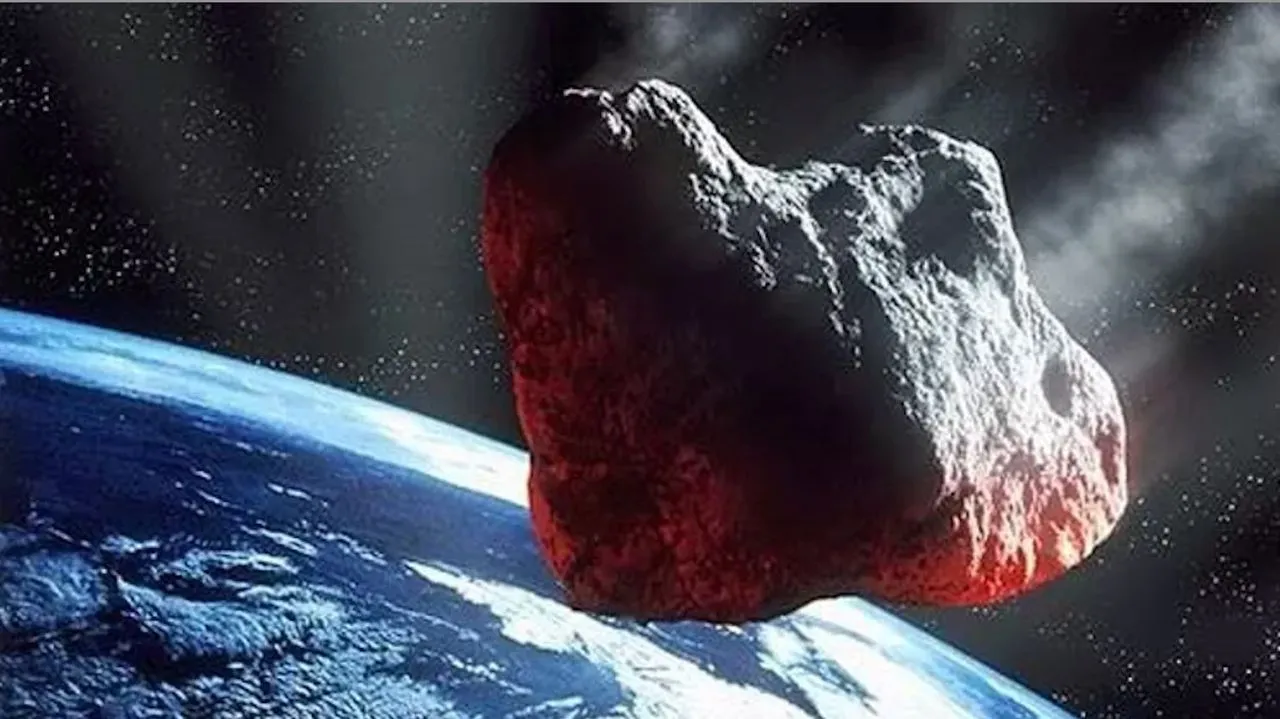
On June 30, the China National Space Administration (CNSA) said it plans a coordinated ground-and-space monitoring system for near-Earth asteroids, centered on a “space-ground” early-warning network. The consequence for decision-makers: the monitoring architecture could close a known tracking gap, while also shaping expectations for international data cooperation.
China has announced it wants to build a “space-ground” asteroid early-warning network, and CNSA’s own chief scientist for asteroid monitoring is specific about the problem it aims to solve. On June 30, International Asteroid Day, Li Mingtao of CNSA’s Asteroid Monitoring and Early Warning Research Center told state media that China is studying the feasibility of an asteroid defense system, with the ground-space monitoring network as its core. His key point is blunt: while no asteroid has been identified that will definitely collide with Earth in the foreseeable future, many near-Earth asteroids remain undetected.
The reason this matters is equally blunt. Li said China plans multiple large-aperture optical telescopes at carefully chosen ground sites, paired with a space-based monitoring constellation that is not limited by atmosphere or day-night constraints, with a particular focus on threats coming from the sunward direction. That sunward angle is exactly where ground systems struggle because the glare of the sun washes out what you are trying to see. Li used a real-world example: the 2013 Chelyabinsk meteor approached roughly from a sunward direction and was only detected once it entered the atmosphere. In other words, the plan is designed to reduce the odds of another “too-late” surprise.
Zoom out, and the network proposal lands in a sector that still has uncomfortable blind spots. China’s statements and supporting material frame the detection gap with numbers: more than 40,000 near-Earth asteroids have been discovered so far, including over 95% of asteroids at least 1 kilometer (0.6 miles) wide that are capable of causing a globally catastrophic impact. But only around 45% of asteroids in the 140-meter (460-foot) class have been detected, which are large enough to devastate a small country. The takeaway for boards and program leaders is not that “impact risk is rising.” It is that coverage is uneven, and uneven coverage is how you miss the stuff that hurts most.
That is where China’s architecture signals something more concrete than “we’ll watch the skies.” Recent journal papers and a 2025 presentation to the United Nations’ Committee on the Peaceful Uses of Outer Space (COPUOS) provide clues. A June 2026 paper in the Journal of Deep Space Exploration, co-authored by Wu Weiren (chief designer of China’s lunar exploration program, and a leading voice on China’s asteroid defense plans), lays out four candidate orbital positions for a monitoring network: the Sun-Earth L1 Lagrange point; an Earth-leading or trailing orbit; a Venus-like heliocentric orbit; and an Earth-companion distant retrograde orbit (DRO). The paper also describes ongoing research into how effective each option would be for monitoring.
An “extended model” would add spacecraft in the three additional orbits named in Wu’s paper. The “basic model,” as described in a 2025 COPUOS technical presentation by Chinese researcher Chen Yongcai, includes a single satellite at Sun-Earth L1, about 1.5 million kilometers (930,000 miles) inside Earth’s orbit, paired with northern and southern ground stations. This is not just orbital trivia. Sun-Earth L1 is attractive because it can provide a stable vantage point for observing regions of the sky that are otherwise hard to catch from the ground, including sunward approaches. And the Venus-like option is notable because it closely tracks a prior concept known as CROWN, a constellation of small satellites in Venus-like orbits designed to survey the sunward sky and use its favorable geometry to track other populations of near-Earth asteroids.
China’s plans are also being positioned inside its broader policy and mission pipeline. The country’s 15th Five-Year Plan, approved in March, states that an asteroid defense engineering project is under study. China is also developing a kinetic-impact and observation demonstration mission, compared in the reporting to NASA’s Double Asteroid Redirection Test (DART), which in 2022 slammed into Dimorphos, the asteroid that orbits Didymos, changing the binary’s orbit around the sun. The European Space Agency’s (ESA) follow-on Hera mission is scheduled to launch in 2027. Put simply: China is not only talking detection, it is working toward the ability to test mitigation concepts.
For executives watching this space, the interesting part is the interaction with the existing global stack. A University of Helsinki asteroid researcher, Anne Virkki, who is familiar with international monitoring efforts, pointed out that NASA and ESA have plans to send missions to Sun-Earth L1 to search for asteroids in infrared light: NEO Surveyor and NEOMIR, respectively. If China launches a similar mission, Virkki said, it could have capabilities the other two do not, and it would matter whether China shares the data internationally instead of only with Chinese scientists. She also highlighted a different, less-discussed constraint: radar tracking capacity. The 2020 collapse of the Arecibo Observatory in Puerto Rico dealt the United States a serious hit, and there is no U.S. successor in the works. China has discussed building its own radar capability, and Virkki said that would be a welcome addition if the data is shared openly.
This is the second-order implication that really matters for decision-makers in adjacent fields, from space technology procurement to international partnerships. The world’s near-Earth population is not small. Virkki noted there are likely about 100,000 near-Earth asteroids that could cause significant local damage if they hit Earth, and that orbits are known for less than half of all such space rocks. The monitoring problem is therefore not a one-time build. It is a sustained data machine. 2029 will mark the International Year of Planetary Defense, when the infamous asteroid Apophis will fly past Earth just within the orbit of geostationary satellites. Virkki’s conclusion for the ecosystem is hard to ignore: there is a lot of work left to do, and international collaboration is crucial.
So what does China’s announcement change? It raises the probability that at least one major player will fill the sunward tracking gap using a ground-and-space “space-ground” approach, with candidate orbits that are detailed enough to plan around. That could augment global efforts. Or it could create a parallel system that duplicates coverage while data-sharing becomes the real differentiator. Either way, the strategic signal is clear: planetary defense is moving from “concept” to “infrastructure,” and the choices made now about observatory design and openness will shape what the world can actually detect, and how fast it can respond.
This story's Key Insights and Take-aways are locked.
Create a free account to unlock Executive Actions for one credit.
Register to UnlockAlways free for Executives Club members. Join the Club
More in Science

Alaska's 1,580-foot tsunami had warning signs. Scientists just found them.
Rapid glacier retreat, heavy rainfall, and thousands of tiny tremors preceded Alaska's 1,580-foot tsunami, a warning for every coastal community in a warming world.

The rare mutation that lets high-risk brains dodge Alzheimer's
Scientists found a natural defense against protein buildup, opening a new path to preventive treatments.

3,000 steps a day may halve Alzheimer's decline, study finds
New research links a modest daily walk to less tau buildup and nearly half the cognitive and functional decline, even for those with early signs.